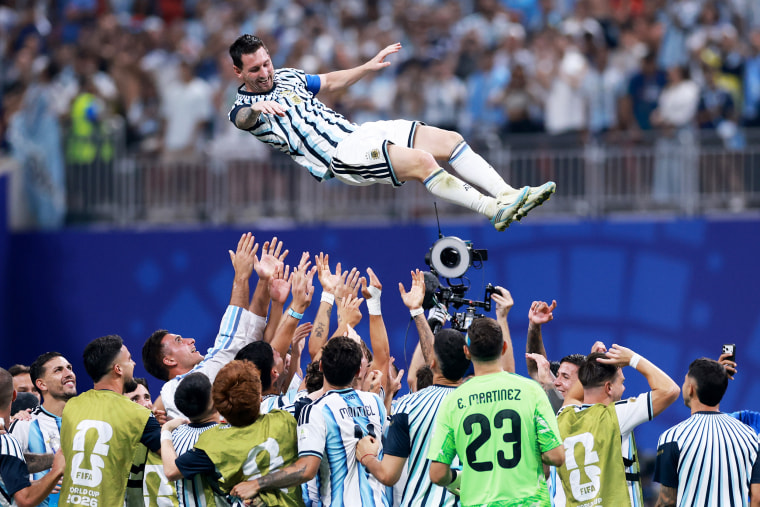
Defense Against Allegations
FIFA refereeing chief Pierluigi Collina defended the officiating in Argentina’s 3-2 victory over Egypt in the World Cup round of 16. He dismissed allegations of bias and asserted that match officials operated independently.
Reaction to Criticism
In an interview on inside.fifa.com, Collina stated that while criticism of referees is part of football, questioning their integrity is unacceptable. He emphasized the independence of FIFA World Cup match officials, insisting that their decisions are not influenced by external forces, including FIFA president Gianni Infantino.
“Constructive discussion about decisions will always be part of football, but unfounded allegations have no place in our sport,” Collina remarked.
Collina warned that such allegations could lead to threats against referees and their families.
Egypt’s Claims
Following their exit from the tournament, Egypt claimed unfair treatment after Argentina overturned a 2-0 deficit. A stoppage-time winner from Enzo Fernandez secured Argentina’s victory, prompting criticism from Egypt about the officiating.
Coach Hossam Hassan suggested there might have been pressure to keep Argentina in the tournament. The Egyptian Football Association highlighted several incidents that raised concerns about decision consistency and fairness during the match.
Egypt argued that Mostafa Zico’s second-half goal was incorrectly ruled out due to a supposed foul. They were also displeased about the lack of a penalty for Mohamed Salah, who was tackled before Argentina scored the decisive goal.
Official Rulings
Collina explained that VAR correctly recommended overturning Zico’s goal after identifying a foul by Marwan Attia on Argentina defender Lisandro Martinez. He asserted that a foul is a foul, and if unseen by the referee, VAR can intervene. He also defended the decision not to award a penalty to Egypt, noting that both the referee and VAR considered the contact between Salah and Julian Alvarez as normal contact.
“Stepping on an opponent’s foot is a foul, whereas a defender who touches the ball first and then makes normal football contact has not committed a foul,” Collina stated.
While some decisions may involve subjectivity, Collina assured that FIFA was satisfied with the application of VAR principles during the tournament.
 The Quest for the Knuckleball Dream
 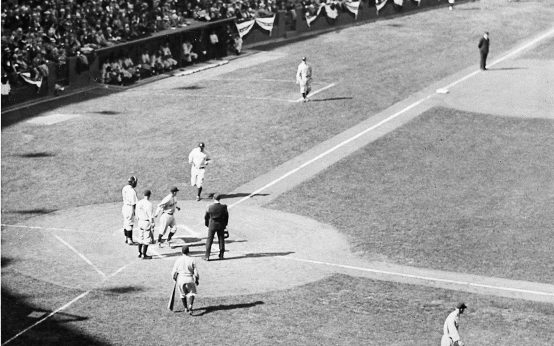 Historical Events in Chicago on October 1st
  Stephen A. Smith Discusses Houston Texans’ Critical Matchup Against Dallas Cowboys
 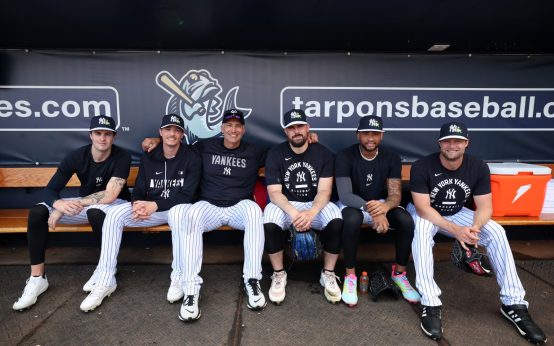 CC Sabathia Anticipates Yankees’ Game 1 Pitcher for ALDS After Beating Red Sox
 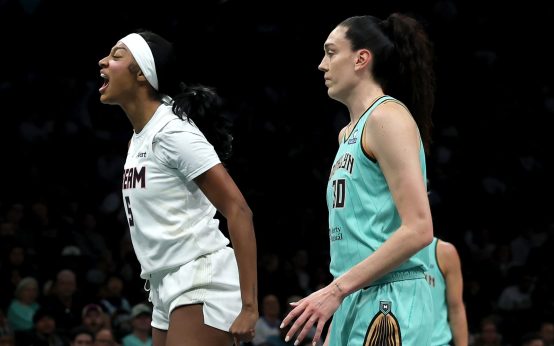 Atlanta Dream Progress to WNBA Semifinals
  Los Angeles Lakers Focus on Defense in Luka Doncic Era