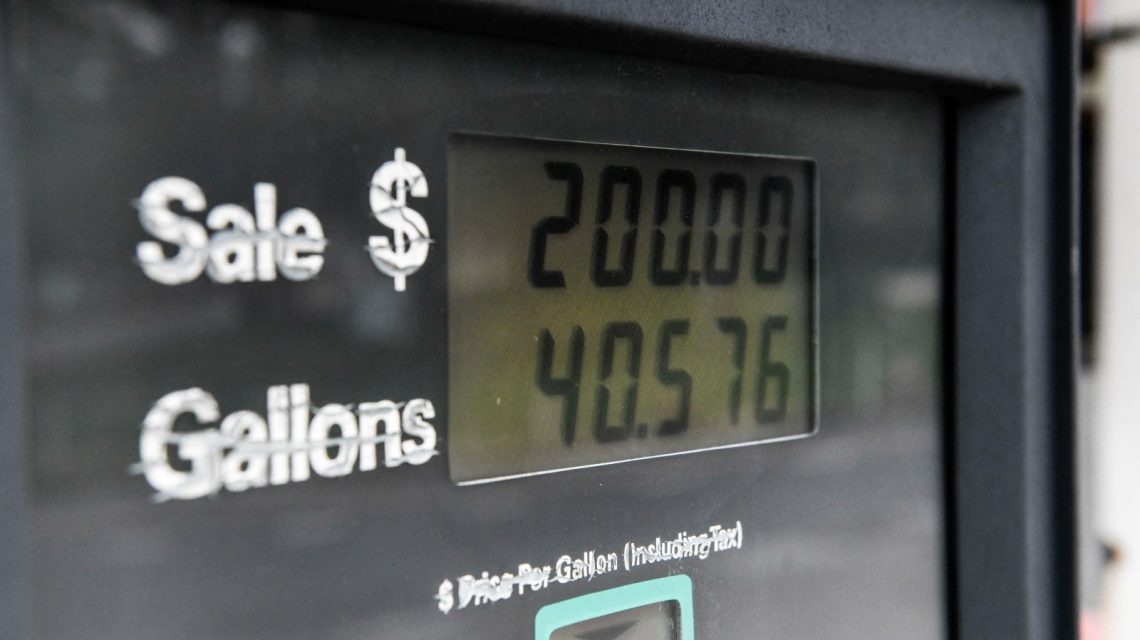
Gasoline prices have climbed above $4 per gallon in 28 states. This increase coincides with renewed tensions between the U.S. and Iran. The timing poses challenges for President Donald Trump as midterm elections approach in 100 days. Research by AAA indicates that 60% of American drivers will struggle financially if gas prices reach $4. This figure acts as a psychological threshold, affecting consumer attitudes as elections near on November 3. Newsweek has reached out to the White House for a comment.
Battleground State Gas Prices
According to a map by Newsweek, 28 states have surpassed the $4 mark. Key battleground states affected include Michigan ($4.23), Maine ($4.10), and New Hampshire ($4.06), with AAA reporting a national average of $4.11. Michigan faces an open seat race after the retirement of Democratic Senator Gary Peters, noted for its competitiveness. In Maine, Troy Jackson, a former state Senate President, becomes the Democratic Senate nominee, marking a significant campaign for his party. In New Hampshire, an open Senate race follows the retirement of Democratic Senator Jeanne Shaheen, in a state Trump narrowly lost in the 2024 election.
Gas prices in Georgia ($3.92) and Ohio ($3.89) have not yet reached $4. In Georgia, Democratic Senator Jon Ossoff seeks reelection in a Trump-carried state, making it pivotal for Senate control. Democrats aim to challenge the GOP-held seat in Ohio, potentially turning it competitive. California reported the highest average gas price at $5.64, while Indiana had the lowest at $3.51 per gallon.
Why Gas Is Expensive
The U.S. and Israel conducted airstrikes on Iran on February 28, aiming to weaken military capabilities and nuclear development. In response, Tehran blocked the Strait of Hormuz, a critical passage for one-fifth of the global oil and gas supply. This disruption drove the price of Brent crude over $100 per barrel. Prior to the conflict, gas averaged $2.98 per gallon. Prices surpassed $4 on March 31, about a month after the onset of the conflict.
Gas prices peaked at $4.56 in early May with hopes of a U.S.-Iran agreement reopening crucial shipping lanes. Following a memorandum on June 17, prices fell briefly but rose again after Iran resumed aggressive actions in the Strait. U.S. retaliation followed, coupled with escalating threats from Houthis in the Bab el-Mandeb Strait, another major oil route. White House spokesperson Taylor Rogers stated the U.S. military’s efforts to protect commercial shipping routes would help bring oil and gas prices back to pre-conflict levels.
For further insights on this situation, Newsweek editors Daniel Orton and Tony Phillips are responsible for this story.
 The Trump Team’s Challenge to the Military Leadership
  Maryland First State to Restrict Electronic Pricing in Grocery Stores
  British Police Arrest Man Suspected of Terror Plot
  Activists Push for Nationwide Ban on Child Marriage in the U.S.
  Democratic Hopes and Historical Warnings in 2026 Senate Race
  Republicans Face Challenges Amidst Cost of Living Concerns