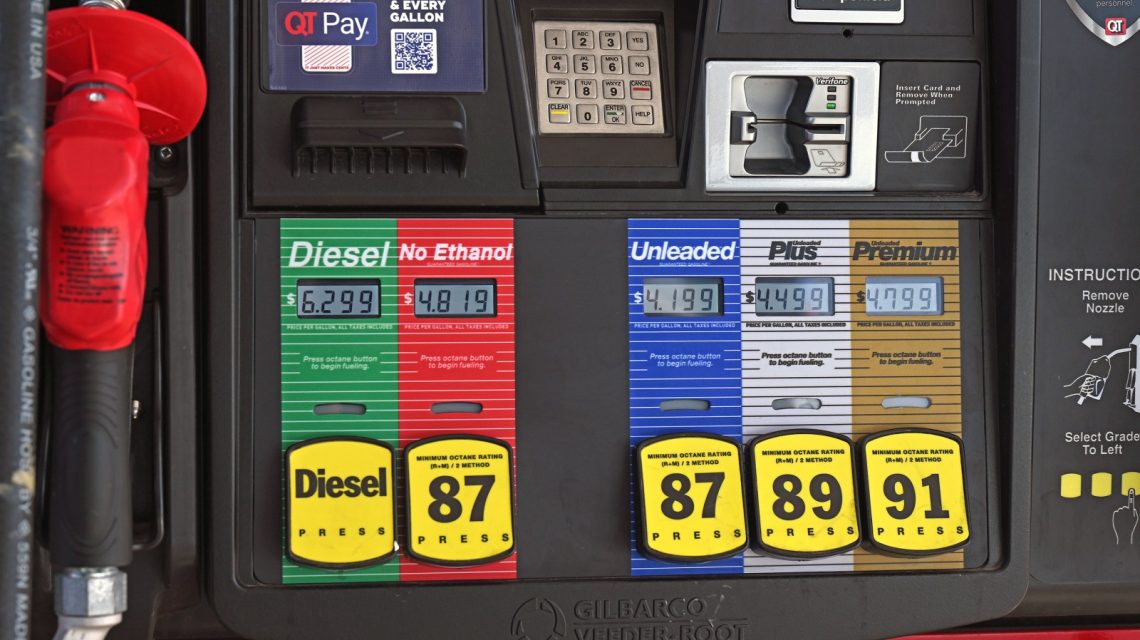
Gasoline prices are dropping significantly across the United States. This brings relief to many drivers after facing rising costs. The national average for regular gasoline reached $3.53 per gallon on Saturday, according to AAA, marking a decrease from $3.66 just the previous week and $4.25 a month ago. This decline is nearly 72 cents over one month.
According to GasBuddy analyst Patrick De Haan, the national average was slightly lower at $3.49 per gallon. He mentioned that prices might settle within this range for the coming months if no significant geopolitical disruptions occur.
Regional Price Differences
Despite the overall decrease, drivers in various Western states including California, Hawaii, Nevada, and Washington are still paying over $4 a gallon. Conversely, motorists in Georgia, North Carolina, and Indiana might soon face price increases as fuel tax suspensions in these states are ending.
Georgia will see gas prices increase by 25-35 cents per gallon starting Tuesday morning due to the expiration of the state’s gas tax suspension,De Haan noted.
Currently, Georgia averages around $3.02 per gallon, offering many options below $3. However, this will change soon.
Impact of Global Events and Political Responses
Gasoline prices had surged due to geopolitical tensions following the start of the Iran conflict in February, with the U.S. and Israel launching attacks on February 28. At that time, the average gasoline price was approximately $2.98 per gallon nationally. By March 31, the AAA average surpassed $4, peaking at $4.56 on May 21.
This increase posed a challenge for President Donald Trump’s administration. Despite higher prices, Trump argued they benefited the U.S. as a major oil producer. Vice President JD Vance acknowledged the concerns consumers faced but indicated the increase would be short-lived.
As crude oil prices later fell, the administration sought faster price reductions at the pump. Trump accused gasoline sellers of maintaining high prices and requested the Justice Department investigate potential price gouging.
By late June, the AAA national average fell to $3.91 as crude prices dropped, and efforts towards a U.S.-Iran agreement advanced. Even with the recent declines, prices remain above last year’s average of $3.02 per gallon. Diesel prices also remain high, with AAA recording a national average of $5.67 per gallon.
Price Projections and Risks
De Haan suggests that gasoline prices might hover within their current range for the next couple of months, unless geopolitical tensions escalate. He anticipates diesel prices might fall 25 to 55 cents per gallon in the near future, though the outlook carries risks.
By Thanksgiving, 44 states had average gasoline prices under $4 per gallon, with Pennsylvania dropping below that level shortly before the holiday.
A Regional Divide
Some states continue to experience elevated costs:
- Hawaii: $5.58 per gallon
- California: $5.37 per gallon
- Nevada: $4.60 per gallon
- Washington: $4.53 per gallon
Meanwhile, certain Northeastern states are near the $4 mark, such as Pennsylvania ($3.97), New York ($3.93), and Vermont ($3.84). This creates a significant regional divide in gas prices.
Georgia, however, stands as an exception to the decreasing trend. The state’s gas tax suspension is set to expire soon. Without an extension, prices could increase by about 25 to 35 cents per gallon. Similar tax expirations in North Carolina and Indiana could also lead to price hikes.
Cheapest Gas in the Nation
Several states currently have average prices below $3 per gallon. Indiana registered the lowest average at $2.83 per gallon, followed by Ohio at $2.84 and North Carolina at $2.90. Oklahoma’s average stands at $2.96.
Price wars in local areas have resulted in even lower prices. De Haan mentioned a Sam’s Club in Lafayette, Indiana, selling gas for $2.05 per gallon.
De Haan cautioned that Indiana’s unusually low prices could soon increase. Factors such as state fuel taxes, crude oil markets, and international developments can greatly impact upcoming prices at the pump.