
Support for Israel is a crucial aspect of the religious identity for many Jewish adults aged 45 and older in the United States. However, younger Jewish adults tend to focus on other connections such as celebrating Jewish holidays, according to a recent AP-NORC poll. This reflects a generational divide that affects views on Israel’s actions following the Hamas-led attack on October 7, 2023, indicating that the divide extends beyond politics into religious identity.
Cameron Bernstein, a 27-year-old medical student from New Orleans, shared her perspective, stating, “I pray for people in the land of Israel. I don’t need to pray for the state.” Bernstein, who celebrated her bat mitzvah in Israel, explained that the country no longer holds the same significance in her life as it once did.
The survey conducted by The Associated Press-NORC Center for Public Affairs Research involved 1,022 Jewish adults, highlighting the differences in support for Israel among those who identify as religiously Jewish. Jewish adults who are not religiously affiliated but identify as Jewish typically have weaker emotional ties to Israel.
The survey methodology involved questioning 3,040 U.S. adults from June 11-17, 2026, using NORC’s probability-based AmeriSpeak Panel. This panel is designed to reflect the U.S. population accurately.
Among Jewish adults, those identifying as Jewish due to religious, ethnic, cultural, or familial reasons were categorized as such in the study. For religiously Jewish adults, who represent 68% of this group, about 60% state that being Jewish is highly important to them. Approximately half of the older religious segment view support for Israel as a significant part of their Jewish identity, similar to the importance placed on Jewish holiday celebrations.
Conversely, only around 40% of younger religious Jewish adults prioritize support for Israel, whereas about 70% consider celebrating Jewish holidays as crucial to their Jewish identity.
For Susan Boyer, a 72-year-old from Southern California, supporting Israel equates to backing the right of Jewish people to have a homeland in the Middle East, serving as a refuge against large-scale atrocities like the Holocaust. Boyer emphasized the constant need to defend her identity as a Jew in daily life due to rising antisemitism.
Ari Pollack, a 30-year-old arts fundraiser in Wisconsin, criticizes Israel’s recent military operations, believing they contribute to antisemitism globally. This viewpoint makes him feel disconnected from traditional synagogue services.
The poll reveals that while a significant portion of religious Jewish adults under 45 accuse Israel of genocide in the Gaza conflict, only 2 out of 10 adults aged 45 and older share this sentiment. Younger Jewish adults still place importance on other Jewish traditions like Shabbat and dietary restrictions.
Phoebe Wapnitsky, a 32-year-old from Connecticut, opposes Israel’s military actions, aligning her Jewish values with promoting social justice. She feels disconnected from Israel even before the recent attack.
Similarly, Brian Ebarb, a 47-year-old attorney in Louisiana, defines his Jewish identity through action and community, advocating for support of Israel while urging responsible criticism of the government.
The AP-NORC poll involved 3,040 participants, with 1,022 Jewish adults, reflecting accurate opinions through a representative sample. The overall margin of error stands at 2.8 percentage points, while for Jewish adults, it is 5 percentage points.
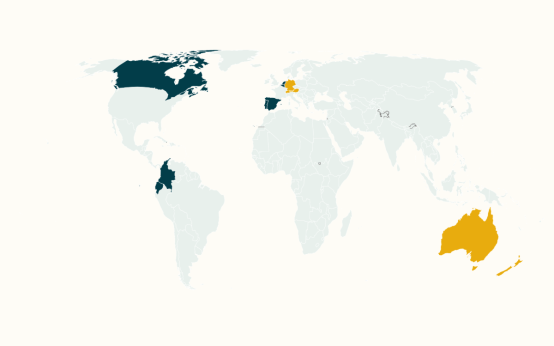 Dutch Review Board’s Euthanasia Ruling and International Debate
  Israeli PM Commends Heroic Actions in Flight Emergency
 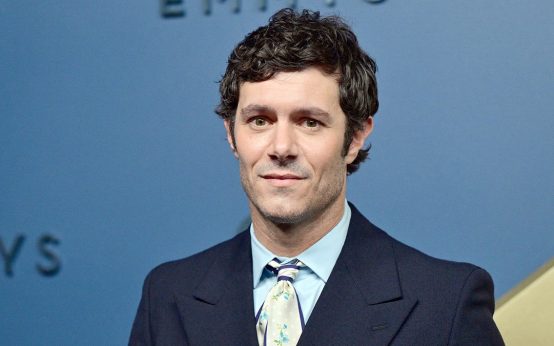 Rabbi and Jewish Leaders Criticize Adam Brody for ‘Genocide’ Comment
  Flydubai’s Emergency Landing Highlights Cockpit Security
 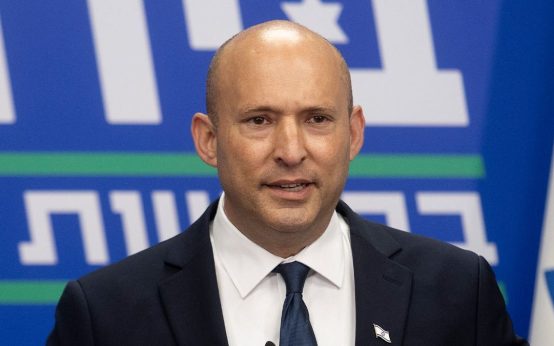 Former Israeli PM Naftali Bennett Commends Passengers and Crew for In-Flight Heroism
  Diplomatic Complexities Unfold at U.S. National Archives Visit