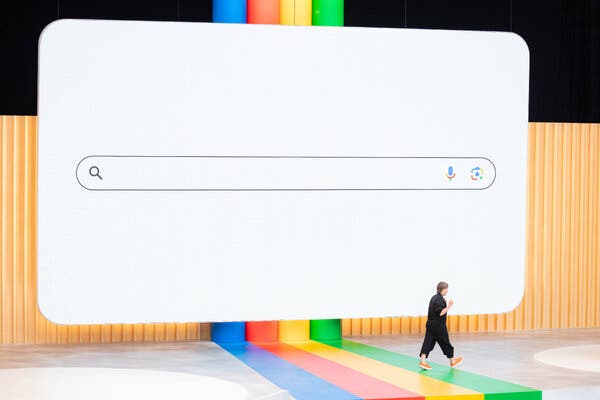
On May 19, 2026, Google announced a significant overhaul of its iconic search box. This redesign is the first major change since 2001, driven by advancements in artificial intelligence.
For 25 years, Google’s search box was a simple, narrow bar where users typed concise keywords. With recent AI developments, people now ask more detailed questions like, “Who are the top 24 teams in the World Cup and what chance does the United States have of advancing?”
The new search box is larger and more interactive. It supports longer questions and allows users to upload photos and videos into their queries. Additionally, users can follow up with questions through a chatbot on Google’s main search page.
Google is introducing digital assistants or agents, which can automate search processes. For instance, someone looking for an apartment can receive notifications of new listings without visiting real estate sites like Zillow.
These enhancements are powered by Gemini 3.5 Flash, a new AI model. Google claims the model excels in creating software code, automating tasks, and operating more efficiently. Gemini is noted for being faster and less expensive to run compared to similar models.
Google CEO Sundar Pichai expressed that Gemini’s efficiency and cost-effectiveness will allow broad deployment, ultimately benefitting the company.
 Trump’s 2024 Campaign Targets Young Men Through Cryptocurrency
  How Modern Windows Improve Home Insulation
  State Department Simplifies Passport Process with Online Applications
  Senate Democrats Block Data Center Bill Over Efficiency Concerns
  Future Cities: Ambitious Projects Aiming for Innovation and Sustainability
  High-Profile Hearing and AI Developments: Key Political Moves