
A recent experience with my daughter reminded me of valuable parenting lessons. She returned from school, upset about not being invited to her friend Samantha’s birthday party. Out of a class of twenty children, she wasn’t included. The party wasn’t a small affair, which made her exclusion sting even more. I faced a choice: either acknowledge her disappointment or call Samantha’s mom to secure an invitation. I resisted the impulse to take the latter route.
The natural desire to protect our children from hurt is strong. However, it’s crucial to differentiate between supporting them through tough times and shielding them from every unpleasant experience.
Understanding Childhood Struggles
There seems to be a tendency to view ordinary childhood struggles as major issues. Sadness might be labeled as depression, while normal frustrations could be deemed emotional dysregulation. But these aren’t always symptoms of deeper problems. Some negative experiences play essential roles in personal development. When children face challenges, they learn to adjust expectations, solve problems, and form relationships.
“Negative experiences can serve important developmental functions.”
Good mental health does not mean the absence of negative emotions. Instead, it’s built on the ability to manage those emotions. Resilience requires practice. Fostering resilience involves allowing children to encounter manageable challenges, experiment with solutions, and sometimes fail.
The Path to Building Self-Efficacy
Parents can play a crucial role in building a child’s self-efficacy by setting appropriate expectations. Children should be encouraged to handle challenges independently. When adults constantly step in, they imply children can’t manage on their own. This constant intervention undermines a child’s confidence.
“It’s impossible to teach kids to swim by keeping them out of the water!”
Repeated intervention carries unintended consequences. It weakens self-efficacy. Children may also begin to avoid challenges, viewing unpleasant situations as intolerable. Additionally, continuous intervention can lead to unrealistic expectations about life’s difficulties.
Support Without Rescuing
Of course, children sometimes need guidance. However, reflexively eliminating demands isn’t always beneficial. Short-term relief may overshadow the benefits of long-term growth. As parents, we need to balance supporting our children with stepping back to let them navigate hurdles independently.
Here are three ways to deliberately support without rescuing:
- Acknowledge their feelings without intensifying them.
- Resist solving the problem yourself. Ask if the child can manage it alone.
- Guide them in developing their solutions. Sometimes the best intervention is none.
Reflecting on my daughter’s situation, I hope her experience provides an opportunity to make new friends or learn to cope with exclusion. These outcomes are meaningful and desirable. My role isn’t to eliminate adversity but to prepare her to tackle life’s inevitable challenges.
“I want to raise someone who knows how to get back up.”
Katie S. Davis, PsyD, is a clinical neuropsychologist focusing on helping children with learning and developmental disorders. She authored “Actually, You’re Fine,” released by Balance in October 2026.
 Department of Education Investigates Teacher Programs for Discrimination
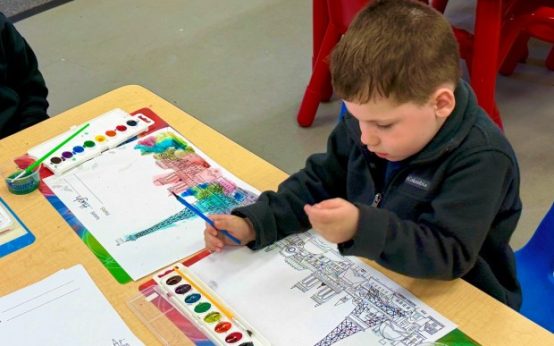 Immersion in French Culture at Ascension Catholic School
 Franklin Park School District Prepares Leadership Transition
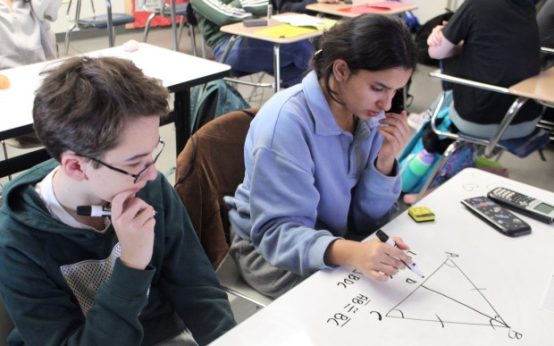 Orland High School District 230 Achieves Exemplary Status
 Advice for Concerned Grandparents
 AI’s Impact on Math Education at Caltech