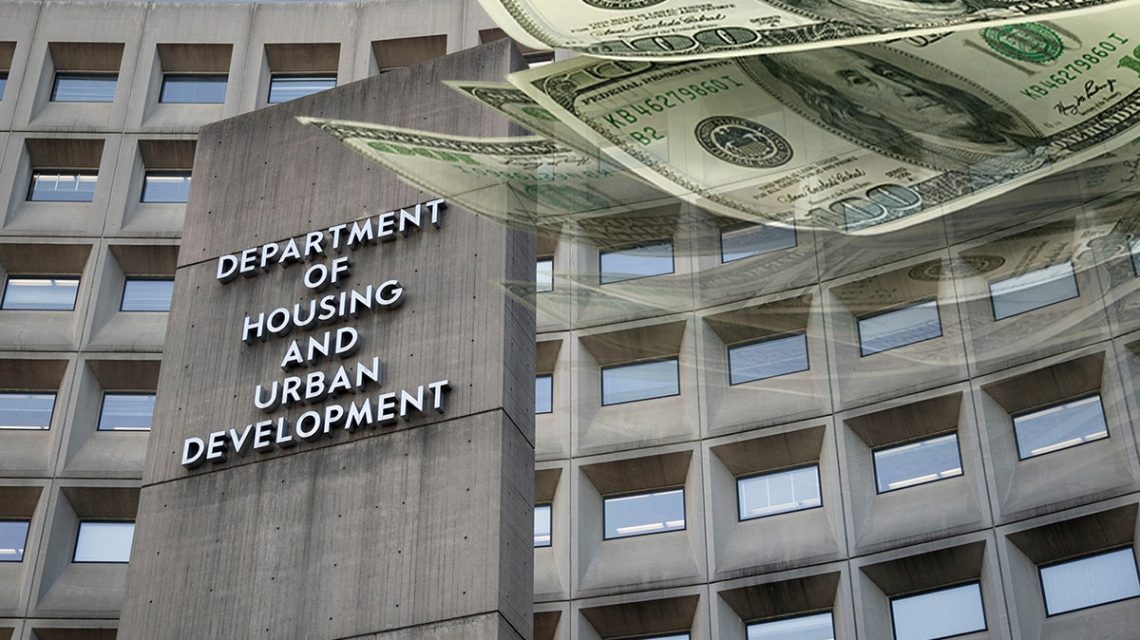
The American aspiration of owning a home has become increasingly difficult to achieve over the past decade. This situation persists even as the government has allocated massive funds toward housing initiatives. A recent analysis by Open The Books, a conservative watchdog, examined the connection between federal housing expenditures and housing affordability.
Open The Books studied home price and household income trends across the United States over ten years. Their findings reveal that there is little correlation between increased spending by the Department of Housing and Urban Development (HUD) and reduced affordability gaps. In fact, in every state, home prices rose at a faster rate than median household incomes during this period.
“The further you get from a prospective home site, the less effective any spending or regulatory tweak is likely to be,” stated Christopher Neefus, vice president of communications for Open The Books. “A single agency in Washington is likely the least equipped to offer some uniform solution.”
Open The Books used a metric called the ‘Affordability Gap’ to measure disparities. This metric calculates the percentage growth in each state’s home price index and subtracts the household income growth rate over the same period. The aim is to illustrate how much faster home prices are increasing compared to incomes.
Between 2015 and 2024, every state experienced a situation where home prices outstripped income growth. In 48 states, this gap reached double digits. Seventeen states saw home prices grow more than 50 percentage points faster than household incomes.
An analysis of HUD spending showed that close to $460 billion was dedicated to 18 housing programs aimed at affordability, rent control, and homelessness. Despite these efforts, there was no noticeable reduction in affordability gaps linked to increased federal spending.
In response, HUD highlighted initiatives under the Trump administration to reduce regulations and empower state and local governments in housing policy decisions. A HUD spokesperson stated, “Under President Trump’s leadership, HUD is focused on delivering results and making housing more affordable.” Efforts included identifying over $495 million in fraud and supporting over 1 million Americans to achieve homeownership.
The reality, according to Neefus, is that regulatory and zoning reforms at the local level are essential. Nearly half a trillion dollars spent over a decade did not result in significant improvements in affordability. Younger generations now face greater challenges in realizing the dream of homeownership compared to their predecessors.
Fox News Digital reported that the median household income nationwide increased by 99.7% from 2000 to 2024. During the same period, the median sale price of a single-family home rose by 150.1%. The average age of a first-time homebuyer has increased to 40.
Neefus believes these trends mean that younger generations may have a changing perception of the American dream. “If you look at how long it would take a median income household to save for a strong down payment,” Neefus said, “it’s no wonder younger generations might be redefining what the American dream means for them.” The report suggests that top-down federal spending alone will not restore the traditional dream of homeownership.
 Navigating Los Angeles Real Estate on a Budget
  Mortgage Rates Return Above 7% After Twenty Months
  Inland Empire Grapples with Growing Housing Affordability Concerns
  Challenges in Los Angeles’ Multifamily Housing Market
  Jevon Carter Sells Chicago Town Home
  Charming River Forest Home With Custom Features