
The U.S. House of Representatives approved a measure led by Democrats to end the military conflict with Iran. This directive called for President Donald Trump to withdraw armed forces from hostilities. The resolution passed with a narrow vote of 214-208, with four Republicans voting alongside all Democrats. Those Republicans were Reps. Thomas Massie from Kentucky, Tom Barrett from Michigan, Warren Davidson from Ohio, and Brian Fitzpatrick from Pennsylvania.
Later, the Senate voted against a joint resolution to end the Iran conflict. This resolution, unlike the House’s non-binding one, would carry legal force but could be vetoed by the president. The Senate’s vote ended at 47-49, with only Sen. Susan Collins of Maine breaking from her Republican colleagues to side with the Democrats. Sen. John Fetterman of Pennsylvania was the sole Democrat who did not vote for the measure.
Four Republican Senators did not vote: Katie Britt of Alabama, Mitch McConnell of Kentucky, Lisa Murkowski of Alaska, and Rand Paul of Kentucky.
“The focus was on getting Republicans on record regarding the unpopular war before the upcoming midterm elections. This move also aimed to reassert Congress’s authority in declaring war,” explained political analysts.
Sen. Thom Tillis from North Carolina and Sen. John Curtis from Utah stated that under federal law, military conflicts should not exceed 60 days without congressional approval. However, both voted against ending the war. Tillis clarified that the 60-day period commenced only after the administration acknowledged it as a war in July, emphasizing that Congress should authorize continued military action after this period.
Some House Republicans showed openness to extending the deadline beyond the 60 days, allowing more flexibility. Notably, four Republicans did align with Democrats to pass the non-binding resolution against the conflict.
Rep. Gregory Meeks, a leading Democrat on the House Foreign Relations Committee, highlighted the growing congressional opposition to the war, mirroring the views of 70% of Americans. Meeks mentioned potential strategies to force an end to the war, such as using budgetary powers during upcoming government funding talks. He is also considering legal action against the administration’s defiance of Congress regarding the Iran situation.
The ongoing conflict has placed Republicans in challenging electoral positions in key areas. Rep. Rob Bresnahan, representing a swing district in Pennsylvania, voted against the resolution, citing concerns over Iran potentially developing nuclear weapons. He acknowledged the economic implications of the war and expressed urgency in resolving the situation to stabilize prices.
Previously, Congress disapproved of the war with a similar resolution in early June. Key Republicans supported that effort as well. Continued efforts by Democrats aim to hold Republicans accountable for a war that lacks broad public support.
Sen. Chris Van Hollen of Maryland spearheaded the recent failed measure in the Senate. The conflict remains the most unpopular military engagement in recent history, resonating with voters across the political spectrum, including those strongly supporting former President Trump.
 State Department Simplifies Passport Process with Online Applications
  Becerra and Hilton Clash in California Gubernatorial Debate
  California Voters to Decide on $7.5 Billion State Research Fund
 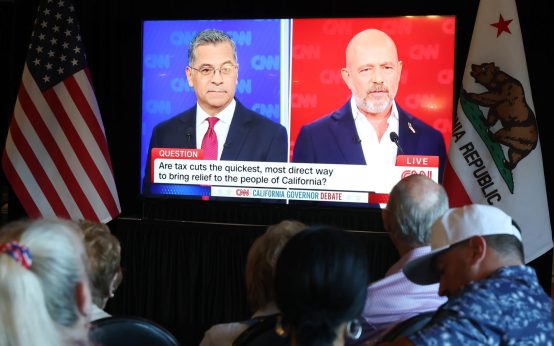 Highlights from the California Gubernatorial Debate: Becerra vs. Hilton
 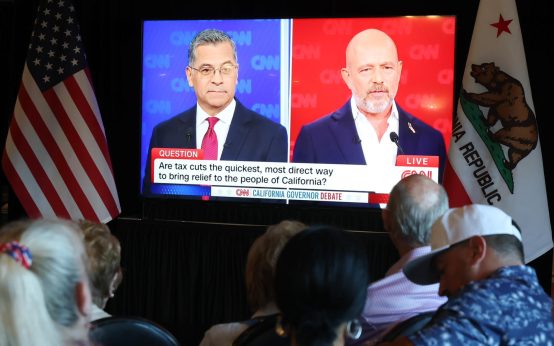 Becerra vs. Hilton: The Debate and Key Issues in the California Governor Race
  Senate Confirms New Labor Secretary