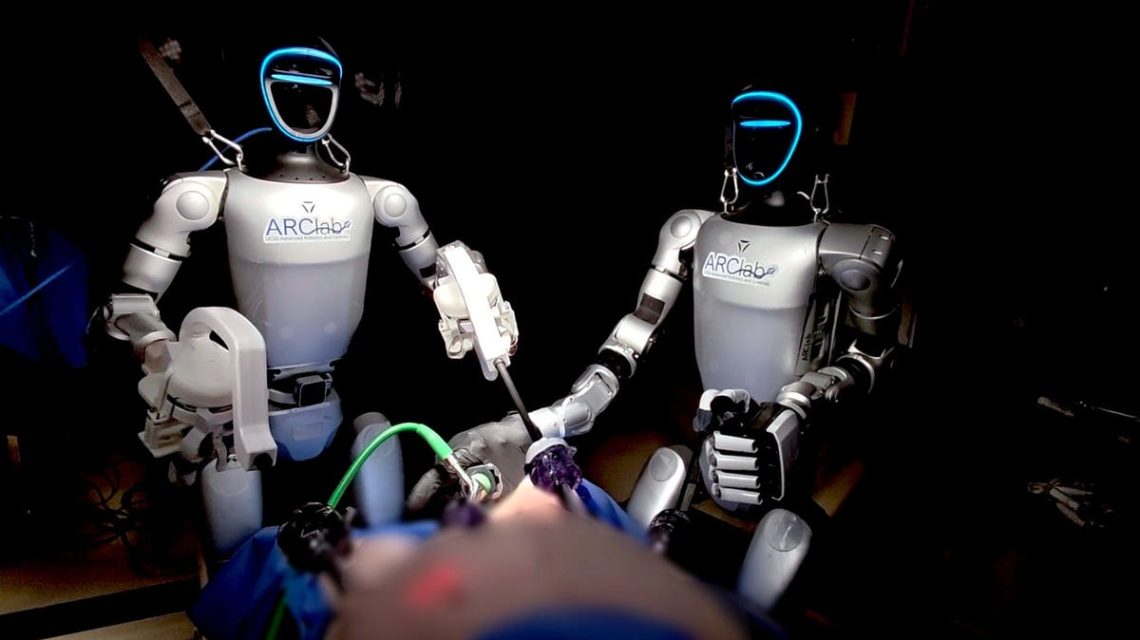
Doctors at UC San Diego recently marked a milestone by using $20,000 humanoid robots for a remote gallbladder surgery on a pig. This innovation points to the potential of AI in addressing surgeon shortages and improving healthcare access globally. However, it also raises concerns about privacy in the use of AI. These humanoid robots were part of a significant step forward, completing two surgeries for the first time.
Preclinical Trials and Robot Performance
In the trial, surgeons remotely guided the robots in two gallbladder removal surgeries using movements rather than decision-making. The procedures did not involve human patients. The humanoid robots were five-foot machines equipped to work in standard operating rooms, suggesting that future operations could occur in rural clinics or remote locations lacking surgical care.
Robotic systems used in hospitals tend to be large and complex, but these humanoid robots offer a more flexible option.
Published Results and Trial Details
The University of California San Diego researchers published their findings in the journal Nature. Two gallbladder removal surgeries on pigs demonstrated how humanoid robots can handle delicate surgical tasks. One procedure involved a robot and a human surgeon; the other used two robots working in tandem, all under remote control. The robots successfully performed minimally invasive surgery but faced challenges to resolve before human trials can proceed.
The Integration of Humanoid Robots in Surgery
The humanoid robots, named Surgie, were adapted from commercially available Unitree G1 units, which stand five feet tall and weigh about 60 pounds. This size allows them to fit in existing operating rooms for human staff, unlike many larger surgical robots. Surgie was operated from a remote console, demonstrating the human-like design crucial for blending into standard medical settings.
Surgie’s base model costs $13,500, a fraction of the $700,000 or more typically required for specialized robots, highlighting its potential economic advantages.
Advantages Over Traditional Surgical Robots
Humanoid robots provide more flexibility than current surgical systems, meeting the need for mobility and adaptability in diverse medical environments. While modern robotic systems perform precise surgeries, using a humanoid robot means adapting existing facilities instead of building around hefty machinery. This adaptability could bring specialist skills to underserved areas, potentially even aiding space missions.
Challenges and Next Steps
Despite these promising results, humanoid robots require improvements. The trial demanded frequent recalibrations, with surgeries taking longer than conventional systems allow. Latency, or delay in robot response, remains another critical concern.
The researchers aim to enhance robot reliability and eliminate all protocol interruptions.
An important future goal is developing an autonomous surgical assistant, which would recognize necessary tools and perform tasks under human supervision. This development is crucial, given the unpredictable nature of live surgical environments.
Considerations for Future Use
To prioritize patient safety, any humanoid-operated procedure must clearly define command hierarchies and the ability to resolve emergencies. Autonomous robots further raise complex questions of accountability and procedure control.
With continued development, the successful integration of humanoid robots could revolutionize healthcare accessibility, providing specialist care wherever needed.
 Trump’s 2024 Campaign Targets Young Men Through Cryptocurrency
  How Modern Windows Improve Home Insulation
  State Department Simplifies Passport Process with Online Applications
  Senate Democrats Block Data Center Bill Over Efficiency Concerns
  Future Cities: Ambitious Projects Aiming for Innovation and Sustainability
  High-Profile Hearing and AI Developments: Key Political Moves