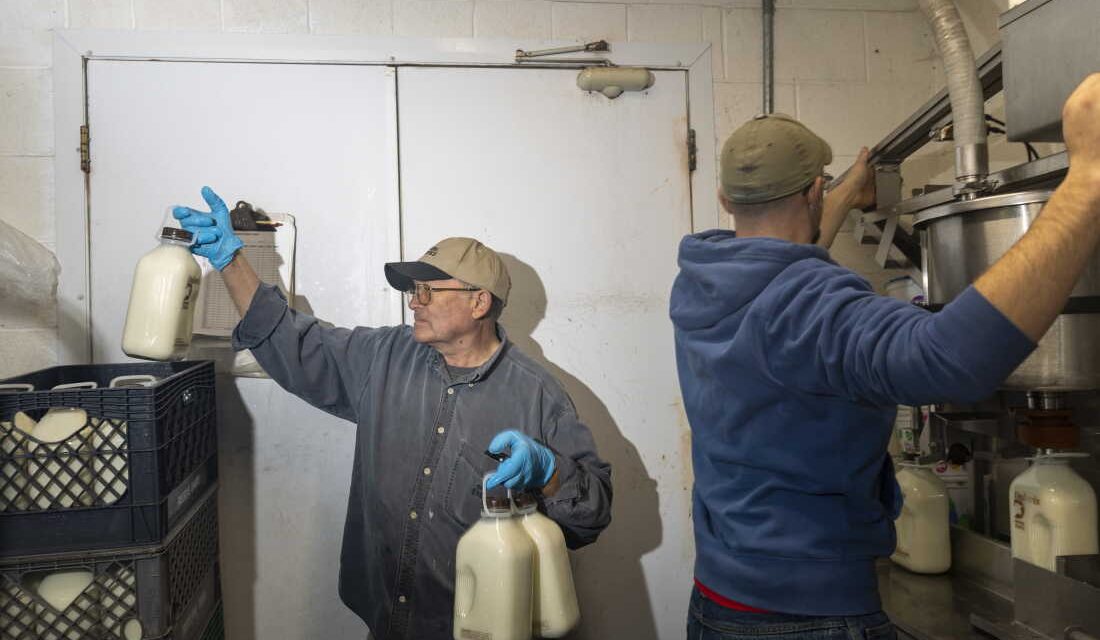
In Twin Falls, Idaho, Rick Naerebout’s office offers a view of the Snake River Canyon, a location once famous for Evel Knievel’s failed motorcycle jump in 1974. Today, Twin Falls is recognized for its significant role in the agricultural sector, especially through the thriving dairy industry. Yet, this success partly hinges on undocumented immigrant workers, with Naerebout estimating that 90% of workers in Idaho’s 350 dairies may lack legal status.
Naerebout, CEO of the Idaho Dairymen’s Association, argues these jobs don’t appeal to American workers due to their physical demands and exposure to elements. Despite President Trump’s immigration crackdown, American farmers have largely escaped its brunt so far, but there is growing fear over possible enforcement that might hinder their ability to sustain food production.
Farmers in Idaho have noted a lighter ICE presence compared to other states. Nonetheless, twice weekly, a deportation plane lands at Twin Falls airport, drawing protest from immigration activists like Heather Muth. These flights, though small, stir concern about their impact on the community.
In nearby Burley, Susan Rios, a farmworker activist, recounts how ICE crackdowns have forced some families to self-deport. Despite a relatively calm period nationwide, the immigration crisis has exacerbated worker shortages in local farms, challenging those who think immigrants are taking their jobs.
The reality is stark, with Idaho advertising thousands of farm jobs through the H2A visa program last year, and only receiving four local applications. Naerebout emphasizes that dairy jobs pay more than typical service jobs, yet still struggle to attract local labor.
This labor shortage is a critical issue for Idaho’s dairy industry, the fourth-largest milk producer in the U.S., as it requires year-round workers, not just seasonal ones. Consequently, they depend heavily on migrant labor since they are not eligible for H2A visas.
Idaho’s political landscape presents a unique challenge. Despite supporting Trump in past elections, Naerebout notes that administrations have been lenient with the dairy industry, yet the general Republican voter may not fully understand the complexities involved.
Although Idaho has not faced extensive raids, its dairy sector holds considerable political influence. Immigration attorney Brandy Perez credits this for maintaining a more moderate level of enforcement compared to other regions.
President Trump promised solutions for farmers dealing with undocumented workers. Naerebout remains hopeful but acknowledges the precarious situation, emphasizing the need for legislative solutions, like removing the seasonal visa requirement. Throughout these uncertainties, Idaho’s dairy farms continue to operate, ensuring daily milking despite the challenges.