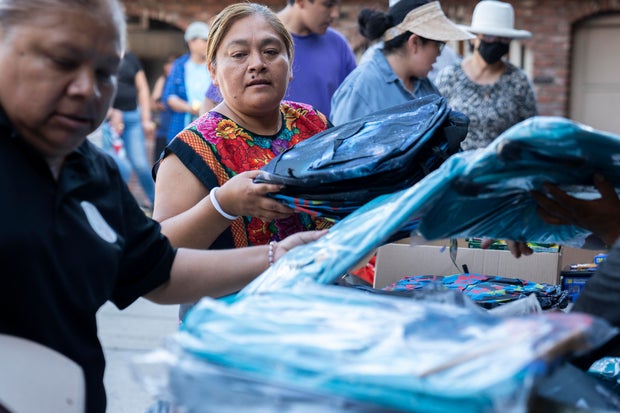
On a December morning, Norma Gómez faced a challenging question from a 6-year-old girl. The girl asked if Gómez was the person who would bring her mom back. The girl and her baby brother were left behind when their parents were taken by immigration agents in Oxnard, a community on the Southern California coast. Gómez, unable to give a definitive answer, offered what little comfort she could, bringing food, diapers, baby wipes, and clothes for the children and their caregiver neighbor.
Gómez is a project manager with the Mixteco Indigena Community Organizing Project. Her non-profit provides food assistance to immigrant families affected by Immigration and Customs Enforcement (ICE) raids. She has witnessed the lasting effects of these raids. An estimated 205,000 children had at least one parent detained by immigration authorities by April. The number has likely risen since then. The separation impacts children’s psychological well-being, disrupting families and forcing caregivers to manage housing, food, and medical needs alone. In some cases, children fend for themselves.
Even children with parents not directly affected by detentions face threats to their safety and health. Reports indicate that two children in the South died by suicide in February 2025, attributed to bullying over their family’s immigration status. Many immigrant families struggle with diminished access to medical care, food, tax credits, and other supports as governments reduce eligibility for immigrants with and without legal status. Fear of enforcement leads parents to avoid schools, doctors, and social activities. Some have also withdrawn their children from health and nutrition programs.
The situation affects millions, including numerous American citizen children. Roughly 1 in 4 U.S.-born children have an immigrant parent, with about 4.6 million having a parent who lacks legal status. Wendy Cervantes from the Center for Law and Social Policy voices concerns about the long-term effects on children, affecting their development and future stability. The distress among children from immigrant backgrounds is marked by emotional distress and anxiety over potential racial profiling by ICE.
“This type of stress can have long-term developmental harm and can really inhibit their ability to do well in school, to have good health outcomes, and to grow into thriving, stable adults.”
President Trump’s administration has focused on limiting immigrant family support. On his inauguration day, he attempted to end birthright citizenship for children of undocumented parents. Although the Supreme Court blocked the attempt, the administration has spent billions on immigration enforcement. Reports show 145,000 U.S. citizen children’s parents were detained by April. The administration also plans to revoke the temporary protected status (TPS) for over 1 million immigrants and stall the Deferred Action for Childhood Arrivals (DACA) renewals.
The administration argues that the crackdown frees resources such as jobs and housing, reducing pressure on public funding. Despite claims that deportations benefit American citizens, research indicates that mass deportations harm U.S. workers. Some government officials, including Stephen Miller, claim that immigration drains resources, though studies show immigrants’ economic contributions increase over time.
Trump’s recent policy changes, such as the denial of green cards for immigrants using public benefits, could mean millions of U.S. children losing access to healthcare support. Separation from parents causes trauma that leads to extended health issues, documented in studies estimating billions in annual healthcare spending linked to childhood trauma.
Many children in immigrant families experience anxiety. Emmanuel, a 13-year-old from Oxnard, expresses fear for his father’s safety as a farm laborer. Even young children are affected, often preparing for contingencies if their parents are detained. Healthcare professionals report increased referrals for mental health services for children from immigrant backgrounds.
Community organizations provide much-needed support, delivering groceries, counseling, and helping parents create plans for emergency childcare. Programs like the Family Case Management Program, terminated by the Trump administration, show potential for keeping families together while enforcing immigration laws. This approach is viewed as both effective and cost-efficient.
Mabel Alavez at Venice Family Clinic helps families stay together, preparing safety plans for children if parents face detention. Having grown up in an immigrant family, she recognizes the added pressures children face in these situations.
 Understanding Inflammation: Myths and Facts
  Calm Parenting: Strategies to Manage Stress
  Trump’s Executive Order to Combat Mosquitoes and Ticks in D.C.
  Overcoming Weight Loss Challenges: Brain Health and GLP-1 Medications
  Supporting Children’s Mental Health at Home: Practical Steps for Parents
  Abdul El-Sayed’s Strategy to Attract Health-Conscious Voters in Michigan