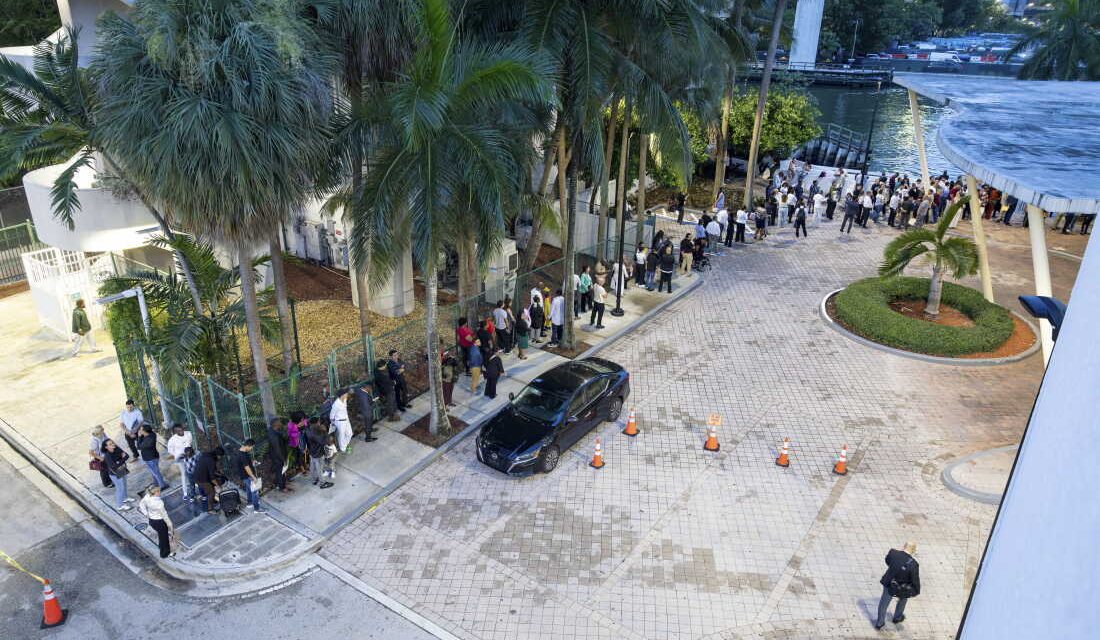
Miami’s Immigration Court is experiencing unprecedented congestion due to a new approach by the Trump administration. Mega master calendar hearings are resulting in extensive lines as individuals await their scheduled appearances.
Yerandy Gonzalez glanced at the sprawling queue before lighting a cigarette. “This is crazy, man,” he remarked in Spanish. Hundreds were lined up on a humid Tuesday morning outside the court. For many, this was their initial court visit.
Avene Jeanite, a 52-year-old from Haiti, was among those waiting. Last month, he accompanied a friend facing deportation, but today was his turn. “It wasn’t like this before — you’d approach the door and be let in,” Jeanite noted, reflecting on the changes.
The long lines are intentional. The Trump administration’s “mega master” calendar hearings aim to expedite deportations. Judges now handle over 100 cases simultaneously instead of the previous three dozen.
Officials claim this approach addresses a significant backlog. Critics argue it accelerates deportations unfairly. David Wilson of the American Immigration Lawyers Association described it as both effective and chaotic, leading to missed court notices and difficulty for immigrants in obtaining legal assistance.
A Justice Department spokesperson stated that reducing the backlog is a priority. Meanwhile, the Executive Office for Immigration Review plans to adjust schedules as more judges are added to ensure lawful case handling.
Since these hearings began, absentee deportations soared to record numbers. In July, over 54,000 nationwide missed their court dates, a 60% rise over recent months. The Miami court saw an increase from 1,383 orders in May to 2,886 in July, a 108% jump.
Courtrooms are overcrowded and chaotic. In courtroom 24, Judge Xavier Racine addressed 30 individuals at once, outlining their rights and assigning new court dates. Other judges scheduled hearings with even shorter notices.
Three factors contribute to the rising docket at Miami: high immigrant arrests, rescheduled court dates from 2027 to current times, and cases previously considered low priority now being addressed.
Yeriné, a Venezuelan mother, expressed her concerns. Her original 2027 appointment was moved to Tuesday. As she waited outside, she worried about the implications of the crowded dockets.
Billie Botch from the American Friends Service Committee highlighted operational problems. Extended waiting times result in individuals arriving late to hearings. “You can’t deny the correlation,” Botch explained. “More people and less preparation time equates to increased removal orders.”
 Activists Push for Nationwide Ban on Child Marriage in the U.S.
  Democratic Hopes and Historical Warnings in 2026 Senate Race
  Republicans Face Challenges Amidst Cost of Living Concerns
  A Different Kind of Fall for Congress This Year
  Cornel West and Sean Hannity Discuss Differences on Podcast
  Trump Unveils AI-Powered America.gov Platform