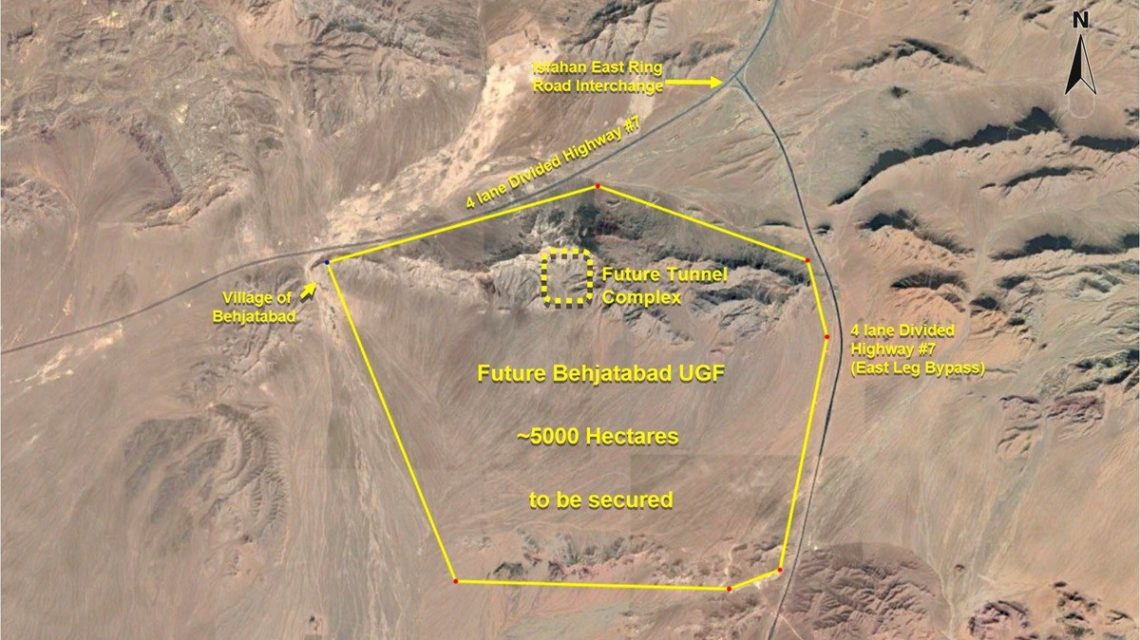
Iran is developing a facility between two major nuclear sites, according to the Institute for Science and International Security (ISIS). This site is positioned near Behjatabad, centrally located between the Isfahan and Natanz nuclear facilities. The distance from either site to Behjatabad is approximately 62 kilometers, or 40 miles.
Known for its uranium enrichment, Natanz was targeted by the U.S. during conflict periods, including a brief war in June 2025. The Isfahan complex includes facilities for reactor fuel manufacturing, chemical processing, and centrifuge production. It is also believed to house tunnels for storing highly enriched uranium. United Nations experts have calculated Iran’s stockpile of 60 percent enriched uranium exceeds 970 pounds, posing proliferation risks.
The Behjatabad site is expected to cover an estimated 19 square miles. Its intentions remain unclear, although some speculate it might be a new missile base for the Islamic Revolutionary Guards Corps (IRGC). Research analyst Sam Lair from the Foreign Policy Research Institute suggests the tunnel entrances and other infrastructure bear similarities to other IRGC facilities.
Construction activities at Behjatabad commenced in December 2025, with rapid development following. By early 2026, a series of tunnels began taking shape. Satellite images from November 2026 revealed several features, including security checkpoints and multiple tunnel entrances.
The possibility of the site serving a nuclear purpose has not been dismissed, according to ISIS analysts. The White House and Iranian foreign ministry have been contacted for comments but have not yet responded.
Iran frequently situates its nuclear facilities within mountains or deep underground. This strategy complicates adversaries’ efforts to damage or gain intelligence about such sites. Former President Trump has suggested military action against Iran, specifically targeting Pickaxe Mountain, should new hostilities arise.
Pickaxe Mountain, also known as Mount Kolang, lies just over a mile from Natanz and is fortified underground. Iran has asserted no nuclear activity is ongoing there, but the International Atomic Energy Agency (IAEA) remains barred from accessing the site.
In previous conflict episodes, Iran’s deeply entrenched sites like Pickaxe Mountain have proven resistant to standard attacks. In 2025, U.S. forces utilized GBU-57 bunker busters at Fordow and Natanz but refrained from targeting Pickaxe Mountain. Satellite imagery indicates ongoing construction efforts, including enhanced security features and tunnel infrastructure improvements.
 Japan’s LDP Proposes Financial Support for Families to Counter Population Decline
 Netanyahu Faces Setback Amid Unity Government Talks
 The Silence of Women in Tech Regarding Jensen Huang’s Return
 Concerns Rise Over Death Sentence of Pakistani Christian Accused of Blasphemy
 The Controversy Surrounding Lake Ontario’s Renaming
 Pakistan to Bolster Saudi Defense Amid Houthi Attacks