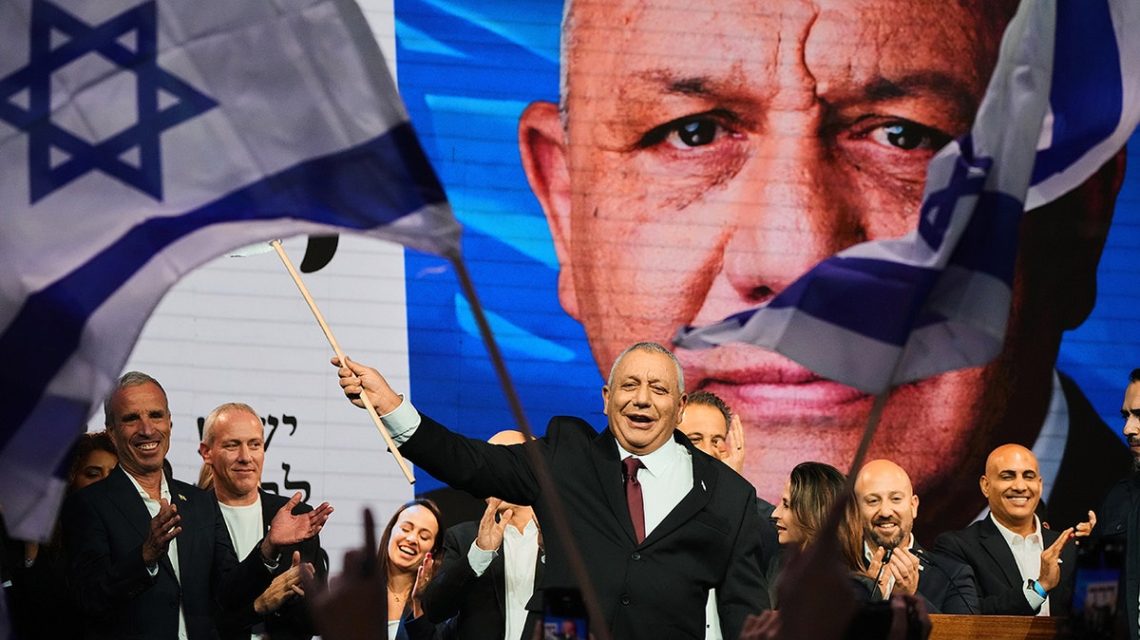
Following the recent elections in Israel, a political stalemate has emerged, as Benjamin Netanyahu and Gadi Eisenkot vie for the chance to form a government. The situation remains tense, with both leaders facing challenges in securing the necessary support from various factions.
President Herzog’s Decision
Israeli President Isaac Herzog has chosen opposition leader Gadi Eisenkot to attempt forming the next government. This decision was announced on November 7, with the mandate set for presentation the following day at 5 p.m. Israeli time. Eisenkot now faces a 28-day period, with the possibility of an additional 14 days, to build a coalition.
Eisenkot’s task, although given significant initial support, involves overcoming deep-seated disagreements among potential coalition partners. Herzog’s choice marks a crucial step that could potentially bring an end to Netanyahu’s tenure, but the negotiations are expected to be complex.
Coalition Building Challenges
During consultations with the newly elected parliament, Eisenkot secured recommendations from parties representing 67 of the 120 Knesset members. However, forming a coalition remains uncertain due to differing political agendas and vetoes within these endorsements. Netanyahu, meanwhile, received backing from 46 lawmakers.
The Joint List and Ra’am, two Arab-led parties contributing their support to Eisenkot, add to his endorsement count. Yet, this support complicates potential agreements with some parties who oppose coalition reliance on Arab factions.
Plans for a National Emergency Government
Eisenkot outlined his intention to form a National Emergency Government, initially gathering four parties seeking to replace Netanyahu, while allowing the possibility of other parties and lawmakers to join. He emphasized the nation’s urgent need for stability amid political and security challenges.
His proposed government centers around four principles: recognizing Israel as a Jewish and democratic state, adhering to the country’s Declaration of Independence values, compulsory service in some form, and dismantling Hamas’ capabilities.
Potential Compromises and Obstacles
In a significant turn, Avigdor Lieberman from the Yisrael Beitenu party showed a willingness to negotiate military conscription policies for ultra-Orthodox Jews, potentially easing coalition talks. However, the conscription issue continues to be a divisive topic, with religious parties demanding protection for yeshiva students.
Reaching a majority without relying on Arab parties remains a sticking point for Lieberman and others. Despite majority recommendations for Eisenkot, the lack of unanimous agreement on coalition composition could hinder government formation.
Netanyahu’s Position and Continuing Challenges
While Eisenkot works to form a government, Netanyahu stays on as the caretaker prime minister. The election results have prompted scrutiny, but the Central Elections Committee has upheld their integrity, dismissing claims of irregularities.
For Eisenkot, the presidential mandate signifies political advancement, yet converting this into a viable government requires resolving contentious domestic debates over military service and political cooperation with Arab factions. Failure to achieve this could result in prolonged political deadlock or another election.
 In-Flight Altercation on Qatar Airways Leads to Police and FBI Response
 Mayor Mamdani’s Policing Reform Plans
 Virginia Residents Sue Over Alleged Immigration Violations
 Gen Z Voter Shifts and Their Impact on the 2026 Midterm Elections
 Disappearance of US Senate Candidate Raises Questions
 DOJ Rule Change Reduces Appeal Time for Immigrants Facing Deportation