Sendai Nuclear Plant Reports No Damage
Japan’s nuclear authority informed the International Atomic Energy Agency that there was no damage to the Sendai Nuclear Power Plant following today’s earthquake. The IAEA, committed to monitoring developments, shared this update on X. After the 2011 disaster at Fukushima Daiichi, Japan’s nuclear plants receive heightened scrutiny during seismic events.
Japan Deploys Forces for Disaster Relief
Prime Minister Sanae Takaichi announced the dispatch of 300 Japan Self-Defense Forces troops to southern Japan for disaster assistance. This response highlights the priority given to addressing earthquake aftermaths.
Individuals Trapped in Mall Amidst Destruction
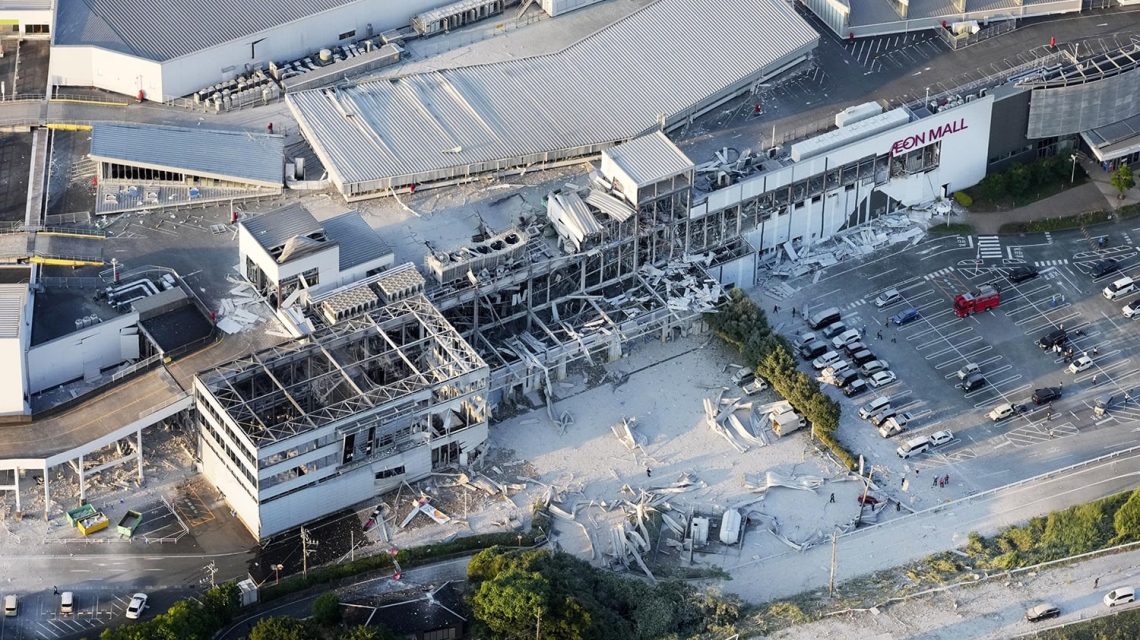
Local fire officials reported that several people remain trapped inside AEON Mall after the earthquake. An explosion was heard on the second floor, and broadcast footage showed numerous fire trucks at the scene. The mall’s ceilings and facade collapsed, leaving debris strewn across roads.
Infrastructure Damage and Public Response
Early images reveal severe damage from the 7.1 magnitude quake. Train services were halted in Fukuoka due to the impact, and Kumamoto Prefecture saw fallen shelves and office equipment. A store’s exterior wall in Kumamoto City also collapsed, emphasizing the infrastructure damage.
Buildings and Fires Wreak Havoc in Kumamoto
State broadcaster NHK indicated at least 12 building collapses, impacting various areas, particularly Yatsushiro in Kumamoto Prefecture. Aerial footage showed a compromised commercial building, along with a shrine and a fire outbreak in another structure. Seven fires reportedly started in the prefecture.
Details of the Earthquake’s Impact
A 7.1 earthquake hit southern Japan, causing a train derailment and injuries, while inducing a tsunami warning for nearby seas. This warning was later lifted. The quake’s impact reached the highest levels of Japan’s seismic scale, creating widespread concern.
Japan’s Earthquake Vulnerability Explained
Situated on the ‘Ring of Fire,’ Japan experiences frequent seismic activity. It’s a site where tectonic plates meet, causing numerous earthquakes and eruptions. Approximately 20% of global earthquakes measuring 6.0 or above occur here. Post-2011, Japan has enhanced its seismic warning systems and emergency measures significantly.
 British Police Arrest Man Suspected of Terror Plot
  Activists Push for Nationwide Ban on Child Marriage in the U.S.
  Investigation into Alleged Incident at Cornell University
  Rising Drone Threats Highlight Vulnerabilities in Moldova’s Airspace Defense
  Bolivia Faces Security Test Amid Unrest
  Incident on FlyDubai Flight Raises Security Concerns