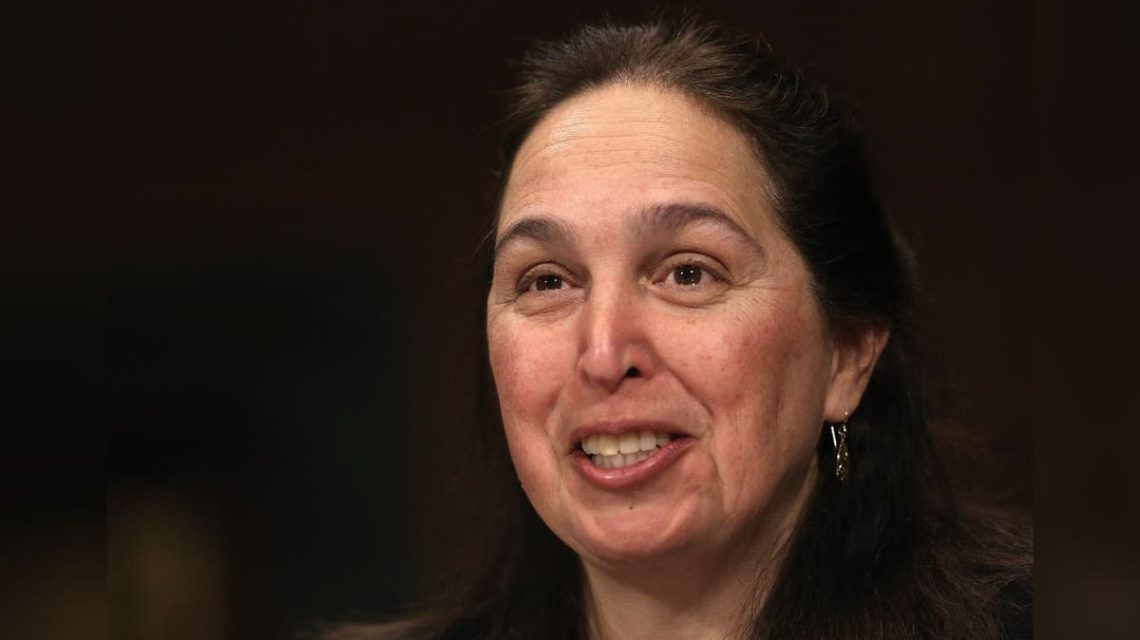
President Trump directed his administration to develop a plan to enhance the security of America’s elections. The primary goals include verifying citizenship, prosecuting fraudulent actions, and mailing ballots exclusively to verified citizens. Despite this initiative, Obama-appointed Boston Judge Indira Talwani has actively countered Trump’s order.
Talwani’s actions faced rebuke from the Supreme Court on August 24, yet she reinstated a hold on the order the following day. Her intent is seen as an attempt to delay measures to prevent noncitizens from illegally voting by mail in the coming election.
The pursuit of election integrity is essential for maintaining the Republic’s survival. Understanding this, Trump instructed the Justice Department and Department of Homeland Security to prosecute election fraud and collaborate with the U.S. Postal Service to ensure ballots are mailed only to verified citizens. Additionally, the administration was tasked with compiling citizen rolls to block illegal voting by noncitizens in federal elections.
The directives impact only those within the executive branch. Only American citizens are permitted to vote in federal elections.
Democratic opposition emerged in response to this directive, prompting lawsuits from 23 states and the District of Columbia. The League of Women Voters filed a similar suit. Talwani issued injunctions against these challenges.
In response, late last month, the Supreme Court intervened. Despite dissent from three Democrat-appointed justices, they stopped Talwani’s injunction against the states’ lawsuit. The Court argued the states lacked standing since they experienced no direct harm and that the challenge was premature without a finalized rule.
The Supreme Court did not consider the League of Women Voters suit, although the legal issues were similar. However, Talwani did not immediately lift her injunction after her case was remanded. She claimed a breach of her directive when the administration finalized the regulation.
Iowa Solicitor General Eric Wessan referred to her decision as an “advisory opinion,” lacking support for a contempt citation. Talwani finally reversed her decision but not before sparking significant controversy.
This scenario mirrors earlier judicial actions from Talwani. An instance includes her decision regarding Congress’ defunding of Planned Parenthood. Despite the passage of legislation to defund the organization, Talwani declared it unconstitutional, which was later overturned by the U.S. Court of Appeals for the First Circuit.
Recently, Talwani issued a temporary restraining order (TRO) on Trump’s finalized election security rule, seen as a strategy to delay appellate review. Although TROs are not usually appealable, they can last up to four weeks, potentially affecting the upcoming election.
Such actions contribute to perceptions of judicial overreach, with Talwani facing criticism for defying Supreme Court decisions, delivering advisory opinions, and allegedly politicizing her bench activities. Calls for her impeachment and reassignment of her cases have been expressed.
 Trump Unveils AI-Powered America.gov Platform
  Upcoming Congressional Elections: Key Districts to Watch
  Immigration Judge Allows Deportation of Wisconsin Mosque Leader Salah Sarsour
  President Trump’s Pre-Midterm Interview on Key Issues
  Trump’s 2024 Reelection and Evolving Voter Dynamics
  Defense Secretary Emerges as Key Player in the Trump Administration