
A trustee’s governance document rendered non-binding by a trustee’s disagreement loses its authority. This scenario mirrors recent judicial interventions. U.S. District Judge Allison Burroughs, for the second time since March, stayed the Trump administration’s decision to end Temporary Protected Status (TPS) for over 1,000 Somalis. This action followed the Supreme Court’s directive in Mullin v. Doe, which restricted district courts from revisiting TPS terminations except on constitutional grounds.
The stay reflects broader issues. Homeland Security described Burroughs’ order as resistance and procrastination. Rep. Andy Ogles criticized it as potential grounds for impeachment. Both suggest failings, but neither identifies why disregard for governing rules persists. The fundamental issue is that Congress hasn’t enforced robust legislative instruments. A stay represents a judicial halt requiring superior authority to cease.
Mullin v. Doe, though centered on Haiti and Syria, underscores this. The Supreme Court stressed that Congress prohibits judicial review of TPS termination on statutory grounds. Yet, they left space for constitutional claims to endure.
Somali plaintiffs utilized this legal avenue, shifting from statutory claims to constitutional ones, invoking equal protection and due process. Burroughs paused the termination to review these arguments. The First Circuit’s stance highlights the importance of constitutional review over mere claim existence.
The concern transcends Judge Burroughs and points to a wider judicial pattern. The Supreme Court aims to limit district court’s nationwide policy freezes to specific plaintiffs, as illustrated in Trump v. CASA. Yet, constitutional loopholes remain.
This issue doesn’t necessitate TPS abolition. The program addresses humanitarian needs, preventing returns to countries deemed unsafe by credible authorities. The Department of State advises against travel to Somalia due to security threats, contrasting with Homeland Security’s position on TPS termination suitability. This debate, ideally, rests with the courts, not political statements.
The crux lies in legislative shortcomings: a statute lacking deadlines on judicial TPS review. Following Mullin’s June 25 decision, Burroughs’ July 31 stay is symptomatic of this legislative oversight.
Addressing this requires congressional action on two fronts. Firstly, procedural: Updating the statute to direct constitutional TPS termination appeals to circuit courts. This aligns with other immigration review procedures under the REAL ID Act. Imposing a 60-day decision window for these courts facilitates timely rulings, preempting drawn-out pauses.
Secondly, oversight: Beyond impeachment, Congress wields more tools. Options include employing the Judicial Conduct and Disability Act, conducting hearings to scrutinize judicial reasoning, and appellate court oversight. Impeachment lacks feasibility and threatens a cyclical precedent harmful to future conservative judges. Appropriate judicial accountability mechanisms are essential.
Simultaneous execution of both tasks is feasible. Legislatively assigning TPS constitutional claims to circuit courts ensures structured resolutions. Employing rigorous judicial oversight deters constitutional misapplications against precedents. Failure to act ensures repetitious judicial stays. Unrealized legislative and judicial adjustments perpetuate these cycles.
Jay Rogers is an experienced financial professional in various investment fields. © 2026 Nexstar Media Inc.
 Military Voting Procedures and Security
  Marines Achieve Recruiting Success for 2026
  Justice Alito Remains Committed to Supreme Court Role
  Backlash Against Trump’s White House Photos
 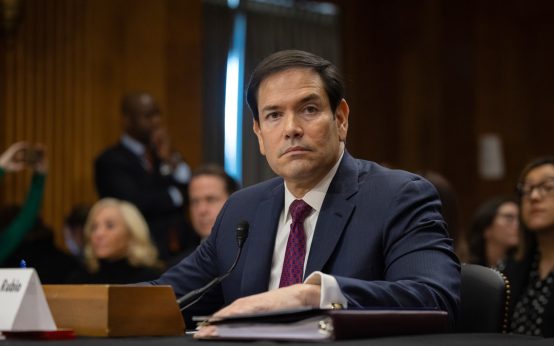 State Department Accuses Senate Democrats of ‘Grandstanding’ Over Venezuela Oil Deal
  Texas Senate Candidates Address Attacks with New Ads