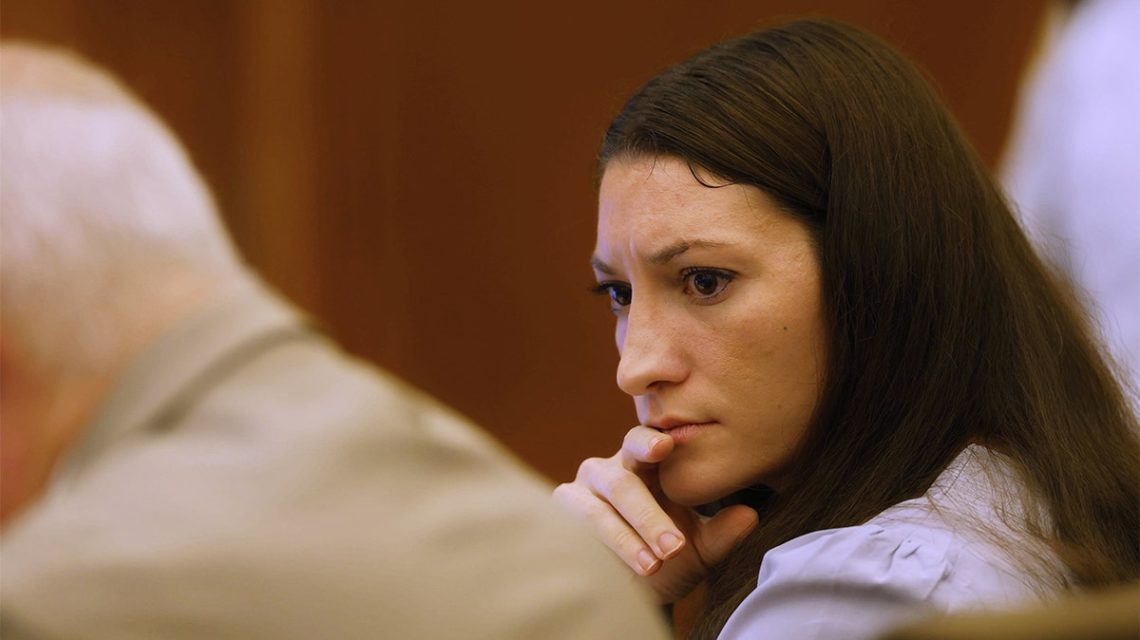
Lindsay Clancy responded affirmatively in court, repeatedly saying, “Yes, Your Honor,” as she permitted prosecutors to consider specific forensic facts as established. This occurred right before a state police trooper disclosed that usable fingerprints were not retrieved from a knife or three exercise bands during the investigation.
The focus of the Massachusetts mother’s murder trial narrows down to whether Clancy was criminally responsible for the deaths of her three children at their home in Duxbury. Before the jury entered, Judge William Sullivan queried Clancy on a stipulation addressing some evidence.
You understand that by signing the stipulation, you’re agreeing that the Commonwealth does not have to prove these certain facts that are contained in the stipulation,
Sullivan said. Do you understand that?
Clancy replied, Yes, Your Honor.
She confirmed that no one forced or threatened her into agreeing. Sullivan concluded that Clancy had accepted the stipulation “knowingly, intelligently, voluntarily, and willingly.”
Defense attorney Kevin Reddington explained that the agreement prevents prosecutors from bringing numerous witnesses solely to validate the handling of blood, bodily fluids, exercise bands, and DNA evidence.
We have not been contesting the government’s case in chief,
Reddington stated. The stipulation is neither a guilty plea nor an admission of Clancy’s criminal responsibility for the deaths of Cora, 5, Dawson, 3, and Callan, 8 months.
Margaret McLean, a former prosecutor and current law professor at Boston College, suggested the agreement helps the defense guide jurors from redundant forensic testimony toward Clancy’s mental state.
The legal strategy by the defense is to focus the jury on the central issue of criminal intent, or mens rea,
McLean conveyed to Fox News Digital. She emphasized that Clancy’s composed replies shouldn’t necessarily reflect her mental condition from January 24, 2023.
McLean stressed that the Commonwealth must prove Clancy was sane beyond a reasonable doubt at the crime time, not her current state.
Massachusetts State Police Trooper Jonathan O’Loughlin later testified about analyzing a knife and three exercise bands from the scene. He noted that a friction-ridge impression on the knife was unsuitable for identification.
There wasn’t enough characteristics or minutia for comparison,
O’Loughlin said, rendering the impression “no value.” The exercise bands also produced no viable fingerprints.
The bottom line is that you didn’t get any fingerprints,
Reddington said.
Correct,
O’Loughlin replied.
O’Loughlin described fingerprints as fragile, influenced by texture, environmental factors, movement, grip strength, or whether a surface was wiped. McLean pointed out that jurors might speculate about glove use or cleaning, hinting at planning.
However, the defense can highlight that jurors shouldn’t speculate without evidence. McLean added, They can’t speculate [about] things not in the evidence.