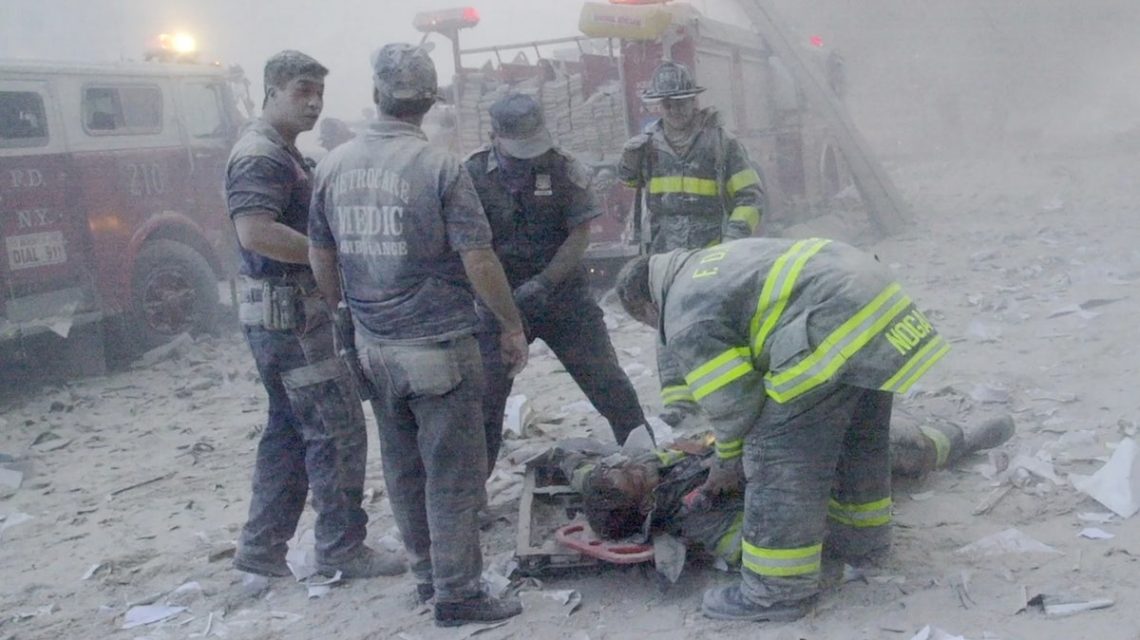
Many individuals who were present at Ground Zero on September 11, 2001, continue to suffer the lingering physical effects of their exposure. Lower Manhattan was shrouded in dust and debris from the collapse of the towers, forcing first responders and survivors to inhale toxic air.
According to the World Trade Center Health Program, more than 400,000 people faced exposure to toxic substances, physical injury risks, and stressful conditions in the aftermath of the attacks. By March 2025, 8,215 individuals enrolled in the program had passed away, with 5,844 of them being responders, as reported by the CDC. These numbers include deaths from all causes, not necessarily linked to 9/11 exposure.
A Responder’s Health Struggles
In a Fox News Digital interview, Mordechai Shedrowitzky, a volunteer EMT, recounted how his exposure during 9/11 led to numerous hospital visits and significant surgery. Shedrowitzky, originally from Queens, was residing in Brooklyn at the time and joined the response efforts later in the evening after assisting locally.
“My most vivid memory was entering Manhattan from Brooklyn,” Shedrowitzky recalled. “Approaching the tunnel, there were no lights, no electricity, [it was] pitch black.” The swirling debris inside the tunnel left a stark impression.
Once his team reached South Street Seaport, where his ambulance was stationed, Shedrowitzky described the dust as “overwhelming.” The engine of the vehicle struggled, perhaps due to the excessive dust intake.
Initially unaware of the air’s harmful effects, Shedrowitzky spent substantial time outside, bonding with others present. He felt relieved after leaving the scene, but years later began experiencing worsening symptoms.
His pre-existing asthma intensified annually, causing persistent coughing despite inhaler use.
Increasing Health Complications
Shedrowitzky shared how his condition steadily worsened, requiring oral steroids and leading to frequent respiratory infections and hospital stays. Initially unclear of the connection, his health issues were eventually linked to his exposure during 9/11.
In 2019, his symptoms, including a relentless cough unresponsive to substantial steroid and antibiotic treatment, became more severe.
Shedrowitzky was connected with the WTC Health Program, where his condition was monitored and classified as related to 9/11 exposure. He was diagnosed with tracheobronchomalacia, a condition that causes the windpipe and airway walls to collapse during breathing.
He underwent a tracheobronchoplasty in 2024, aiming to reinforce his trachea and main bronchi.
Two years post-surgery, Shedrowitzky reported improvement, though he still faces occasional infections. He hopes to resume work as a physical therapist.
Shedrowitzky’s condition, accompanied by his role as a father and grandfather, often hampered his ability to engage with his family. “Simple actions like lifting my children, even speaking with them,” were challenging, he said.
Treating Health Effects
Dr. Denise Harrison, a medical director at NYU’s WTC Health Program Clinical Center, has been involved in post-9/11 healthcare since 2002. The program now offers screening, monitoring, and treatment for individuals facing health issues due to their 9/11 exposure.
Harrison explained that the 9/11 dust was “highly alkaline,” irritating to airways, and unusually deposited both large and small particles in lower airways and beyond.
Patients frequently report sinus problems, asthma, and COPD, sometimes alongside other aerodigestive issues, complicating diagnoses and treatment.
Harrison noted the impact of intertwined conditions, such as asthma and PTSD, requiring collaborative healthcare efforts.
Shedrowitzky urged other responders experiencing health issues to seek assistance and establish links to their exposure on 9/11. “Continued monitoring is crucial,” he advised.
As of March 31, 2025, the WTC Health Program had over 130,000 current members, operating across NYU Langone Health, Mount Sinai, Northwell, Stony Brook, and Rutgers.
Harrison reaffirmed the persistent nature of health effects from 9/11 exposure, cautioning that they may be exacerbated by environmental factors and other conditions. Research and treatment efforts continue.
“Symptoms are still ongoing,” she emphasized, urging patience with the process to benefit both individual health and future disaster responses.
 Trump Administration Distributes ACA Refund Checks
  Higher Consumption of Ultra-Processed Foods Linked to Increased Health Risks
  Understanding Inflammation: Myths and Facts
  Calm Parenting: Strategies to Manage Stress
  Trump’s Executive Order to Combat Mosquitoes and Ticks in D.C.
  Overcoming Weight Loss Challenges: Brain Health and GLP-1 Medications