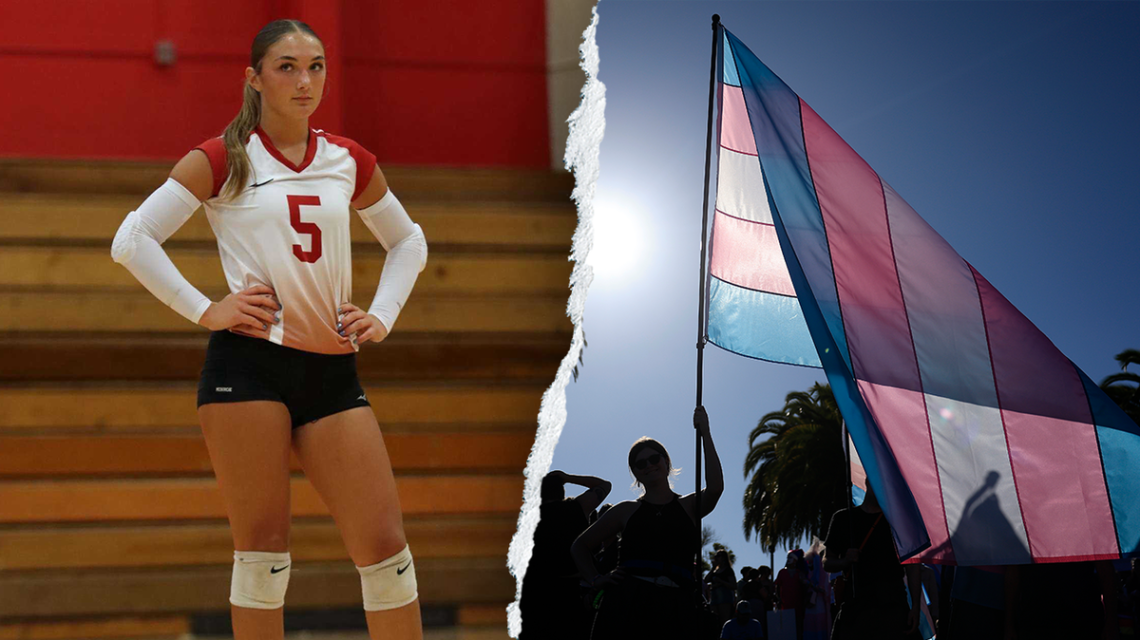
A Michigan father, Sean Lechner, claims his family experienced threats and racist insults after he and his daughter, Briley, voiced concerns over a transgender athlete in girls’ volleyball. Sean stated, “We’ve been threatened with violence and called Nazis.” The situation escalated to the point where the FBI reached out to the family for safety reasons.
Despite receiving support, the family also faced hostility for speaking out in favor of safeguarding girls’ sports. Briley, a student-athlete at Monroe High School, said her father bore the brunt of the abuse. She received messages accusing her of promoting hate. Briley emphasized her intentions, “I don’t want to spread negativity. I know what I’m standing up for and what I’m fighting for.”
Briley felt unsupported by political and educational leaders who should have given female athletes a fair environment. She expressed disappointment, stating, “It seems they are not prioritizing our safety and fairness.” Briley competed against a transgender athlete in Fall 2024 and early 2025, only realizing later that the athlete was biologically male. This prompted her father to file a Title IX complaint.
After discovering the athlete was male, Briley felt taken aback and expressed concern over not being informed beforehand. She noticed physical differences, saying the athlete could jump higher and hit the ball stronger. The Monroe team faced the trans athlete in a rematch, fully aware of the situation, which affected their focus and performance.
The controversy drew national attention when Briley spoke publicly after the season, highlighting the unfair treatment of female athletes. The U.S. Department of Education began investigating Monroe and Ann Arbor Public Schools for compelling female athletes to compete and share facilities with a biological male without addressing parents’ concerns adequately.
According to the Michigan High School Athletic Association, transgender eligibility decisions are made individually for postseason competitions, while schools decide for regular seasons. The Supreme Court’s June 30 ruling affirmed schools could maintain gender-separated teams but allowed states some discretion.
Briley acknowledged the opposing athlete might feel targeted, saying, “It might seem like we’re attacking them.” Yet, the experience has made her reconsider attending college in Michigan due to concerns over school policies. Her father, Sean, declared the threats strengthened their resolve, saying, “We turned it into purpose and devoted ourselves to advocating for what we think is right.”
He remained unwavering, stating, “We won’t be intimidated or silenced; we’ll persist until every female athlete secures the opportunities they deserve.” Monroe Public Schools, the Michigan High School Athletic Association, and Ann Arbor Public Schools have been asked for their comments on the issue.
 Cargo Plane Crash at Miami International Airport
  Nick Saban’s Comments on ESPN Spark Debate Over College Sports Regulations
  Marine Veteran Suing Oregon School District Over Curriculum Reimbursement
  Freddy’s American Adventure: From Soccer to College Football
  Tennessee Execution Halted as Issues Persist with Lethal Injection Protocol
  Brock Purdy’s Impressive Start in the 2026 NFL Season