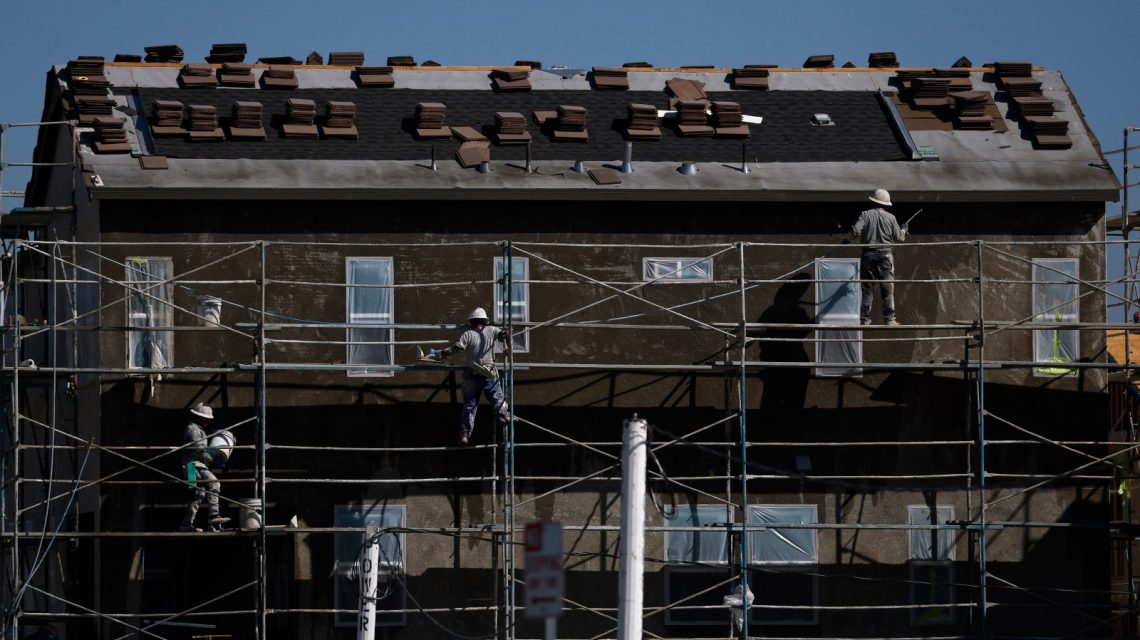
Many Americans who have not yet purchased a home feel that achieving homeownership is daunting due to escalating housing costs. This increase is especially pronounced following the pandemic. Nonetheless, parts of the country, particularly the Midwest, still offer hope. Here, owning a home remains possible and more affordable compared to other regions.
The Midwest’s Accessibility Advantage
A recent analysis by Newsweek demonstrates the Midwest’s dominance on a list highlighting states where housing is most accessible. Midwest states feature prominently among the top ten in Newsweek’s American Dream Index. This index evaluates U.S. ZIP codes based on six opportunity pillars crucial for achieving the American Dream, such as housing access. A score from 0 to 100 indicates whether a household with a standard income can reasonably afford to reside there.
Data used for these scores is publicly available. Newsweek calculated housing access scores using median home value-to-income ratios, rent affordability, and owner-occupancy rates. Notably, only one Southern state and one from the Northeast appear in the top ten, illustrating the disparity in affordability between the nation’s interior and its costly coasts.
Understanding Housing Access Scores
65 and over: Thriving
55 to 64: Doing Well
45 to 54: Holding Steady
35 to 44: Facing Challenges
35 and less: Struggling
According to the analysis, these states show the highest housing scores, indicating that homeownership is most attainable there:
- Iowa: 52.0
- West Virginia: 51.6
- South Dakota: 49.6
- Indiana: 48.8
- Kansas: 48.7
- Michigan: 48.4
- Nebraska: 48.0
- Missouri: 47.7
- Maine: 47.4
- Ohio: 47.4
Conversely, states with lower access scores, mostly located on the West and East coasts, include:
- District of Columbia: 12.5
- Hawaii: 16.2
- California: 16.6
- Nevada: 26.2
- New York: 26.8
- Oregon: 28.4
- Massachusetts: 30.1
- Washington: 30.5
- Colorado: 31.2
- Florida: 32.2
Midwest’s Resilience Against the Housing Crisis
The Midwest’s affordability compared to other regions results from lower demand, according to Chen Zhao, Redfin’s head of economic research. Fewer people gravitate there due to limited job prospects, enhancing affordability.
The region did not witness the dramatic price surges experienced by Southern markets, like Florida and Texas, during the pandemic. States such as Iowa, Indiana, Kansas, and Ohio saw median sales prices in June 2026 significantly lower than those in the Northeast and West.
Data from the Federal Housing Finance Agency reveals national home prices climbed approximately 51% from 2019 to 2025. The Northeast saw the greatest spike at nearly 66%. Yet, Iowa, Kansas, and Ohio maintain prices lower relative to incomes than California, New York, or Massachusetts.
This affordability allows buyers in the Midwest to face smaller down payments and allocate less income to housing. Though Midwestern incomes are not higher than those in the coastal states, home costs are markedly lower.
The Role of Home Building
The West Coast and Northeast have high home prices due to buyer popularity and limited supply. Hannah Jones of Realtor.com attributes this to decades of underbuilding relative to economic and population growth.
Economic hubs like San Francisco, New York, and Washington, D.C. attract high earners, elevating prices. By contrast, the Midwest has fewer geographic constraints, allowing expansion to meet demand.
While the Midwest does not lead in new home availability or permits, its lower demand balances its housing market—keeping prices stable compared to others.
This relative affordability makes the Midwest a region where homebuying remains feasible, despite national trends. Existing home sales, while down 2.4% nationwide in June, increased 2.1% in the Midwest.
 Navigating Los Angeles Real Estate on a Budget
  Mortgage Rates Return Above 7% After Twenty Months
  Inland Empire Grapples with Growing Housing Affordability Concerns
  Challenges in Los Angeles’ Multifamily Housing Market
  Jevon Carter Sells Chicago Town Home
  Charming River Forest Home With Custom Features