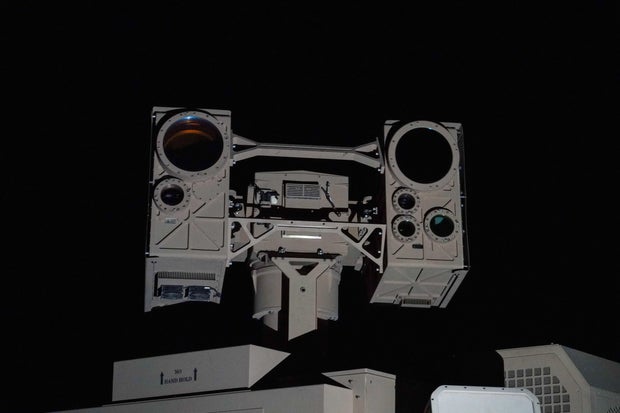
By September 7, 2026, military officials reported a significant decrease in drones surveilling the Rio Grande Valley following the use of a high-energy laser weapon system. This laser technology debuted by neutralizing three drones on August 25 and 26, marking a shift after extensive training and coordination with the Federal Aviation Administration (FAA). The training included an incident earlier this year when El Paso’s airport was temporarily closed due to safety concerns. The military’s collaboration with the FAA ensures civilian safety during laser operations.
While the U.S. military has tools to jam and redirect drones, the laser provides a method to eliminate drones deemed threats. Since the start of the year, the military has tackled 300 drones related to cartels, with the laser bringing down eleven in ten days. Army Col. Robert Felicio highlighted the tool’s impact, explaining that removing a threat completely prevents its reuse by adversaries.
Military leaders note the decrease in activity since the laser’s introduction, though other factors like cartel strategies may contribute. Air Force Gen. Gregory Guillot shared with lawmakers there are roughly 1,000 drone incursions monthly across the southern border. The Army’s Multi-Purpose High Energy Laser System has been vital, demonstrated in a recent test where soldiers used an Xbox controller to track and destroy a drone.
The Army’s laser works by emitting an invisible beam that quickly heats and targets drone parts. The testing showed damage to the drone’s propeller and battery. The system used, LOCUST, developed by AeroVironment, is being expanded along the border after the Army secured a $465 million contract for high energy lasers.
While not a foolproof solution, lasers enhance counter-drone capabilities. Rain and vapor can reduce beam effectiveness. Nevertheless, leaders like Admiral Daryl Caudle advocate for laser investment, citing their cost-effectiveness at $17.4 to $25 million per unit, with each shot costing around $3 compared to multi-million dollar interceptors.
Safety concerns persist, especially near civilians, prompting stringent FAA coordination. The U.S. government collaborates with Mexico to manage cross-border threats, acknowledging drone usage by cartels for reconnaissance and attacks. Lt. Ray Richards discussed the economic impact of reducing drone activity by 75%, affecting cartel operations tied to such technologies. Cartels have also deployed armed drones against rivals, with 221 incidents and 77 fatalities reported between 2021 and 2025 in Mexico.
Military officials assess drone threats to around 8,000 U.S. service members along the border. Col. Felicio pointed out the close proximity of U.S. personnel to drone activities. The laser technology helps manage repeated drone incursions, potentially disrupting cartel capabilities and offering a more permanent solution to drone threats.
 Cargo Plane Crash at Miami International Airport
  Marine Veteran Suing Oregon School District Over Curriculum Reimbursement
  Tennessee Execution Halted as Issues Persist with Lethal Injection Protocol
  Judge Dismisses Case Against Former Olympian Over Lincoln Memorial Incident
  Minnesota Family Files Civil Rights Lawsuit Over ICE Agent Shooting
  California Bans Child Marriage, Protecting Minors