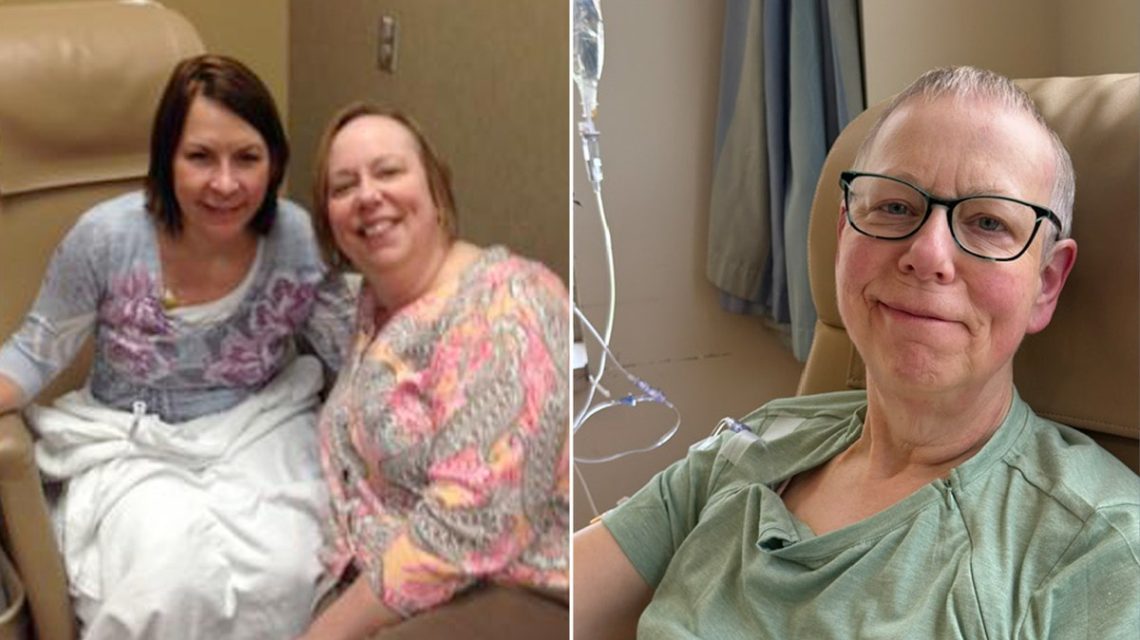
Becky Drexler, a Minnesota resident, faced a challenging diagnosis of ovarian cancer less than a year after her best friend Connie Dahl succumbed to the same illness. Drexler had supported Dahl through her stage 4 diagnosis in April 2015 until her passing in September 2017. During this difficult time, Drexler became involved with the Minnesota Ovarian Cancer Alliance (MOCA).
After retiring in 2017, Drexler planned to travel, garden, and volunteer. These plans changed when she was diagnosed with stage 3B high-grade serous ovarian cancer in July 2018. Initially, she dismissed symptoms such as frequent urination, constipation, and hip pain as part of aging. However, signs such as seeing dragonflies, which reminded her of Dahl, prompted her to see a doctor.
On her 57th birthday, a CT scan revealed masses on Drexler’s ovaries. She quickly underwent surgery and started six chemotherapy treatments. Throughout the difficult journey, she received support from family, friends, and MOCA, drawing inspiration from her late friend, Connie.
In 2020, Drexler experienced a recurrence of cancer, which led to another surgery. Her oncologist discussed treatment options, including targeted radiation. After completing radiation in January 2021, Drexler was declared as having “no evidence of disease” (NED) and started taking Lynparza, a PARP inhibitor not available during Dahl’s treatment.
By 2026, Drexler experienced another recurrence, this time around her small intestine. A subsequent surgery removed the tumor, followed by an 18-week treatment cycle involving carboplatin, taxol, and avastin. A mid-treatment PET scan showed positive results, with no visible cancer spots.
Throughout her battle, Drexler remained active with MOCA, participating in various roles, including serving on the board of directors. Reflecting on her journey, she highlights the advancements in medical treatment that offer hope for others facing similar diagnoses.
“Developing a reliable early detection test for ovarian cancer remains one of the most critical research goals,”said Drexler, underscoring the continued need for research efforts.
Symptoms to Watch For
Ovarian cancer’s symptoms can be subtle and easily overlooked. Dr. Brian M. Slomovitz from Mount Sinai Medical Center in Florida notes that symptoms such as stomach pains, bloating, and increased abdominal size often mimic everyday ailments like gastroenteritis.
Other symptoms include weight loss, decreased appetite, and persistent changes in body shape. Any symptoms persisting or worsening over one to two weeks should prompt a medical evaluation.
Advocacy and Early Detection
Drexler emphasizes the importance for women to listen to their bodies and advocate for themselves. Vague symptoms should not be dismissed as aging or stress-related. Prompt medical consultations could lead to earlier diagnosis and better outcomes.
Dr. Slomovitz highlights ongoing research efforts to develop reliable screening tests for ovarian cancer, which presently lack effective early detection methods. Currently, no routine screening is recommended for women at average risk.
When diagnosed at stage 1, the cure rate for ovarian cancer approaches 90%, showing the importance of detecting the disease early. Continued research is necessary to improve early diagnosis and improve survival rates.
 Understanding Inflammation: Myths and Facts
  Calm Parenting: Strategies to Manage Stress
  Trump’s Executive Order to Combat Mosquitoes and Ticks in D.C.
  Overcoming Weight Loss Challenges: Brain Health and GLP-1 Medications
  Supporting Children’s Mental Health at Home: Practical Steps for Parents
  Abdul El-Sayed’s Strategy to Attract Health-Conscious Voters in Michigan