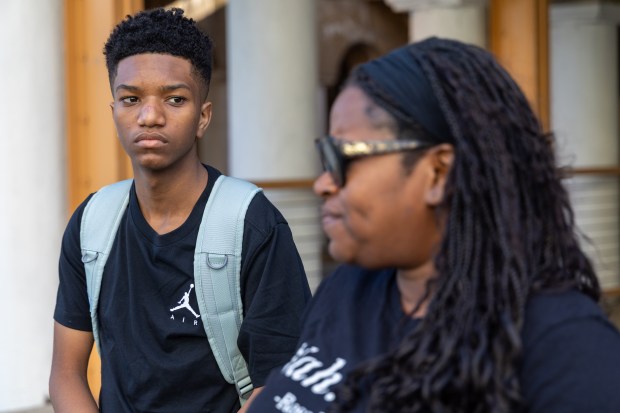
As students progress through the school year, parents accompany them, providing guidance and support. The back-to-school period unfolds with surprises and challenges from everyday school interactions. For many Black and brown families, one significant conversation persists: ‘the talk’ about racial profiling and systemic racism’s potential dangers.
Joy Sapp, a Chatham native, recalls discussing ‘the talk’ with her sons, Robert Wise III and Elliott Donaldson Jr., at young ages. Parents like Sapp continue revisiting this conversation, emphasizing safety, identifying biases, and de-escalating risky situations. The recent death of Nolan Wells, a Black teen, highlighted these discussions. Wells traveled to an island off Mississippi’s Gulf Coast with white friends, but his body was discovered days later. This raised questions from family and the Black community regarding the investigation’s speed and information dissemination. An independent autopsy deemed the cause of death ‘undetermined,’ and no indictments were brought by a grand jury.
Parents, like Jamie Nesbitt Golden, face concerns over interactions their children have with law enforcement. Her son, Langston Golden, had a tense encounter with plainclothes officers. It failed to adhere to some advice given in ‘the talk’ such as maintaining distance and involving parents. The incident prompted him to ride in Ubers temporarily and use public transport cautiously.
Riana Elyse Anderson, a psychologist, explores coping strategies to handle race-related stress through her app, Teens Navigating the Talk. Regarding Wells’ case, Anderson notes its complexity and the mistakes adolescents make. She emphasizes the importance of these conversations for psychological well-being, aiding youth in processing experiences and managing stress.
Sapp stresses the continued need for ‘the talk,’ focusing on navigating police interactions, unsafe parties, and awareness in college settings. She notes, ‘Too many Black and brown kids aren’t making it home.’
Anderson asserts early conversations are beneficial, utilizing literature and understanding discrimination to make the dialogue developmentally appropriate. Her program for Black families targets ages 10 to 14, aiming to unpack feelings and improve communication. As Anderson mentions, ‘I love you and want to ensure your safety’ can kick-start discussions, fostering understanding and support.
 Why Memorizing Facts Still Matters in the Age of AI
 Illinois Receives Major Settlement from Meta to Address Youth Screen Time and Mental Health
 Concerns Rise Over Hiring Practices Following Arrests in NYC Schools
 Cornell PhD Student Sues University over Harassment and Discrimination
 Pritzker Faces Criticism Over Scholarship Program Decision
 Student-Loan Borrowers Notified of Ineligibility for Income-Based Payments