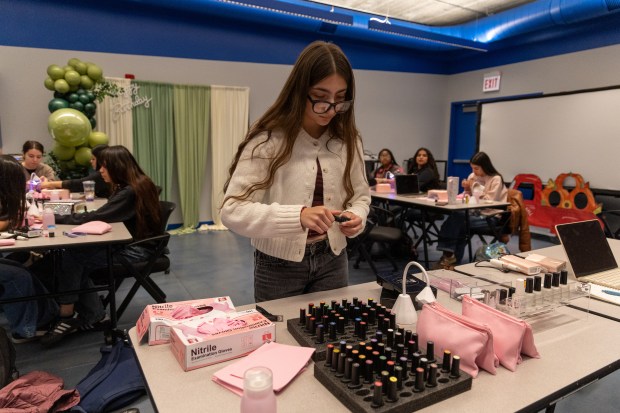
Liliana Villarreal, aged 18, believes she spends less time on her phone compared to most of her peers. As a youth leader at the Brighton Park Neighborhood Council in Southwest Chicago, she is in the process of applying to colleges to study pediatric nursing. Her daily phone usage hovers around six hours. In contrast, she notes that many teenagers her age are logged on almost constantly.
Advocates propose that the entities responsible for excessive screen time should help resolve it. Illinois has secured up to $768 million from Meta as part of a settlement with several states. These states accused the parent company of Facebook and Instagram of damaging children’s mental health. Numerous groups are now clamoring for a share of these funds.
The Brighton Park Neighborhood Council and other nonprofits want to use the money to create in-person programs. These would provide young people with alternatives to being glued to screens. Notable organizations like the Boys & Girls Clubs of America and the YMCA support this initiative. Conversely, the powerful Chicago Teachers Union and Illinois Federation of Teachers wish to use the funds to support schools.
Kwame Raoul, Illinois Attorney General, stated that he plans to administer the money carefully. He highlights the need for a thoughtful grant-making process. Raoul’s office is working through the details of allocating these resources.
“I’m not pointing a finger at anybody, but we haven’t always had in this state the best processes for grantmaking,” Raoul said. “While I hear the people that are calling out, saying, ‘Hey … these resources are desperately needed here or there’ — we’re going to be very methodical about it.”
In August, Raoul revealed that Meta would pay up to $17.1 billion across the states that accused the company of causing mental health issues in children. The settlement includes improved safety measures for kids on Facebook and Instagram. Part of the payout depends on whether other social media platforms implement similar safety measures.
The Potential of New Programs
Settlement funds are earmarked for initiatives that address Meta’s alleged harmful effects. Suggested uses include suicide hotlines, training for medical providers, and programs to enhance youth mental health.
The political and cultural landscape for social media firms remains dynamic, with an increasing number of lawsuits over privacy breaches and negative impacts on children. A variety of nonprofits now have the chance to apply for the settlement money.
A prime example is the Brighton Park Neighborhood Council, promoting genuine, in-person interactions. Adilene Barragan, a program manager at BPNC, believes that youngsters thrive on face-to-face connections. They just need the opportunity and financial support to facilitate it.
Patrick Brosnan, executive director of BPNC, expressed optimism. The money would allow the organization to maintain programs despite previous cuts to federal funding.
The Illinois after-school advocacy coalition ACT Now is supporting this focus, aligning with the nationwide initiative Fund IRL. Major nonprofits endorse using settlement dollars for community programs.
Debate Over Educational Use
The teachers’ unions, however, argue for the funds’ use in bolstering school budgets. Although some evidence suggests the settlement should fund mental health programs, unions observe a chance to augment school funding. They highlight the connection between Meta-induced issues and educational needs.
The Chicago Public Schools district aims to lessen funding gaps through the Evidence-Based Funding formula. Teacher unions hint that improvement in media literacy and awareness could happen within school settings.
The state government, alongside community voices, will determine how funds are allocated. The Attorney General’s office plans to devise a robust administrative framework to ensure efficient distribution.
Raoul acknowledges the funds’ limitations, emphasizing the need for community and school commitments to address mental health issues. Future payments will conclude after a decade, thus indicating the temporary nature of the funds.
In a broader context, the funds could also support efforts to teach parents how to safeguard kids against online threats. The overall approach aims for a collaborative, multifaceted use of resources.
The impactful involvement of people like Villarreal, who found purpose through in-person engagements, demonstrates the tangible benefits of community-centered programs. Her experience with BPNC challenges overreliance on digital interactions and highlights the upsides of real-life socialization.
 Understanding Iron Deficiency and How to Address It
 The Silence of Women in Tech Regarding Jensen Huang’s Return
 Mother Protects Infant during Los Angeles Earthquake
 Surge in Stroke Survivors and Costs Predicted by 2050
 A Journey Through Football’s Impact: Jim Musuraca’s Story and the Fight Against CTE
 The Controversy Surrounding Lake Ontario’s Renaming