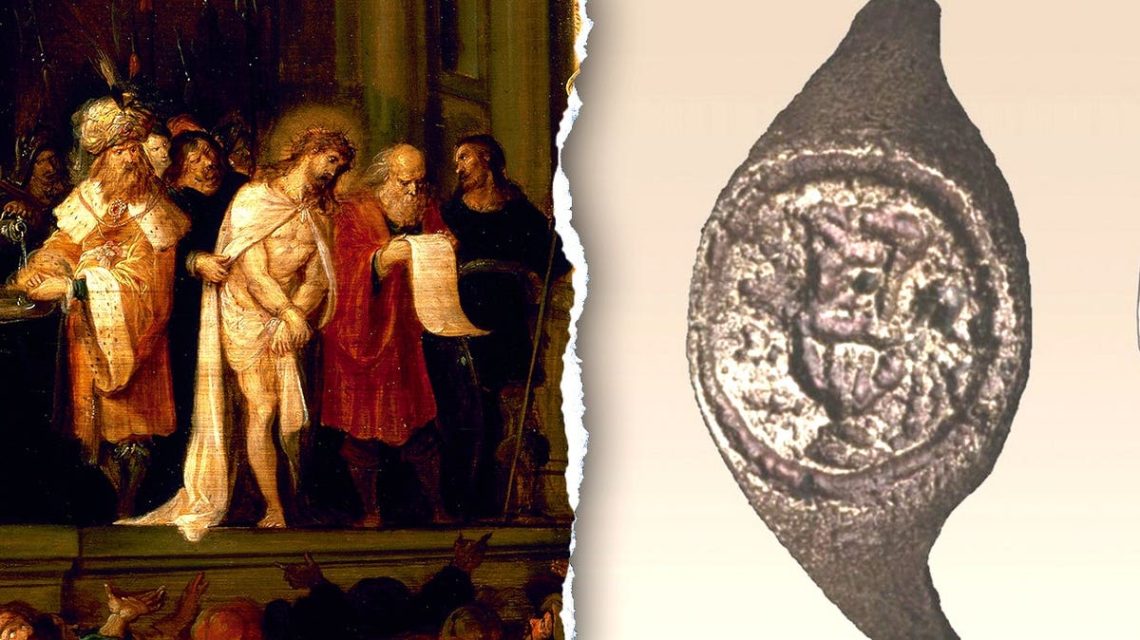
Research into an ancient ring inscribed with a name linked to Pontius Pilate provides new insights into the authority of the Roman governor 2,000 years after he condemned Jesus Christ. Found at Herodium, a fortress in the Judean desert, the ring has drawn scholarly attention since its discovery in the 1960s. Recent studies have spurred debate regarding its connection to Pilate.
The University of California, Los Angeles (UCLA) released details about the ring in 2018. Professor Catherine Bonesho recently addressed the ring’s implications in a published study in Palestine Exploration Quarterly. She concluded the Greek inscription is a transliteration of the Latin PILATO, meaning “for Pilate” or “to Pilate.” Previous interpretations suggested it was a Greek form for “belonging to Pilate.” Bonesho argued the ring likely did not belong to Pilate but rather to a lower-status worker carrying out tasks related to him.
“Understanding the ring gives us more insight into the Roman administration of early Roman Judea,” said Bonesho. She highlighted the low-quality craftsmanship, Greek transliteration, and the fact that seal rings were often used by enslaved or formerly enslaved workers. These elements provide clues about the social and political dynamics of the time.
Historian Candida Moss suggested the ring’s usage by subordinates under Pilate’s authority could provide answers to historical puzzles. The discussion surrounds the ring’s inexpensive design, unexpected for a governor. Moss theorized subordinates acting on Pilate’s behalf may have used the ring to authenticate decisions, reflecting Roman bureaucratic practices.
Beyond archaeological revelations, the ring may offer biblical insights related to Jesus’ crucifixion. Specifically, it relates to the Gospel of John, where Pilate’s role in proclaiming Jesus as “King of the Jews” is mentioned. Moss noted that this act may have been performed by Pilate’s deputy, yet attributed to Pilate.
These research efforts highlight the ring’s significance in understanding historical narratives of Pilate’s time. By examining these details, scholars contribute to a deeper comprehension of Roman and biblical histories.
 Possible 19th-Century Shipwreck Exposed by Nor’easter in Nantucket
  Midwest Underground Railroad Network Gains National Recognition
  Art Collective Critiques Administration with Mall Installation
  American Hagwon: A Tale of Family and the Korean Diaspora
  Volunteer Enthusiasm Shines at Frank Lloyd Wright Home and Studio
  Bible’s Role in Times of War