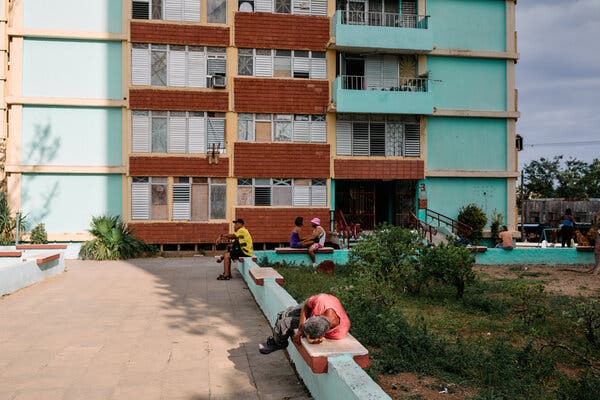
The U.S. oil blockade has severely affected access to cooking gas for millions of Cubans. In Santiago de Cuba, a symbolic location for the Cuban revolution, residents of large apartment towers find themselves relying on charcoal and firewood for cooking.
This month, amidst five towering 18-story apartment buildings in Santiago de Cuba, a significant energy crisis unfolds. The blockade has forced individuals like Yusimi Castellano to adapt to new, often hazardous cooking methods. Using a makeshift setup, she combines charcoal with Styrofoam and plastic as kindling to prepare meals for her family.
Noxious smoke fills her home on the 18th floor, drifting towards the historic military barracks associated with the start of the Cuban Revolution. Despite the health risks such as worsening asthma symptoms, Ms. Castellano persists: “If I don’t cook, I die,” she remarked.
The reliance on manual cooking techniques is now common in the residential complex, once emblematic of the revolution’s promise. In these buildings, each containing 120 apartments, many are pushed to the extreme of scavenging for firewood due to the unaffordable cost of charcoal.
“I shouldn’t be cooking with charcoal,” Ms. Castellano admitted, while emphasizing the necessity of her actions to ensure survival.
 British Police Arrest Man Suspected of Terror Plot
  Activists Push for Nationwide Ban on Child Marriage in the U.S.
  Investigation into Alleged Incident at Cornell University
  Rising Drone Threats Highlight Vulnerabilities in Moldova’s Airspace Defense
  Bolivia Faces Security Test Amid Unrest
  Incident on FlyDubai Flight Raises Security Concerns