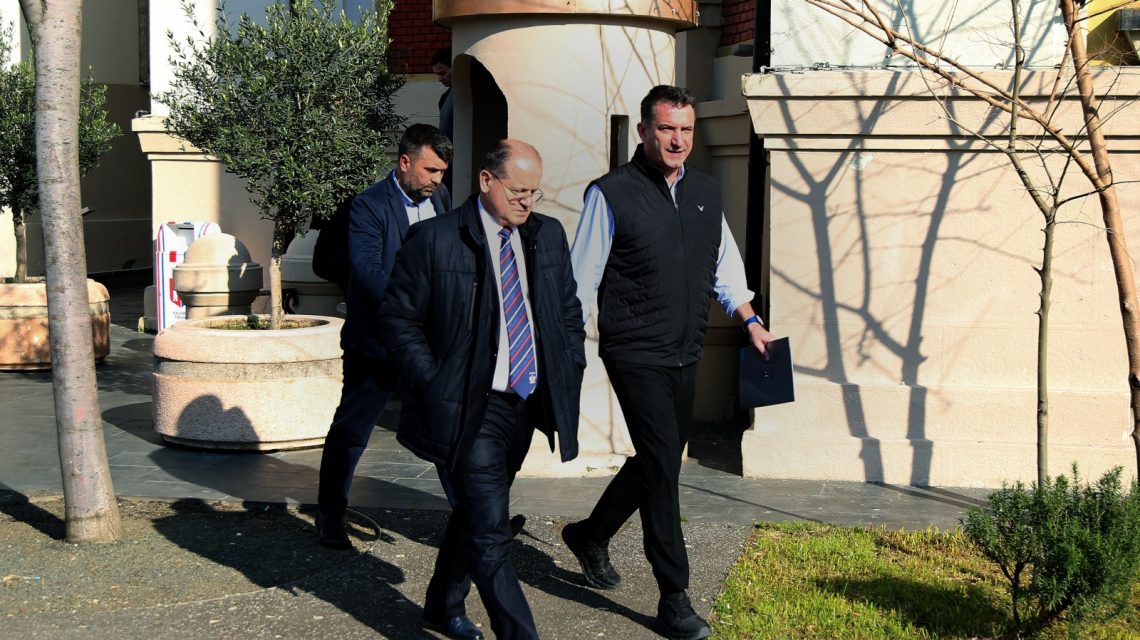
In February 2025, Albanian authorities detained Erion Veliaj, the mayor of Tirana for three terms. Eighteen months have passed, yet he remains incarcerated without a conviction. The ongoing debates in Albania’s courts focus on the legality of his prolonged detention. This situation has left the capital of a NATO member state managed without its elected leader.
Such use of legal mechanisms to sideline political adversaries is popularly termed as ‘lawfare’ in America. This tactic is not confined to the U.S., with examples surfacing globally. Albania presents one of the clearest cases. The striking element in Albania’s scenario is the role players involved. The prosecutors aiming to keep the mayor in custody belong to SPAK, a body against corruption and organized crime, established in 2016 backed by American and European support, aiming at judicial reform.
Albania needed judicial reform due to rampant corruption and the exploitation of weak institutions by criminal networks. The underlying idea was straightforward: reinforce the justice system to yield cleaner governance, increased public trust, elevate investments, and accelerate EU integration. However, ten years later, SPAK, created to uphold the rule of law, is now the focus of questions surrounding that very principle.
Representative Keith Self from Texas has remarked on the growing judicial backlog, escalating from around 16,000 cases to about 200,000, leading citizens to wait up to 15 years for a verdict. More than half of the prison population awaits trial, ranking among the highest in Europe. The European Convention on Human Rights mandates pretrial detention to be an exceptional measure only under certain conditions, yet it appears customary in Albania.
This situation applies to the Tirana mayor. A report by the Council of Europe’s Venice Commission criticized practices that automatically suspend or replace mayors before trial, undermining democratic values and the presumption of innocence. In Veliaj’s case, a detention order rather than a verdict prevents him from fulfilling his elected duties.
Prosecutors need credible evidence to pursue cases that extend to city hall, while also adhering to legal standards themselves. Anti-corruption efforts retain legitimacy only by respecting due process, a standard unmet by holding an individual without a verdict for so long. Albania’s Constitutional Court has twice ruled in favor of Veliaj, safeguarding his mandate and commanding a re-evaluation of his detention’s validity.
This pattern resonates with my experience observing similar situations. With years of working alongside President Donald Trump, notably in the White House as an envoy to the Middle East, I saw attempts to gain through legal processes what wasn’t achieved electorally. Ultimately, voters decide.
Globally, nations face comparable challenges. The prosecution of Prime Minister Benjamin Netanyahu remains contentious in Israel. Argentina’s President Javier Milei faces investigative scrutiny. France anticipates court decisions affecting Marine Le Pen’s political ambitions. Brazil grapples with the legal situation of former President Jair Bolsonaro. Each instance carries unique specifics, warranting individual national judgment.
The recurring pattern is alarming: in democracies worldwide, criminal charges are increasingly utilized as political tools, often targeting elected leaders. Western nations, having supported the establishment of SPAK, have a vested interest in observing Albania’s unfolding events. A compromised justice system lends leverage to autocratic figures criticizing selective application of the law.
The fallout is both political and economic. Having recently considered business engagements in the Balkans, I’ve witnessed how international companies assess Albania’s investment environment. Despite recognizing potential, the State Department’s 2025 report identifies challenges like judicial corruption, inefficient contract enforcement, money laundering concerns, and fluctuating regulations.
Foreign executives may not dwindle on Albanian political intricacies, but prolonged detention headlines are indicative, deterring business interests toward more stable environments. The impact of such decisions goes unnoticed by the authorities ordering detentions but is felt by Albanian citizens through unrealized employment and unpaid wages.
Albania need not forsake anti-corruption to uphold the rule of law. Successful nations integrate both, acknowledging their interdependence. A decade ago, Albania aimed to strip unchecked power from corrupt entities. However, the detention of Tirana’s mayor without trial suggests that power merely shifted, notably into prosecution offices. Albania should finalize its reforms by ensuring that all—including those combating corruption—act lawfully.
Jason D. Greenblatt served as Middle East envoy in President Trump’s administration and authored ‘In the Path of Abraham.’ He founded Abraham Venture LLC and publishes a Substack titled ‘How to Watch.’
 The Trump Team’s Challenge to the Military Leadership
  Maryland First State to Restrict Electronic Pricing in Grocery Stores
  British Police Arrest Man Suspected of Terror Plot
  Activists Push for Nationwide Ban on Child Marriage in the U.S.
  Democratic Hopes and Historical Warnings in 2026 Senate Race
  Republicans Face Challenges Amidst Cost of Living Concerns