For some time, a large portion of Americans have reported that their incomes do not match the rising inflation rates. Many feel that President Trump is not sufficiently addressing this issue. Relief is not evident from either political party, as both are viewed unfavorably regarding their efforts to address the cost of living.
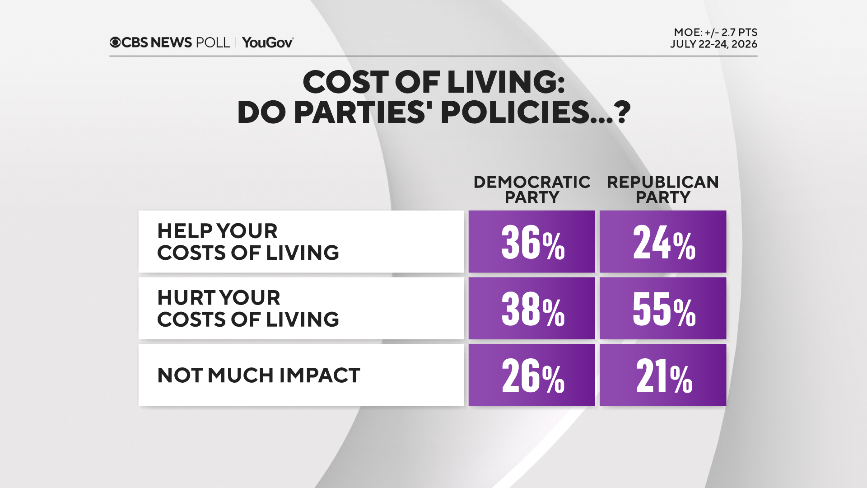
According to a recent CBS News/YouGov survey, Americans are more critical of Republican policies. A majority believe that GOP policies exacerbate economic challenges rather than alleviate them. This perception is linked to the president’s low approval ratings on managing inflation, with many respondents expressing that his policies negatively impact their financial situations.
While the Democrats perform slightly better compared to Republicans, only one-third of respondents feel Democrats are helping with the cost of living. Overall, their policies are perceived as having a slightly negative effect as well. On broader economic policy issues, there is an even split in public opinion.
Regarding immigration policy, Trump and Republicans hold a slight advantage over Democrats. However, both parties face challenges. Approval for the administration’s deportation program has declined, closely tied to unfavorable views of current immigration policies. Republican support is primarily concentrated within the GOP base, with President Trump receiving higher marks for immigration than inflation management.
Democrats, on the other hand, encounter criticism for not sufficiently prioritizing the interests of long-term citizens over recent immigrants.
Voting and Election Procedures
Public opinion on U.S. elections and voting processes remains stable since President Trump’s recent primetime address on the topic. Confidence levels in election integrity have not changed.
There is strong bipartisan support for requiring a photo ID to vote. Most Americans view election management as a state responsibility, preferring state control over federal intervention by the Trump administration.
Currently, more voters express a preference for Democratic control of Congress in the coming year over Republicans. This sentiment aligns with common patterns in midterm elections when the party outside the White House often gains ground. Specific voting outcomes will become clearer as the election approaches and narrow contests shape up.
The survey sampled 2,193 U.S. adults between July 22-24, 2026. The participants were selected to represent national demographics according to criteria such as gender, age, race, and education. The margin of error is ±2.7 points.
 State Department Simplifies Passport Process with Online Applications
 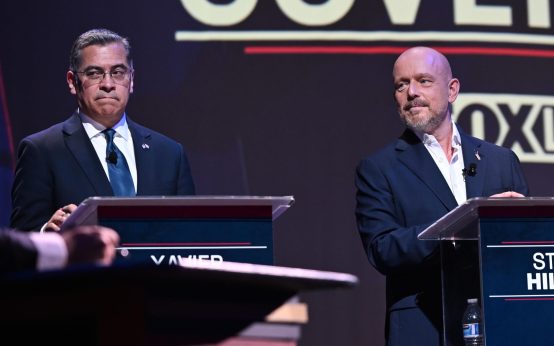 Becerra and Hilton Clash in California Gubernatorial Debate
  California Voters to Decide on $7.5 Billion State Research Fund
 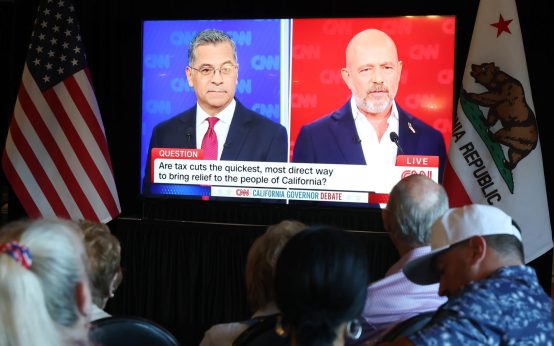 Highlights from the California Gubernatorial Debate: Becerra vs. Hilton
 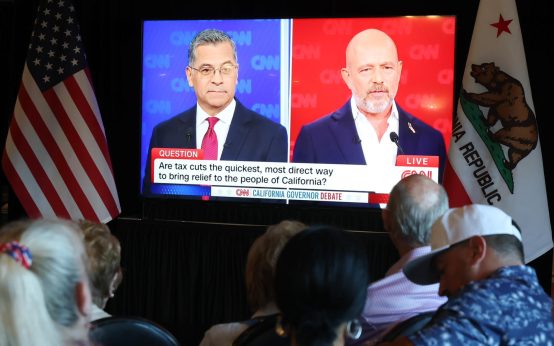 Becerra vs. Hilton: The Debate and Key Issues in the California Governor Race
  Senate Confirms New Labor Secretary