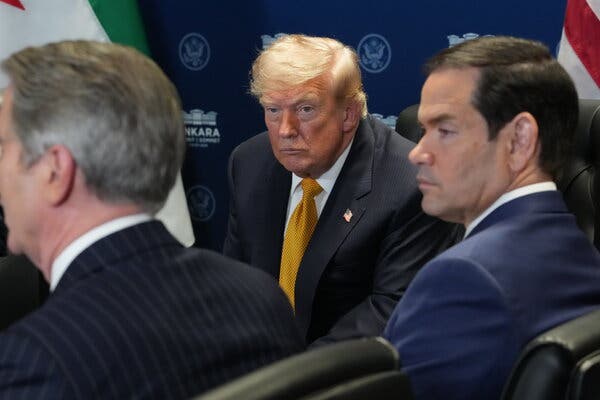
In a recent development, President Trump appears to be dealing with the fallout of a ceasefire agreement with Iran. The deal, hastily put together, lacks progress in addressing core issues fueling the conflict.
Just two weeks earlier, Trump had confidently proclaimed peace in the Middle East at the Great American State Fair. However, the cease-fire, now declared “over” within a month, was already showing signs of strain. Critics argue this was foreseeable, considering the ceasefire was based on a brief memorandum that bypassed significant matters to allow Trump to announce some form of agreement.
Trump is now facing the repercussions of his quick decision. His belief, influenced by his real estate background, that Iran would favor economic incentives over its longstanding revolutionary ideals has proven challenging. This situation leaves Trump with difficult choices regarding Iran’s nuclear ambitions, missile program, and internal repression.
In Ankara, Turkey, at the NATO summit, Trump reacted to recent hostilities by suggesting new military actions. These included capturing an Iranian oil processing site and targeting the nation’s infrastructure. Yet, he has previously made such threats without execution and stated he does not expect an escalation to full-scale war. Such actions would face limited domestic backing with upcoming midterm elections and concerns from key Republican figures.
An alternative involves reinstating a blockade of Iranian ports to disrupt their economy. While Trump claimed this could collapse Iran’s economy, past attempts have not succeeded in that endeavor.
 The Trump Team’s Challenge to the Military Leadership
  Maryland First State to Restrict Electronic Pricing in Grocery Stores
  Activists Push for Nationwide Ban on Child Marriage in the U.S.
  Democratic Hopes and Historical Warnings in 2026 Senate Race
  Republicans Face Challenges Amidst Cost of Living Concerns
 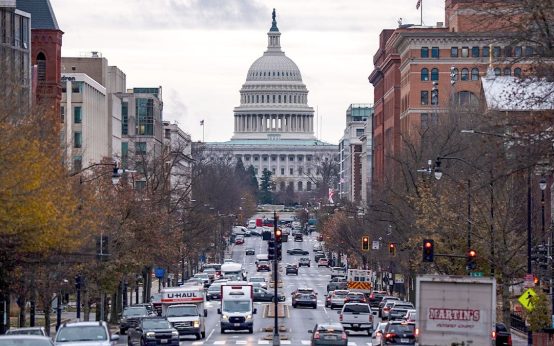 A Different Kind of Fall for Congress This Year