A group of business and transportation leaders has proposed a private train that promises to shuttle passengers from downtown Chicago to O’Hare International Airport in 15 minutes. However, the O’Hare Flyer project faces significant planning, financial, and regulatory challenges before it can proceed. The proposed service plans to utilize existing freight railroad tracks to connect downtown and the airport.
The group has not revealed ticket prices, but they assure the fare will be much less than a taxi or rideshare yet higher than the Chicago Transit Authority’s Blue Line, which currently takes around 45 minutes and costs between $2.50 and $5. The trains are envisioned to run every 15 minutes, starting at 4 a.m. and ending at 10 p.m.
Dave Lundy, CEO of Aileron Communications and lobbyist, spearheads the initiative alongside rail industry veteran Mark Walbrun and Kristi Lafleur, former Executive Director of the Illinois Tollway. They say the 2.25 billion dollar project will be funded entirely by private investment, without seeking government subsidies. Completion of the project could happen within five years.
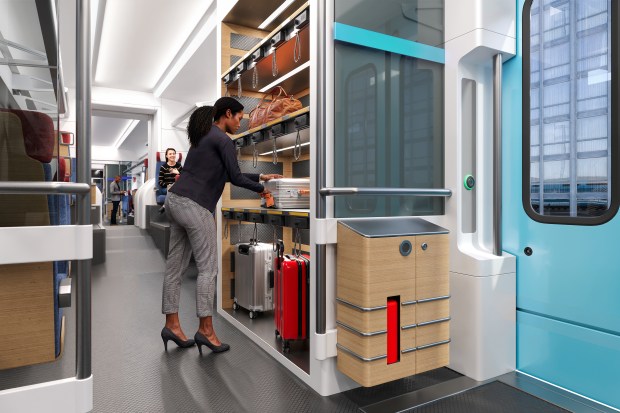
Lundy stated, “O’Hare is a world-class airport, or will be when Terminal 2 is built… Chicago is a world-class city. What we have lacked is a world-class way to connect the two.” An artist’s rendering displays a battery-powered train designed to cover the journey between downtown Chicago and O’Hare International Airport rapidly.
The idea of an express train to O’Hare is not new. In 2018, former Chicago Mayor Rahm Emanuel considered Elon Musk’s The Boring Company to build an express train to the airport using an unproven tunneling technology. That project, anticipated to reduce travel time to 12 minutes for $20-$25, never materialized.
Chicago Mayor Brandon Johnson has expressed support for the new proposal. “Innovative, sustainable, and affordable transportation solutions are crucial,” Johnson stated, expressing enthusiasm for investment opportunities that align with his administration’s vision.
The O’Hare Flyer has received backing from various sectors, including World Business Chicago, United Airlines, and the Chicago and Cook County Building and Construction Trades Council. However, the project must still address several challenges. Not all railroads needed for the project have granted track usage permits.
The group recently signed a letter of intent with CSX railroad, but a final agreement is yet to be finalized. Negotiations with Union Pacific and Canadian National railroads remain ongoing, though Canadian National has refrained from commenting. The Union Pacific spokesperson confirmed preliminary talks with no agreements in place yet.
The O’Hare Flyer requires approval from several federal regulatory bodies like the Federal Railroad Administration, the Surface Transportation Board, and the Federal Aviation Administration. Additionally, approval from Chicago’s City Council is anticipated.
On the financing side, Lundy was tight-lipped about the current fundraising status but mentioned a completed first round of private investments. The group is now pursuing an $18 million second round. The city might share some revenue, though the details of this arrangement are under discussion.
The train route would commence in the Loop, departing from city-owned property under Canal Street near the old main post office before connecting to Union Pacific tracks. It will then travel via the city’s West Side and northwest suburbs before reaching O’Hare’s Terminal 2.
Lundy compared the O’Hare express with similar services in cities like London and Hong Kong. Concerns have been raised that this express service may detract revenue from the CTA, which recently stabilized its finances with the help of state lawmakers; however, the Flyer team stresses that their service targets air travelers with offerings like luggage racks and baggage check options to their final destination.
Lundy remarked, “This is a different kind of service. Someone who opts for a $2.50 Blue Line ride might not choose to spend more on our service.”