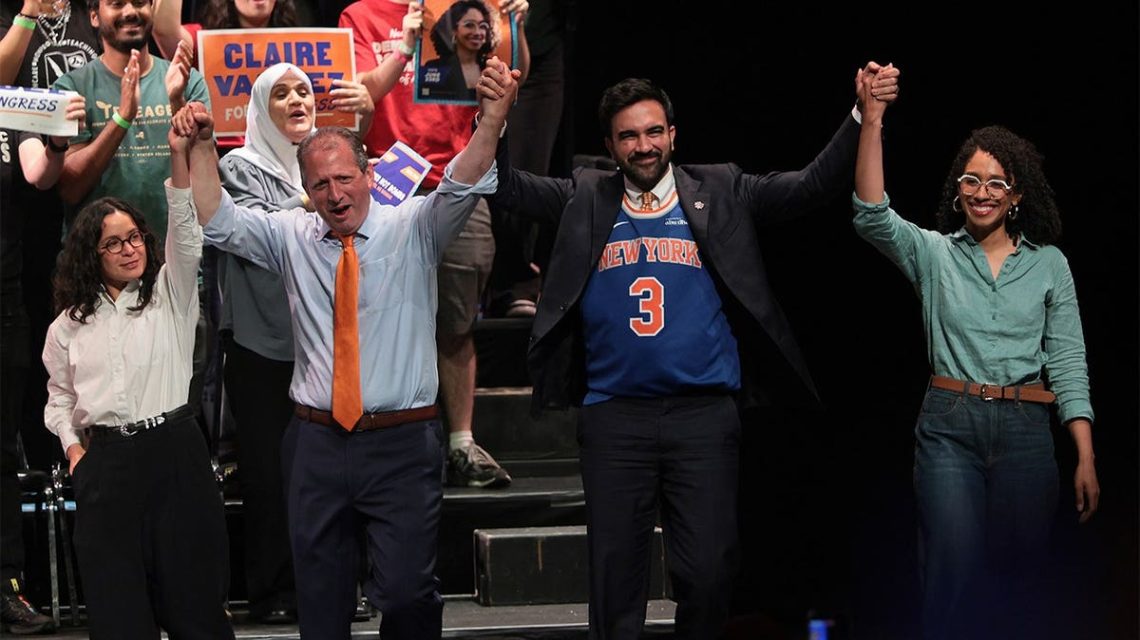
The Democratic Party faces a significant ideological shift as progressive victories, supported by movements like Democratic Socialists of America (DSA), challenge the traditional moderate stance within the party. Following wins by far-left and socialist candidates in deep-blue districts, the focus now moves to significant statewide contests in Michigan, Wisconsin, and Minnesota. These contests could have lasting impacts on the party and affect crucial seats in the upcoming elections.
Progressive Movement Gains Strength
Recently, progressive champion Sen. Bernie Sanders highlighted victories in mayoral races across major cities and various congressional elections. This illustrates the growing influence of the progressive movement. Upcoming primaries in Michigan and Wisconsin will test whether this influence can extend beyond specific districts to attain statewide power.
Backlash from Moderates
While progressives celebrate these victories, moderates within the Democratic Party express concern. Former New York Gov. Andrew Cuomo criticized socialist promises during an interview, asserting that such ideals are unrealistic. He argued that free services are unsustainable as someone must fund them.
Promises of free lunch, free buses, free bread, free everything. There’s no such thing as free. Someone always pays.
Controversy Surrounding Progressive Candidates
The DSA-backed candidates, including prominent challenger Melat Kiros, have upset long-standing incumbents, emboldening the progressive faction within the party. However, this shift has sparked internal debate. Van Jones, a Democratic political analyst, criticized extreme ideologies that he believes are regressive rather than progressive.
‘No police, no prisons, no borders’ is not progressive.
Democratic strategist Jamie Metzl urged the party to confront elements he perceives as detrimental to its core values.
Michigan’s High-Stakes Primary
The Michigan Senate primary is a critical battleground. The retiring Sen. Gary Peters supports Rep. Haley Stevens, favoring her moderate platform over that of progressive Abdul El-Sayed. El-Sayed, endorsed by Sanders and Rep. Alexandria Ocasio-Cortez, is campaigning on Medicare for All and controversial stances on international issues.
El-Sayed’s potential nomination concerns party leaders. They worry his leftward approach may threaten the Democrat-controlled Senate seat, particularly in a state carried narrowly by President Trump in the last presidential election.
Upcoming Primaries in Wisconsin and Minnesota
Wisconsin and Minnesota are also primed for pivotal primaries. In Wisconsin, Francesca Hong, a DSA-backed candidate, aims to succeed retiring Gov. Tony Evers. Her candidacy symbolizes the progressive momentum following recent wins in New York City.
Similarly, Minnesota sees Lt. Gov. Peggy Flanagan vying against moderate Rep. Angie Craig for a Senate seat. Both contests will significantly shape the party’s direction and impact its ability to retain congressional majorities.
Future of the Party
Veteran Democratic strategist Joe Caiazzo emphasized the importance of these contests. The opposing forces within the party underline the high stakes as they strive to maintain control in the upcoming elections. The outcome of these statewide battles will offer insight into the Democratic Party’s future strategic direction.
 Maryland First State to Restrict Electronic Pricing in Grocery Stores
  Activists Push for Nationwide Ban on Child Marriage in the U.S.
  Democratic Hopes and Historical Warnings in 2026 Senate Race
  Republicans Face Challenges Amidst Cost of Living Concerns
  A Different Kind of Fall for Congress This Year
  Cornel West and Sean Hannity Discuss Differences on Podcast