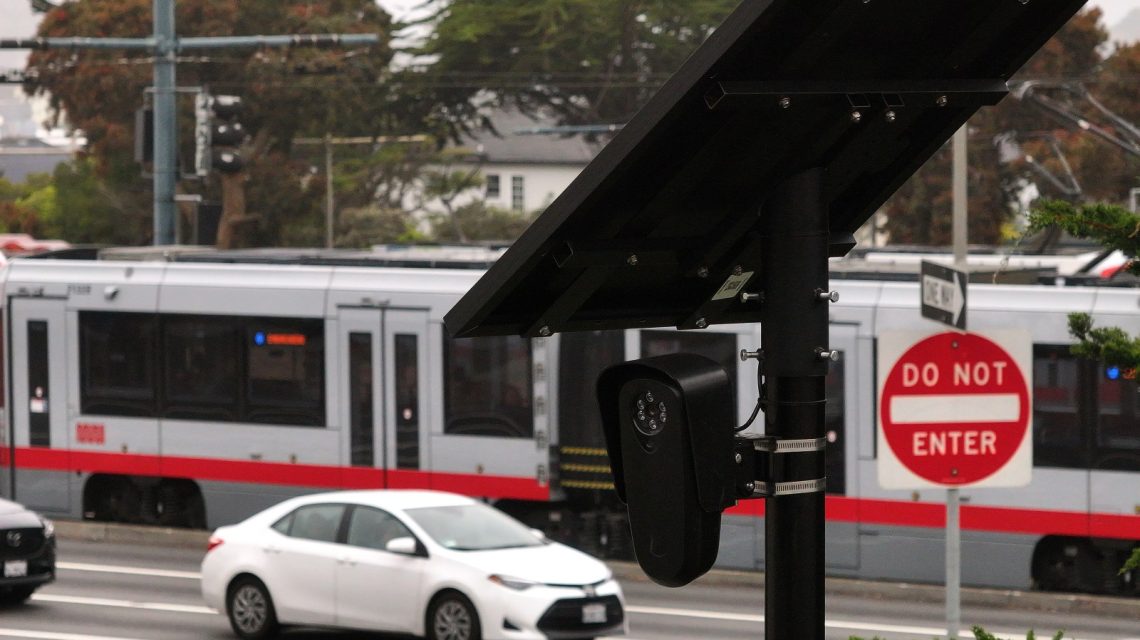
Representative Thomas Massie, a Republican from Kentucky, announced plans to introduce a bill aimed at removing federal support from municipalities and police departments that employ automatic license plate readers (ALPR) and similar surveillance systems. Massie, known for his strong views on privacy and government surveillance, revealed this initiative in a post on X.
He stated, “I’ll soon be sponsoring a bill to withhold federal money from municipalities and police departments that deploy Flock (and other style) cameras to surveil law-abiding citizens.” This proposal would affect systems like those produced by Flock Safety, an Atlanta-based provider of ALPR technology, which collaborates with over 5,000 law enforcement agencies in more than 6,000 communities across the U.S. These systems capture vehicle details along with time and location data.
Response from Flock Safety
A representative from Flock Safety expressed concern to Newsweek about the potential impact of Massie’s bill on public safety. They mentioned that withholding federal funds would significantly affect police departments relying on license plate reader technology. According to them, in 2025, Flock’s technology aided over one million public safety investigations, contributed to solving 20% of cases in affiliated jurisdictions, and assisted in finding over 10,000 missing persons.
The spokesperson added that instead of banning crucial public safety tools, Congress should implement stringent safeguards for accountability and oversight, ensuring responsible use of surveillance technologies. They emphasized the possibility of balancing privacy protection with equipping law enforcement to ensure community safety.
Broader Surveillance Debate
Massie’s announcement highlights a growing national debate over expanding ALPR networks. Proponents argue that this technology is essential for crime-solving, recovering stolen property, and issuing alerts. Critics worry about its potential for extensive monitoring of citizens’ movements without warrants.
This forthcoming bill follows previous legislation Massie co-introduced with Representative Lauren Boebert from Colorado. The Surveillance Accountability Act seeks to mandate probable-cause warrants for certain surveillance actions and restrict warrantless use of facial recognition and vehicle-tracking. They argue this legislation is vital to uphold Fourth Amendment rights and prevent unreasonable government searches.
While law enforcement often views ALPR systems as crucial for maximizing limited resources, some localities have pushed back. NPR noted that places like Flagstaff, Arizona, and Santa Cruz, California, have ceased or opted not to renew their contracts with Flock due to concerns over data privacy and sharing practices.
Legislative Challenges
Massie’s proposal is likely to encounter significant challenges in Washington. Although some lawmakers on both sides express skepticism about surveillance, police organizations and numerous Congress members generally advocate for law enforcement funding. Resistance is expected from those prioritizing public safety or who have heavily invested in such technologies.
The proposal remains in its early stages, with formal bill text yet to be released. Newsweek reached out to the Fraternal Order of Police for further comment.
 Maryland First State to Restrict Electronic Pricing in Grocery Stores
  Activists Push for Nationwide Ban on Child Marriage in the U.S.
  Democratic Hopes and Historical Warnings in 2026 Senate Race
  Republicans Face Challenges Amidst Cost of Living Concerns
  A Different Kind of Fall for Congress This Year
  Cornel West and Sean Hannity Discuss Differences on Podcast