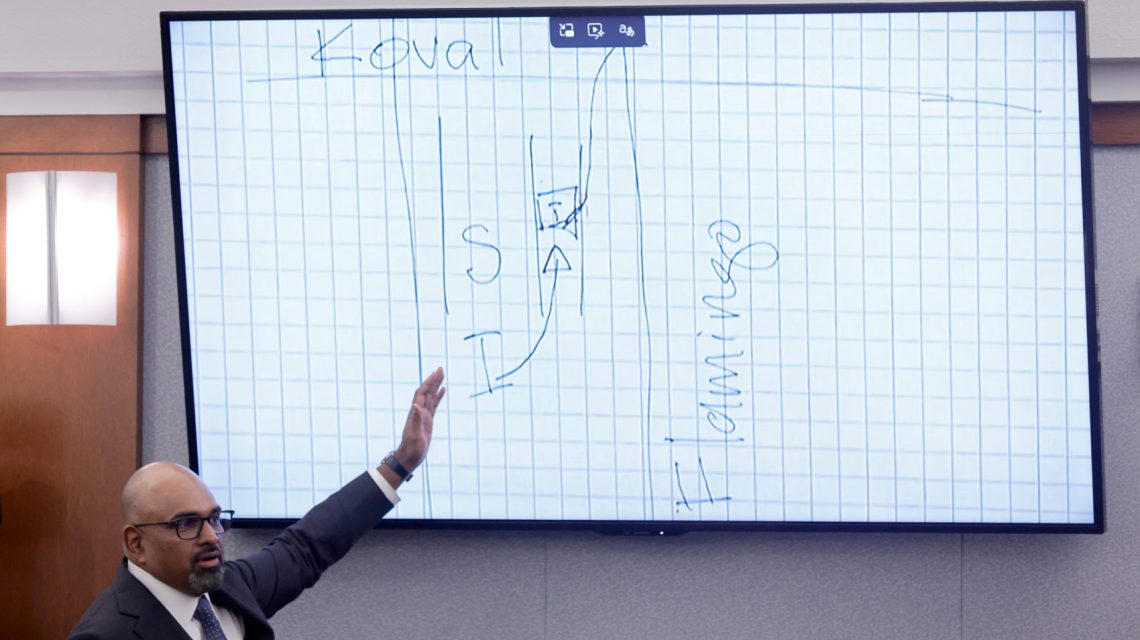
In a Las Vegas courtroom, Chief Deputy District Attorney Binu Palal called for the conviction of Duane ‘Keffe D’ Davis for his alleged role in the 1996 murder of rapper Tupac Shakur. According to Palal, Davis orchestrated the drive-by shooting fueled by a personal vendetta against Shakur and Marion ‘Suge’ Knight, following an assault on Davis’ nephew.
Palal highlighted inconsistencies in Davis’ recounting of events over the years, which he attributed to Davis’ shifting motivations and self-preservation efforts. Despite these changes, a crucial element remained unchanged: Davis placed himself in the Cadillac from which the fatal shots were fired. Palal asserted that Davis’ own admissions were sufficient for conviction, given the lack of additional corroborating evidence.
Emphasizing the long-standing rivalry between the South Side Compton Crips and Mob Piru gangs, Palal brought attention to testimonies identifying Davis and Orlando ‘Baby Lane’ Anderson as suspects shortly after the shooting. He argued that the specific individual who fired the weapon was irrelevant because Davis provided the gun and ordered the attack.
Evidence suggests that the shooting was premeditated. Witnesses reported the group actively searched for Shakur before locating him and making a strategic U-turn. ‘It’s a plan, not an impulse,’ Palal stated.
Davis’ 2019 memoir, ‘Compton Street Legend,’ played a pivotal role in the trial. Palal used the memoir and Davis’ public interviews as evidence of his planning and involvement, despite the book’s disclaimer about altered details.
Davis, now 63, faces a first-degree murder charge with a deadly weapon, with alleged intent to assist a criminal gang. Over nine days, the jury of 16 members heard from 24 prosecution witnesses and three defense witnesses.
The case, unresolved for decades, captures the attention of hip-hop fans and true crime enthusiasts alike. Tupac Shakur, recognized as an influential rapper, was fatally shot at a Las Vegas intersection in 1996. While Knight was injured, Shakur succumbed to his injuries six days later.
Davis emerged as a suspect after making public statements verifying his presence in the car during the shooting. He characterized the event as retribution for an earlier attack on his nephew. Nevada law allows for accomplices to be charged as principals in a murder, and Davis is the last surviving occupant of the Cadillac.
Defense attorney Michael Sanft, defending Davis free of charge, claimed his client’s tales were boastful fabrications intended for profit. Sanft emphasized the absence of physical evidence linking Davis to the crime and the challenges in dealing with evidence from three decades ago.
He also criticized the narrative spun from Davis’ writings and interviews, arguing it lacked factual support. Sanft raised concerns about the accuracy of details, such as a hotel bill found during a police search, which investigators could not conclusively link to the timeframe of the events.
The trial, nearly 30 years in the making, underscores the complexities of investigating historical crimes. Prosecutors reminded jurors that modern investigative techniques differ markedly from those of the 1990s.
The Associated Press journalists Ken Ritter from Las Vegas and Christopher Weber from Los Angeles contributed to this report.