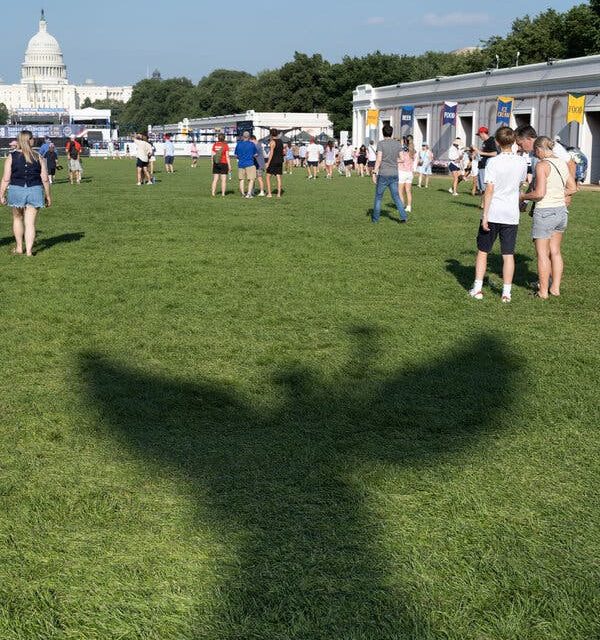
As the United States marked its 250th anniversary, the nation faced challenges that mirrored its current state: divided, troubled, and filled with anxiety. The evacuation of crowds from the Washington Mall due to severe weather highlighted the ongoing impacts of climate change. This event drew attention to President Trump’s stance, as he continues to resist acknowledging climate change while pursuing fossil fuel agendas. Meanwhile, China is taking the lead in the development of green energy technologies, which are set to play a crucial role in the 21st-century economy.
This situation led to reflections on notable historical locations I have visited. Consider Kaifeng, once a central Chinese city on the Yellow River. A millennium ago, it was potentially the world’s leading city as China’s capital, home to about one million people. In contrast, London’s population at that time was roughly 15,000. Other key powers around the year 1000 included the Byzantine Empire in Constantinople, the Abbasid caliphate in Baghdad, and the Ghaznavid Empire in what is now Ghazni, Afghanistan. These empires were unable to adapt and sustain themselves over time.
This raises questions about the United States’ future. Can it maintain its vitality for another 250 years, or will it follow paths similar to the Byzantine and Abbasid empires? Present concerns are significant, with two-thirds of Americans expressing the belief that the country is “pretty seriously off on the wrong track.”
 Aaron Sorkin’s New Film Sparks Debate on Free Speech and Tech Regulation
  Accountability Across Boundaries
  Reflecting on a Career at Fox News
  Accountability in Politics: A Call for Reform
  Candy Thompson’s Journey From Feminism Back to Christianity
  The Best Books of the Year: Recommendations from Four Writers