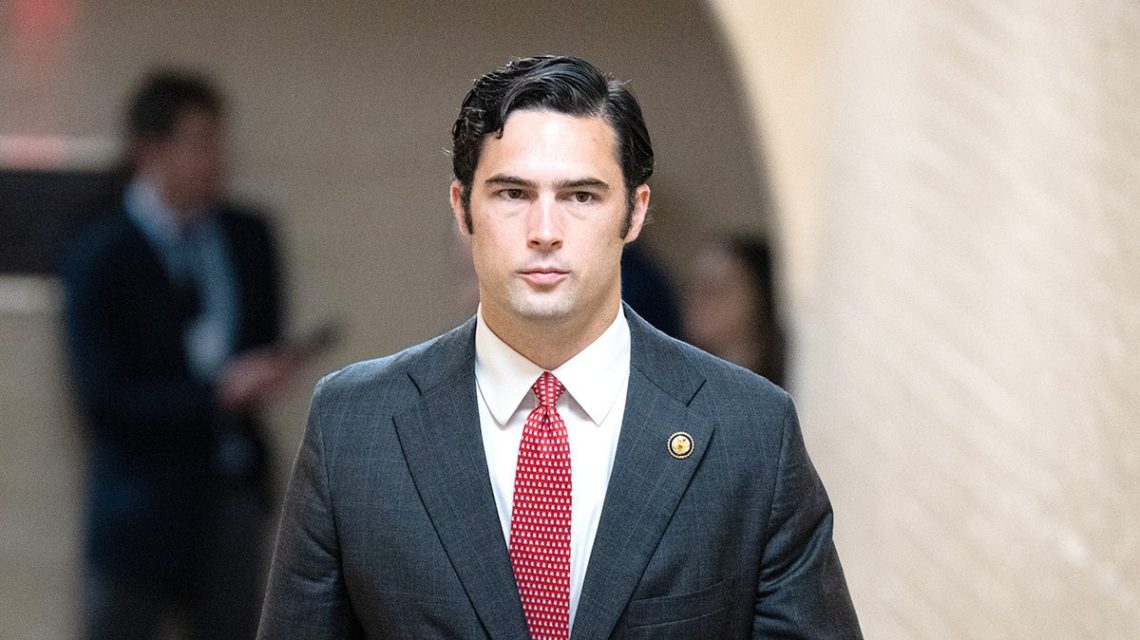
Rep. Brandon Gill, R-Texas, engaged in a challenging dialogue with American Bar Association President Michelle A. Behnke during a House Oversight Committee Task Force meeting. The discussion focused on the ABA’s diversity principles, specifically whether these principles justify not nominating a third Black Supreme Court justice.
The hearing examined the ABA’s influence on law school accreditation and its role in promoting race-conscious diversity, equity, and inclusion (DEI) policies. Republicans contend that the ABA uses this authority to push race-conscious admissions and mandatory DEI-related coursework. In contrast, the ABA maintains its diversity commitment enriches the legal profession without endorsing racial quotas.
Gill, chairing the task force, accused the ABA of leveraging accreditation to compel law schools to adopt race-conscious policies. He stated, “DEI is a harmful ideology that leads to unjust discrimination, stealing opportunities from those deserving them based on merit.” The discussion highlighted Gill’s concerns over ABA’s stance and its effect on admissions policies.
During the hearing, Gill confronted Behnke about the ABA’s advocacy for judicial diversity. He referenced the organization’s views that judges should mirror society’s diversity and questioned the potential benefits of a racially representative Supreme Court. Behnke responded, emphasizing diversity’s importance but avoided giving a definitive yes-or-no answer.
Gill then asked if the Supreme Court should reflect America’s racial demographics. Behnke reiterated, “The ABA does not support quotas,” but did not specifically address Gill’s line of questioning. Gill pointed out that two of the nine justices are Black, which constitutes approximately 22% of the Court. He questioned whether this demographic necessitates rejecting a third Black nominee merely on race grounds.
Behnke maintained, “ABA does not support quotas,” dismissing the notion. The interaction also touched on President Joe Biden’s 2022 commitment to nominate the first Black woman to the Supreme Court, inquiring if this emphasis on race influenced Justice Ketanji Brown Jackson’s nomination.
The ABA holds substantial influence over legal education, largely because attending an ABA-approved law school is a primary path to qualifying for the bar exam in many states. While the ABA claims its law school accreditation is independent, Republicans argue the two entities are closely linked.
Throughout her testimony, Behnke defended the ABA’s focus on diversity, arguing that heterogeneous teams bolster the profession. “Diverse experiences and perspectives enhance our problem-solving abilities for clients,” she commented.
Several states, such as Texas, Florida, Alabama, and Tennessee, are now considering alternatives to relying solely on ABA accreditation for bar eligibility, reflecting the ongoing debate over the ABA’s influence and policies.
 President Trump’s Pre-Midterm Interview on Key Issues
  Trump’s 2024 Reelection and Evolving Voter Dynamics
  Defense Secretary Emerges as Key Player in the Trump Administration
  Hegseth’s Vision for the Military: Balancing Tradition and Innovation
  Significant Funding Boosts Ken Paxton’s Texas Senate Campaign Amid Tight Race
  U.S. States Extend Gas Tax Waivers Amid Rising Fuel Costs Due to Iran Conflict