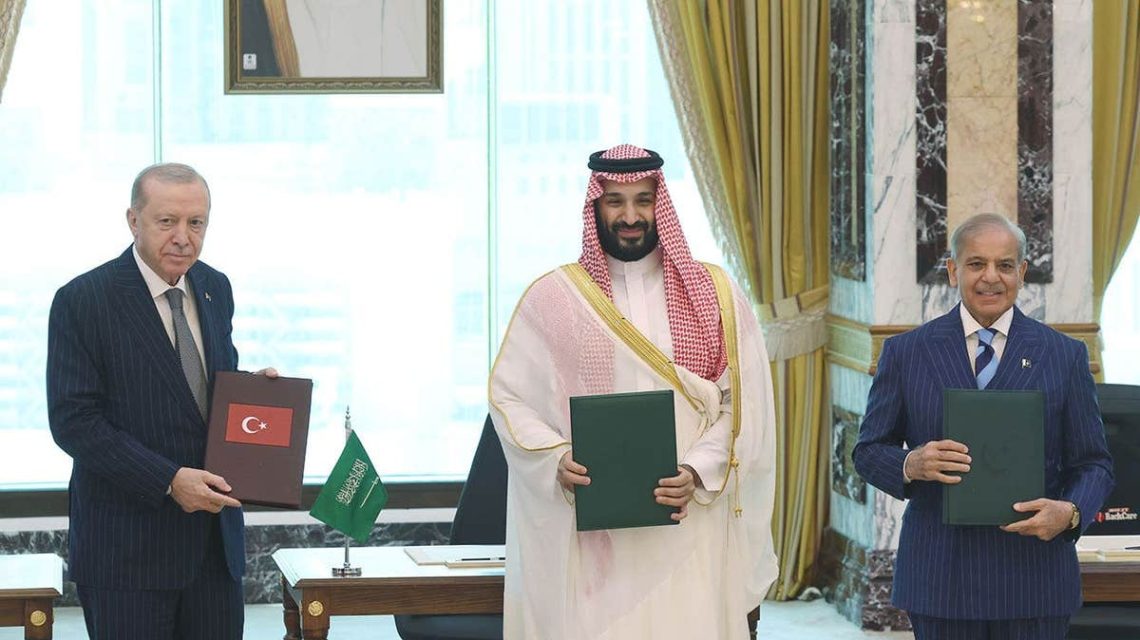
A new defense alliance among Saudi Arabia, Turkey, and Pakistan is stirring debate. Observers question whether these three countries are forming a rival regional bloc or creating a new model of cooperation among U.S. allies. Each nation, with deep-rooted security ties to the U.S., brings different motivations to the table, potentially altering the regional power dynamics.
Saudi Arabia, now a major non-NATO ally of the U.S. since November 2025, entered this pact without the highly sought-after treaty-level U.S. defense guarantee. The new agreement could serve as a safeguard against uncertainties in Washington’s future security policies. Pakistan, possessing nuclear weapons, benefits from improved energy security, Saudi investments, and regional influence, while offering military capabilities. However, whether its nuclear deterrence extends to its partners remains unclear. Turkey, a NATO member, gains a greater market for its defense industry and added influence as tensions with Israel rise.
On August 7, 2026, the leaders of these nations signed the Mecca Joint Defence Agreement. The pact aims to enhance collective deterrence against aggression, equating an armed attack on one nation as an attack on all three. Turkish Foreign Minister Hakan Fidan likened the agreement to NATO’s Article 5, though operational details will be defined by a new committee. A general secretariat will be based in Saudi Arabia.
Potential expansion of the alliance is already discussed, with Turkey identifying Egypt as a candidate. Negotiations for the pact spanned over two years. Saudi officials deny that the agreement forms a new sectarian bloc, while Turkey insists it is not aimed at Iran or others.
Iran’s response has been measured. Spokesman Esmaeil Baghaei views the pact not as a direct threat but as a shift towards regional self-reliance in security.
Sinan Ciddi of the Foundation for Defense of Democracies offered a cautious view, noting that while it resembles a collective defense pact, it’s uncertain if it’ll function like NATO. Each country seeks different benefits: Saudi Arabia views it as a hedge against U.S. reliability, Pakistan sees economic and prestige gains, while Turkey pursues defense opportunities and strategic deterrence.
The agreement, according to Saudi sources, is not a pivot away from Washington and doesn’t signify a break from normalization with Israel. Aziz Alghashian of the Gulf International Forum sees it as a diversification of strategic relationships, complementary to the U.S. partnership.
Raza Rumi of CUNY indicates advantages for Pakistan, including strategic depth and regional influence, cautioning against literal interpretation of the pact’s defense language. He argues the Middle East isn’t splitting into fixed alliances yet.
However, India monitors this new alignment, reviewing its potential implications. The Indian government asserted its intent to safeguard national interests, reflecting regional uncertainties.
Critics warn that new security alliances could provoke rival alignments, heightening tensions. Ciddi highlights that security pacts may lead to more, creating instability.
As President Trump and regional leaders navigate these developments, wider competition between U.S.-backed economic initiatives and autonomy efforts by regional powers emerges.
 Dutch Review Board’s Euthanasia Ruling and International Debate
  Israeli PM Commends Heroic Actions in Flight Emergency
  Rabbi and Jewish Leaders Criticize Adam Brody for ‘Genocide’ Comment
  Flydubai’s Emergency Landing Highlights Cockpit Security
  Former Israeli PM Naftali Bennett Commends Passengers and Crew for In-Flight Heroism
 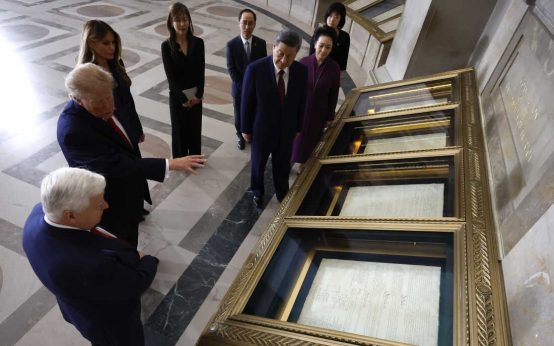 Diplomatic Complexities Unfold at U.S. National Archives Visit