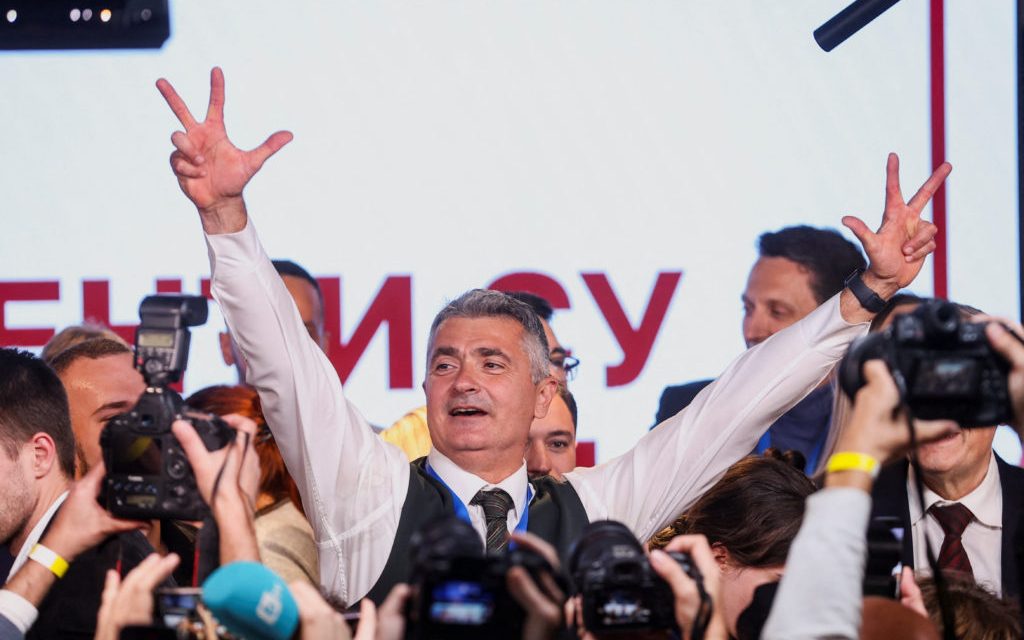
Serbia’s long-term leader, Aleksandar Vucic, conceded defeat after an election against a student-led opposition. Vucic, backed by Russian President Vladimir Putin, faced a diverse movement protesting his government. This marks a significant political change in the country, where Vucic held power for 14 years.
Following the election, celebratory crowds filled the streets of Belgrade and other cities. The election saw high voter turnout and tensions. It was a battle between Vucic’s party and students who accused the government of corruption and undermining democracy.
Serbia’s voters chose 250 parliamentary members. Vucic’s party projected the Students’ List would win 135-140 seats, while his party would secure around 105. Despite acknowledging the defeat, Vucic blamed media and foreign interference for the loss.
The Students’ List reportedly received about 2.2 million votes, surpassing the 1.7 million votes for Vucic’s party. Supporters of the Students’ List celebrated by driving through Belgrade, honking and chanting.
Protests and Political Shift
The election result followed years of tension, as protests erupted over alleged corruption, particularly after a deadly incident in 2024. Ilija Srdanovic, leading the Students’ List, celebrated victory. Dijana Hrka, a victim’s mother, expressed hope for accountability.
Despite protests, many Serbian voters continued to support Vucic, viewing him as a strong leader during global uncertainties. Students, however, campaigned to rebuild democracy and counter Vucic’s authoritarian approach.
The Students’ List included a diverse range of candidates, aiming to restore community and solidarity. They appealed to disillusioned voters through grassroots efforts, reaching out to rural areas.
The student movement’s success echoes similar youth-led political shifts elsewhere in Europe.
International Observations
The election turnout was predicted to reach 70%, a rate not seen since 2000. Voting took place globally, with challenges such as voting hours tied to local Serbian time. Recent elections in Serbia faced irregularities, drawing EU attention.
Election monitors reported several irregularities, including ballot photographing and vote-buying attempts. Concerns over election safety and fairness were highlighted due to incidents like detentions, media control, and reports of surveillance against activists.
In previous elections, fraud allegations led to opposition protests. Violence against journalists and activists was reported in past local elections.
Supporting trustworthy journalism and civil discourse is vital for a healthy democracy.
 In-Flight Altercation on Qatar Airways Leads to Police and FBI Response
 Mayor Mamdani’s Policing Reform Plans
 Virginia Residents Sue Over Alleged Immigration Violations
 Gen Z Voter Shifts and Their Impact on the 2026 Midterm Elections
 Disappearance of US Senate Candidate Raises Questions
 DOJ Rule Change Reduces Appeal Time for Immigrants Facing Deportation