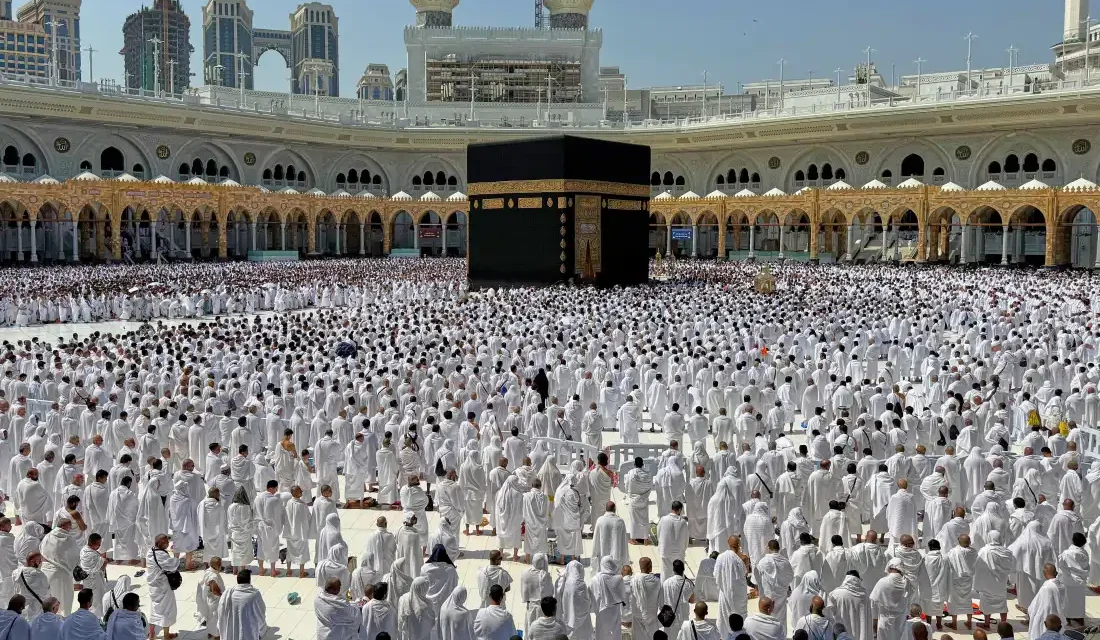
Muslims are projected to become the world’s largest religious group by 2035, according to a new report from the Pew Research Center. Christians will follow as the second-largest group, with both religions experiencing growth. However, the Muslim population is expected to expand at a faster rate. Projections indicate that by 2070, the number of Muslims will reach 3.6 billion, while Christians will number just under 3 billion.
The Pew Research Center utilized data from national censuses, fertility rates, and patterns of religious switching. They also incorporated information from United Nations reports, global migration estimates, and previous research on religious migration. Despite an increase in absolute numbers, Hindus and Jews will decrease in their global share, while Buddhists are expected to decline in both total numbers and global proportion in the coming decades.
Population Growth and Geographic Shifts
A key factor in these demographic changes is the concentration of population growth in Africa. By 2070, over a quarter of the global population will reside in sub-Saharan Africa, where the majority are either Christian or Muslim. The region’s high birth rates and increasing longevity suggest growth for both faiths, with Muslims expanding more rapidly.
Pew forecasts that the Democratic Republic of the Congo will surpass the United States in the total number of Christians by 2070. Alan Cooperman, Pew Center’s director of religion research, describes this as a “global change in the center of gravity of Christianity.”
Fertility Rates and Religious Populations
According to Pew, fertility rates significantly influence religious demographics. Muslim women worldwide have an average fertility rate of 3.1 children, compared to about 2 children for non-Muslim women. This disparity results in differing growth rates across religious groups.
In terms of other religious trends by 2070, the population figures for China, Japan, and South Korea are expected to drop, reducing their Buddhist populations by half. Additionally, more Jews will reside in Israel, increasing from 46% in 2020 to 62% by 2070. While the percentage of individuals without religious affiliation will rise in various countries, the total global population of “nones” will decrease. This trend is attributed to China’s expected population decline due to lower birth rates.
Religious Trends in the United States
Pew’s report also covers religious changes in the United States. By 2070, the U.S. is forecasted to lose its Christian majority, with Christians dropping to just under 48% of the population from the current 62%. During the same period, the proportion of religiously unaffiliated individuals is expected to climb to 41%.
This shift in religious composition in the U.S. will primarily result from people changing their religious affiliation, rather than birth rates. More Christians are leaving their faith, often switching to being religious “nones.” The U.S. is predicted to become more religiously diverse, with Muslims and Hindus surpassing Jews by 2070, following existing demographic trends.
 Netanyahu Faces Setback Amid Unity Government Talks
 The Silence of Women in Tech Regarding Jensen Huang’s Return
 Concerns Rise Over Death Sentence of Pakistani Christian Accused of Blasphemy
 The Controversy Surrounding Lake Ontario’s Renaming
 Pakistan to Bolster Saudi Defense Amid Houthi Attacks
 Opportunities and Challenges in Recent Developments