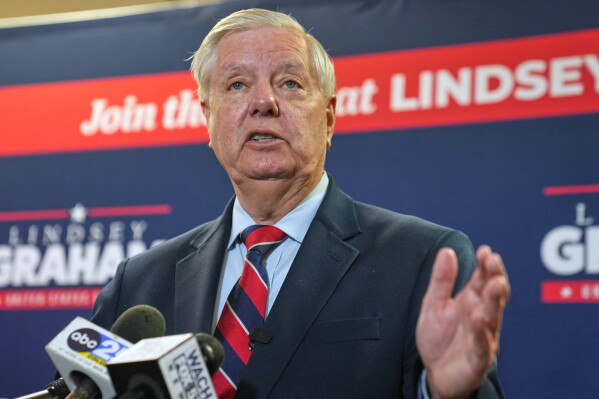
The passing of Sen. Lindsey Graham, who sought a fifth term, marks a turbulent transition in South Carolina’s political scene. As a key ally of President Donald Trump, Graham was on track for reelection. Governor Henry McMaster now faces the task of appointing a temporary replacement until January. In parallel, South Carolina prepares a special primary to select a new Republican nominee for the general election.
This unprecedented vacancy has sparked intense competition among ambitious conservatives aiming for career advancement. Recently, Republicans concluded a contentious nomination process for McMaster’s successor. State Attorney General Alan Wilson emerged victorious against Lt. Gov. Pamela Evette, Rep. Nancy Mace, and Ralph Norman, all now eyeing Graham’s seat.
Special Primary Election Procedure
South Carolina law dictates a one-week filing period for a special primary, beginning on the second Tuesday subsequent to Graham’s death, occurring on July 21. The special primary election follows on the second Tuesday after the filing period ends, slated for August 11. Runoffs, if necessary, would happen two weeks later on August 25. This timeline poses challenges under federal law, which mandates military and overseas ballots be sent 45 days before any federal election — for the general election primary, by June 27. The Federal Election Commission has yet to clarify this process.
Potential Replacements
Graham died due to an aortic dissection. In the aftermath, potential successors prompted discussions among South Carolina Republicans. Given the proximity to November’s election, McMaster’s appointee may become a primary contender, though the choice could also be a temporary caretaker.
One possibility is Evette, enjoying statewide encouragement despite losing the June 23 runoff to Wilson. A source suggests she feels competitive for the special primary. With a slim House Republican majority, appointing a House member is unlikely. Rep. Joe Wilson confirmed his commitment to preserving the House majority. However, House members may pursue Graham’s full-term succession.
Rep. Nancy Mace, reconsidering her decision not to seek House reelection, and Rep. Russell Fry, representing the expanding Myrtle Beach area as a Trump supporter, are potential candidates. Businessman Mark Lynch, defeated by Graham in the primary, and Treasury Secretary Scott Bessent have dismissed aspirations despite inquiries.
Impact on the General Election
The absence of Democratic Senate victories for decades makes Graham’s seat crucial for Republicans, who dominate statewide contests by large margins. In 2020, Graham overcame Democrat Jaime Harrison by a 10-point margin. While Graham appeared destined for reelection, Republicans cautiously assess the unfolding scenario.
Charleston pediatrician Annie Andrews, the Democratic nominee, has garnered over $8 million, with nearly $3 million cash available by May’s end. Graham amassed $6 million, maintaining over $4 million on hand. Andrews appealed for bipartisan unity and gratitude to Graham’s service. Harrison acknowledged their ideological conflicts but appreciated their shared respect for South Carolina.
Republican Influence Challenges
Graham’s departure creates a void in Senate seniority-driven influence, impacting committee leadership. Sen. Tim Scott, serving since 2012, remains relatively new by South Carolina’s standards compared to predecessors like Fritz Hollings and Strom Thurmond. Scott honored Graham as “irreplaceable” following his demise.
Overall, South Carolina faces a shifting political landscape, with upcoming elections and appointments set to reshape its future.
 State Department Simplifies Passport Process with Online Applications
  Becerra and Hilton Clash in California Gubernatorial Debate
  California Voters to Decide on $7.5 Billion State Research Fund
  Highlights from the California Gubernatorial Debate: Becerra vs. Hilton
  Becerra vs. Hilton: The Debate and Key Issues in the California Governor Race
  Senate Confirms New Labor Secretary