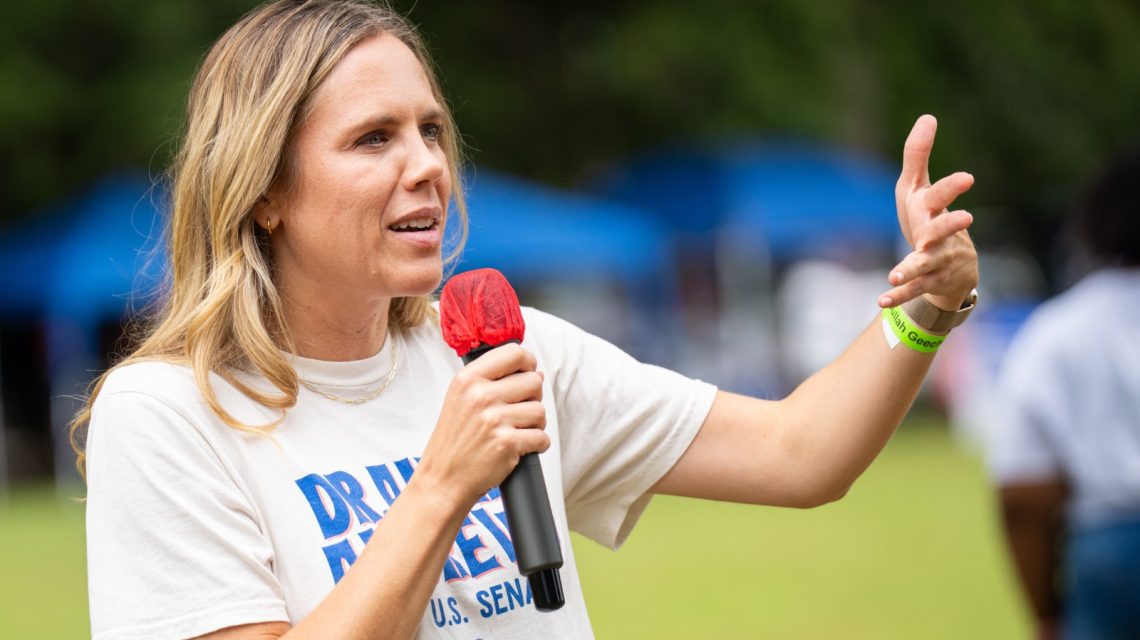
Republican Runoff Scheduled Following South Carolina Special Primary
In the South Carolina Senate primary, Republicans Darline Graham and Ralph Norman advanced to a runoff. They aim to compete against Democrat Annie Andrews in the November election, following the passing of Senator Lindsey Graham. No candidate reached 50 percent in the special primary, leading to a runoff for the two top contenders.
CNN and AP announced Graham and Norman’s advancement just before 9 p.m. ET on Tuesday. Despite an endorsement from former President Donald Trump, Graham, sister to the late senator, obtained 32.6 percent of the vote. Norman secured 24 percent.
There was no Democratic primary as Andrews, a pediatrician, previously won her party’s nomination in June’s regular primary.
Lindsey Graham’s Passing and Special Election
Senator Lindsey Graham, who had served South Carolina since 2003, died on July 11 from an aortic dissection. His unexpected death necessitated a special primary election. Republican Governor Henry McMaster appointed Darline Graham to serve temporarily, as Trump suggested.
Andrews, facing the November election, encounters a traditionally Republican state, which last supported a Democratic presidential candidate, Jimmy Carter, in 1976. In 2024, Trump won South Carolina by 18 points.
Norman spoke at a campaign event, acknowledging he may not be the top choice for voters. “I want to be the third and the fourth choice of everybody,” he stated. Norman seeks unity and conveyed confidence in his message and experience, stressing South Carolina’s pivotal moment.
Graham and Norman’s Political Positions
Norman mentioned he asked for Trump’s endorsement, which was not granted. He emphasized that the state’s voters, not Trump, will decide the next senator.
Norman also expressed interest in upcoming debates to understand where Graham stands on critical issues. He questioned her views on pro-life, the death penalty, and spending, among others. Norman views debates as opportunities to display his clear record.
Conversely, Andrews is engaging voters on Medicaid cuts and gas prices. She noted a positive response to her fundraising efforts and grassroots support.
Republicans, according to Andrews, are gravitating further right to appeal to Trump’s supporters. She believes this stance doesn’t reflect the electorate’s sentiments.
Outlook for Andrews and South Carolina’s Political Climate
Polling on South Carolina’s Senate race is limited, with Andrews’ campaign showing her competitive against various Republican candidates. Independent polling has yet to confirm these findings.
The prediction markets and election forecasters heavily favor Republicans, with high probabilities of securing the Senate seat.
Andrews remains optimistic, citing discussions with Republicans disillusioned by an increasingly extreme party. Some express a desire to return to a more moderate GOP, akin to John McCain’s era.
Historical Context and Demographic Considerations
Historically, South Carolina leans Republican. Since voting for Carter in 1976, it has consistently supported Republicans in presidential elections. At the state level, the last Democratic senator, Ernest Hollings, was elected in 1998.
The state features contrasting areas: Democratic-leaning cities like Charleston and Columbia, and rural regions favoring the GOP. Despite efforts, including Jaime Harrison’s 2020 campaign against Lindsey Graham, Democrats face challenges due to racial polarization and a Republican advantage.
For further details or comments on this story, contact Newsweek editors Jason Lemon and Sam Wilson.
 State Department Simplifies Passport Process with Online Applications
 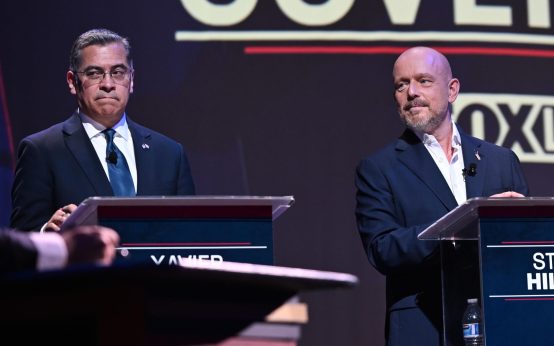 Becerra and Hilton Clash in California Gubernatorial Debate
  California Voters to Decide on $7.5 Billion State Research Fund
 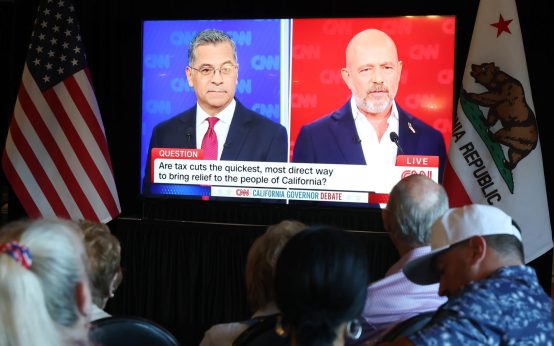 Highlights from the California Gubernatorial Debate: Becerra vs. Hilton
  Becerra vs. Hilton: The Debate and Key Issues in the California Governor Race
  Senate Confirms New Labor Secretary