South Korea’s Kospi index experienced a sharp decline of over 11% on Tuesday. The drop was largely due to heavy selling of chipmaking stocks. Concerns about the booming artificial intelligence market turning into a bubble contributed to the decline. In the Asian markets, most indices also saw declines, while U.S. futures slightly lowered. Oil prices fell as well.
The trading halt occurred when the Kospi fell to its lowest point since April. Shares in key chipmakers like Samsung Electronics and SK Hynix, which carry significant weight in the index, faced steep losses. Kospi ended the day 11% lower, settling at 6,012.68. Samsung Electronics saw its shares slumped by 13.1%, and SK Hynix’s shares fell 13.5%. On Monday, SK Hynix’s shares in the U.S. dropped below their $149 IPO price, closing at $143.
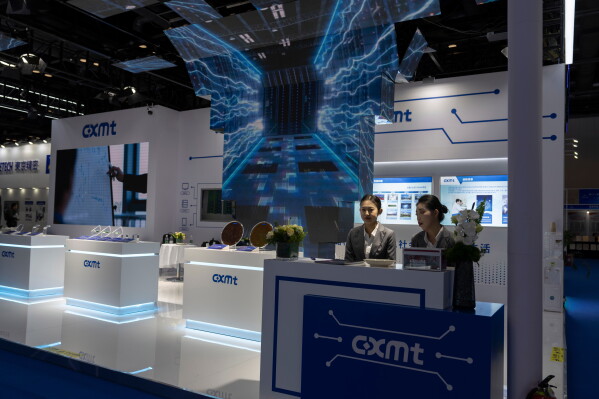
Market analysts attribute the sell-off of AI-related stocks to emerging competition from Chinese AI startups and chipmakers. These competitors potentially undermine the gains made by global leaders whose shares have risen sharply due to AI excitement. A notable event was the 466% surge in Chinese memory chipmaker CXMT’s share price during its trading debut. CXMT’s IPO in Shanghai raised at least $8.6 billion.
The sell-off in South Korea followed a report by The Information, a technology news outlet. The report indicated that China has started mass-producing homegrown deep ultraviolet chipmaking tools. Equity analyst Jing Jie Yu from Morningstar commented that the market was concerned about China’s progress in chipmaking equipment, fearing it might threaten global leaders. Nonetheless, he suggested that the sell-off appeared to be an overreaction.
Other Asian markets also suffered losses. Tokyo’s Nikkei 225 fell 4.3% to 62,127.57. Taiwan’s Taiex slid 4.7%, with Taiwan Semiconductor Manufacturing Co (TSMC) shares down 3%. Hong Kong’s Hang Seng index was nearly stable at 25,196.42, while Shanghai Composite index dropped 1.4% to 3,805.06. However, Australia’s S&P/ASX 200 rose 0.4% to 8,932.90. India’s Sensex edged downward by 0.1%.
Oil prices continued to decrease. The U.S. and Iran avoided escalating their conflict, with progress reported by mediators to resume negotiations and halt attacks. Brent crude, the international benchmark, lost 0.5%, reaching $85.48 a barrel. Before the start of the Iran conflict in February, it was about $72 per barrel. U.S. benchmark crude declined by 0.4% to $82.25 a barrel.
The U.S. stock market saw slight changes. On Monday, the S&P 500 rose by less than 0.1%. The Dow Jones Industrial Average gained 0.5%, but the Nasdaq composite decreased by 0.2%. Major chipmaking stocks fell, affecting the benchmarks. Shares of Advanced Micro Devices (AMD) declined by 5.2%, Nvidia decreased by 5%, and Micron Technology dropped 2.3%.
Early Tuesday dealings saw the U.S. dollar decrease slightly to 163.71 Japanese yen from 163.75 yen. The euro remained stable at $1.1369.
Kurtenbach reported from Bangkok.
 U.S. Stocks Recover Amid Oil Price Cooldown
  Navigating Interest Rate Hikes: Where Savers Should Stash Their Cash
  Kevin Warsh’s Approach to Inflation Control
  Nike Stock Plunges as Company is Dropped from S&P 100
  Nike Faces Criticism from Investor Over Activist Stance
  Maximizing Returns: The Benefits of a 3-Year $100,000 CD Account