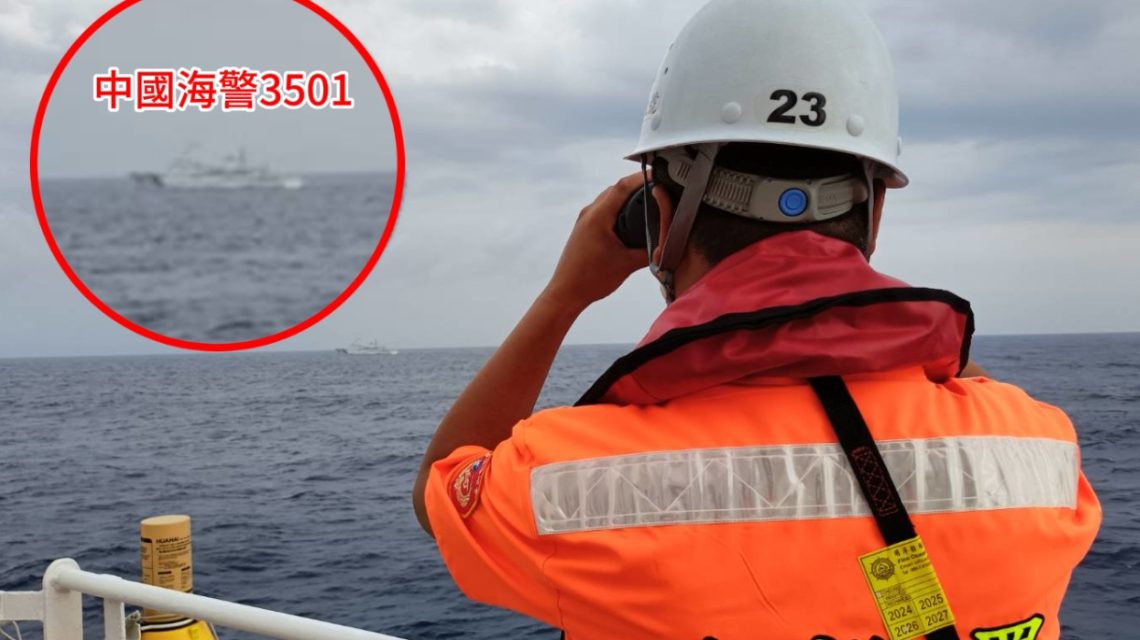
The Chinese and Taiwanese coast guards had a standoff near the Taiwan-controlled Pratas Islands, according to a report from Taipei on Friday. A Chinese vessel with the hull number 3501 was detected about four miles outside the restricted zone claimed by Taiwan around the Pratas at 7:32 a.m. local time. The Taiwan Coast Guard Administration (CGA) provided these details.
Incident Details
The Taiwanese patrol boat, Xunhu No. 9, responded promptly by sailing parallel to the Chinese ship while issuing radio broadcasts ordering it to leave. By 8 a.m., tensions escalated. China’s Coast Guard 3501 ignored the warnings and increased its speed from 5 to 9 knots. It then made a sudden turn into the restricted waters. The two vessels were still in a standoff at the time of the report.
The Republic of China and the People’s Republic of China are not subordinate to each other, and only the [Taiwan] Coast Guard Administration has the authority to enforce the law in the waters around the Dongshas.
The CGA emphasized they would take all necessary measures to curb China’s unreasonable actions. The People’s Republic of China refers to the government in Beijing, while the Republic of China is Taiwan’s official governmental title, dating back to its move to the island post-1949 Civil War defeat.
Both Taipei and Beijing refer to the Pratas as the Dongsha Islands. Located approximately 250 miles southwest of Taiwan and 200 miles east of Hong Kong, these islands are claimed by both parties but administered by Taiwan. The Taiwan government maintains a small marine garrison on the largest island, known as Pratas.
Chinese Patrols Increase
This encounter follows the activities of Shanghai’s state-owned oceanographic vessel, Tongji Hao, which moved near Taiwan’s Eluanbi Peninsula on May 7 and Hualien port on May 15. After being intercepted by Taiwan’s coast guard, the vessel responded, There is no Republic of China, only the People’s Republic of China.
China’s coast guard activity near Pratas has seen a noticeable increase, with reports from the Taipei Times indicating over 30 incidents annually, compared to earlier transits. Such activity remains less intense than around the Taiwan-controlled Kinmen in the Taiwan Strait, but the frequency is rising.
The ‘Gray Zone’ and Strategic Responses
Analysts describe the increased activity around Pratas and Kinmen as gray-zone tactics. These tactics involve forms of coercion that do not incite a military response. Defense analyst Bryce Barros noted these actions began post U.S. President Donald Trump’s May 14-15 talks with China’s President Xi Jinping.
Barros mentioned, Beijing might view these incidents as opportunities to continue to salami-slice against Taiwan while testing resolve in Taipei, Washington, and allied capitals.
In response to China’s maritime actions, Taiwan plans to enhance its coast guard capabilities and surveillance efforts. According to Nikkei, Taiwan’s Ocean Affairs Council has secured over $935 million for acquiring 40 new patrol vessels and upgrading surveillance systems.
 Dutch Review Board’s Euthanasia Ruling and International Debate
  Israeli PM Commends Heroic Actions in Flight Emergency
  Rabbi and Jewish Leaders Criticize Adam Brody for ‘Genocide’ Comment
  Flydubai’s Emergency Landing Highlights Cockpit Security
  Former Israeli PM Naftali Bennett Commends Passengers and Crew for In-Flight Heroism
 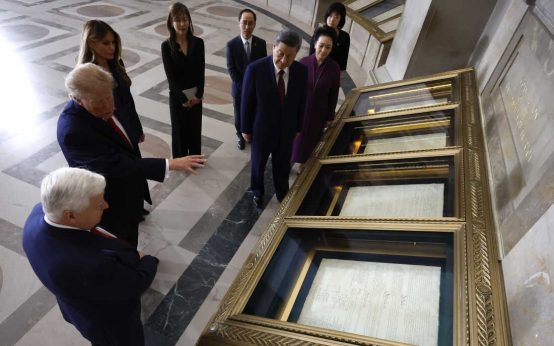 Diplomatic Complexities Unfold at U.S. National Archives Visit