Across the United States, various states are implementing new civics education mandates. In Iowa, a new law requires that starting this fall, students must pass a test based on the naturalization exam to graduate. In Kentucky, starting 2024, students must either take a civic literacy course or pass a 100-question civics test. Alaska has also incorporated civics into diploma requirements as of June. Mississippi passed a law in April mandating civics as part of the required coursework beginning in 2027. Meanwhile, the District of Columbia has a unique approach through its social studies standards, effective since 2024, which emphasize “engaging in civil discourse and taking informed action” as a core component, ending with a capstone project in government and civics.
These measures aim to enhance both civic knowledge and engagement. However, a survey by the Sandra Day O’Connor Institute raises an important question regarding whether students are willing to enter disagreements despite these formal requirements. Conducted this summer among recent graduates from 25 states and Washington, D.C., the survey revealed that 58% of respondents had self-censored at times due to concerns about others’ reactions to political or civic issues. Despite 73% feeling comfortable sharing honest opinions generally, 51% of those still self-censored at least once. This suggests that while classrooms may foster open discussion in general, specific topics may lead to reticence. One Washington, D.C. student noted the absence of a “comfortable space” to discuss contested issues, prompting many to refrain from speaking up.
The survey highlighted a significant finding: 91% of students who self-censored were worried about classmates’ reactions, while 41% were concerned about teachers. This shifts focus from adults like teachers and policymakers to the perspectives of peers. Harvard’s Fall 2025 Youth Poll similarly found that 47% of young Americans aged 18 to 29 avoided political discussions due to fear of negative reactions.
Self-censorship poses a problem for civic education, which involves not only understanding government processes but also practicing civic engagement, such as forming and defending opinions and working through disagreements. Without open conversation, students miss out on essential practices of citizenship.
Teachers play a vital role in shaping classroom dynamics. More than half of the survey respondents saw teachers avoiding or shutting down discussions on political topics. Additionally, around 80% of teachers reported self-censoring to avoid controversy. This suggests caution is present in classroom discussions from both students and teachers. Research indicates that peer perceptions impact participation more than teacher actions. Often, students misread peer norms and may incorrectly assume peer opinions.
The report recommends practical steps for classrooms, such as anonymous surveys to gauge respect for opposing views, encouraging open debate, and creating an environment where recording or sharing classmates’ remarks is discouraged. Training teachers in managing peer dynamics is also crucial to support diverse viewpoints.
While civics tests may show knowledge of government structures, they do not guarantee that students will comfortably defend unpopular opinions. The survey points out that such willingness should not be assumed. Liam Julian, head of programs and public policy at the Sandra Day O’Connor Institute, authored the institute’s report, “Why Are Students Self-Censoring in Civics Class?,” which is accessible on their website.
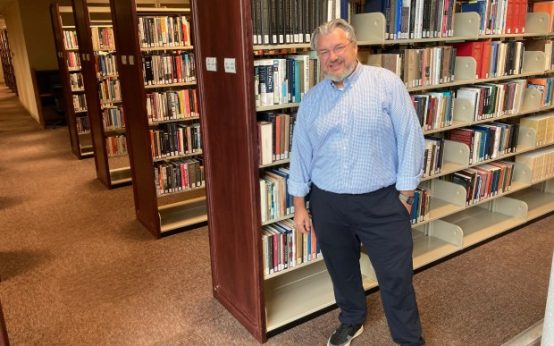 Troy Swanson: Award-Winning Librarian Transforming Academic Libraries
 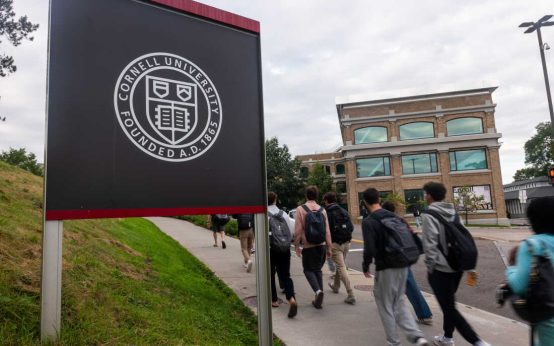 Cornell University to Investigate Handling of Alleged Assault Case
  Legal Challenge Against School Funding Inequalities in West Virginia
  Potential Changes Loom for School Voucher Programs
  Regents Exam Elimination Raises Concerns Over Student and School Accountability
  Education Funding Disparities in West Virginia