
On July 20, President Donald Trump signed a significant executive order aimed at preventing U.S. defense contractors from purchasing crucial minerals from China. This action is part of a broader strategy to bolster the security of supply chains essential to national defense. The Pentagon is leading efforts to boost production within the defense-related industrial base, underscoring the necessity of avoiding reliance on Chinese-controlled materials vital for military operations.
The administration’s approach aligns with its strategy for U.S. economic growth, emphasizing the importance of domestic manufacturing over imports from unreliable suppliers. This focus strengthens U.S. labor, security, and economic stability.
The U.S. does not need to undertake these efforts alone. Partnerships, particularly with G7 allies and other trusted partners, are encouraged, provided manufacturing occurs domestically. For example, U.S. company ReconCraft and Ukrainian company Uforce have teamed up to produce drone boats in Portland, Oregon, marking a milestone in the Pentagon’s quest to expand autonomous weapons capacity. In a recent operational test, U.S. drone boats successfully targeted an Iranian submarine facility in the Strait of Hormuz.
Ukraine’s battlefield experience in resisting Russian aggression contributes valuable warfighting doctrine for the application of these drone boats, particularly in Middle Eastern conflicts. These force multipliers are crucial for revitalizing the U.S. defense industrial base.
The strategy extends to securing semiconductor supply chains, critical for drone production. Tennessee Republican Sen. Marsha Blackburn has spearheaded efforts to address vulnerabilities in semiconductor supply chains with her Chip EQUIP Act. This act aims to halt funding to companies acquiring specialized technology from adversarial nations, including China.
Blackburn highlights the necessity for American semiconductor firms to avoid purchasing manufacturing tools from nations like China, Russia, North Korea, and Iran. Her insight is supported by the presence of the Wacker Polysilicon Plant in Tennessee, producing essential semiconductor components.
The Trump administration’s vigilance in securing vital supply chains deserves commendation. Continued bipartisan legislative support for these procurement strategies is crucial to ensure military readiness and national security.
 California Voters to Decide on $7.5 Billion State Research Fund
  Highlights from the California Gubernatorial Debate: Becerra vs. Hilton
  Becerra vs. Hilton: The Debate and Key Issues in the California Governor Race
  Senate Confirms New Labor Secretary
 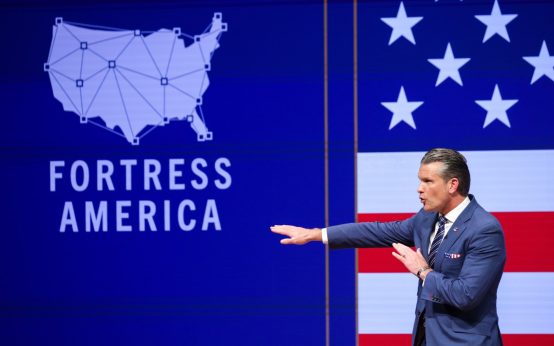 Hegseth’s Ambitious Military Initiatives to Reshape Warfare
  Pete Davidson Criticizes NYC Mayor Zohran Mamdani Over BQE Construction