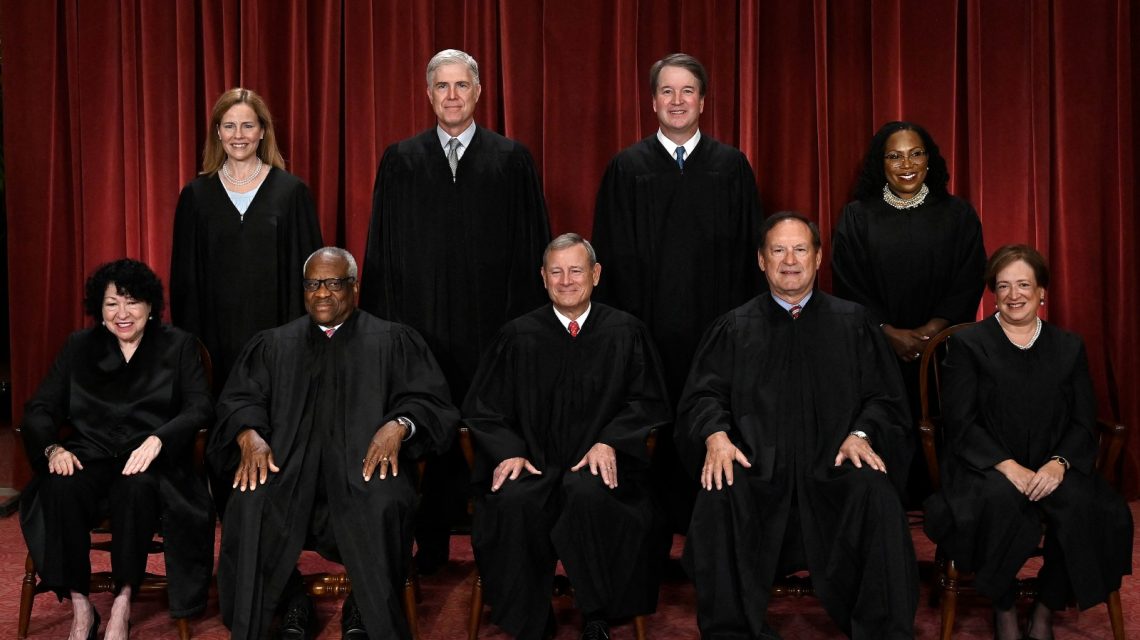
America’s Catholic bishops have called on the Supreme Court to mandate changes in Florida’s criminal jury formation, claiming the current system breaches the U.S. Constitution. In Florida, only capital cases involve 12-member juries, while other criminal cases rely on six-member juries.
The Supreme Court has agreed to hear the case of Hamed Kian, convicted by a six-member jury. He argues this violates his Sixth Amendment rights. Supporters of Kian include current and former prosecutors, the American Civil Liberties Union, and the Catholic bishops. The United States Conference of Catholic Bishops filed an amicus brief, challenging the legal stance maintained by Florida and other Republican states. They argue that the Constitution’s original intent was for 12-member juries and request the overturning of the 1970 decision in Williams v. Florida, which allowed smaller juries.
Details of the Kian v. Florida Case
The case questions the necessary number of jury members for serious trials. Kian, a chiropractor in Florida, contested his conviction, claiming the Sixth and 14th Amendments guarantee 12-member juries for serious charges. After his trial by a six-member jury, Kian was found guilty on five counts of practicing without a license, receiving a one-year and one-day sentence and five years on probation. His charges stemmed from continuing treatment practices despite a suspended chiropractic license, backed by patient testimonies and documents.
For centuries, 12-member juries were standard in England and the U.S. The 1970 Williams v. Florida ruling stated that the Constitution doesn’t require exactly 12 members, enabling states like Florida to adopt smaller juries. Florida’s six-member jury system, dating to the 19th century, applies to noncapital cases. Kian’s attorneys argue that the Supreme Court’s 2020 decision in Ramos v. Louisiana, which required unanimous verdicts, challenges the Williams ruling. They advocate for a return to the Constitution’s original meaning, supporting 12-member juries.
Catholic Bishops’ Perspective
The bishops argue for a historical approach in their brief, emphasizing the church’s role in developing the jury trial system. They claim that the Constitution’s jury trial provision historically implied a 12-member jury, reinforced by founding-era sources. The bishops aim to restore this understanding, viewing Williams as a departure from tradition. The brief filed on behalf of the United States Conference of Catholic Bishops by attorneys including Noel Francisco, stresses constitutional fidelity.
Republican States’ Defense
Florida defends its jury system, discouraging re-evaluation of the long-standing precedent set by Williams. The state argues this precedent is still valid and vital for the state’s legal operations, noting that six states use smaller juries for certain cases. Florida warns that overturning Williams could jeopardize around 5,000 pending criminal appeals. The state also argues that smaller juries function comparably to larger ones, referencing studies and statistics.
Florida asserts that the Constitution doesn’t specifically dictate a 12-member requirement for juries. The Supreme Court previously concluded that jury size wasn’t an essential feature akin to unanimity established by Ramos v. Louisiana.
Conservative Debate and Legal Implications
Within conservative circles, the case spurs interest in originalism, which advocates for interpreting the Constitution based on its original public meaning. Some justices, including Neil Gorsuch, questioned whether six-member juries align with historical understandings. This case has divided conservatives, with some preferring established systems and others supporting originalist interpretations.
The case’s outcome could significantly change criminal procedures in multiple states. A ruling for Kian would highlight a major originalist shift revisiting the 1970s’ precedents, affecting thousands of convictions from smaller juries. Upholding Florida’s system would maintain the current structure and confirm states’ flexibility in jury composition. This high-stakes legal battle presents Catholic bishops and Republican states at odds over a key constitutional interpretation before a conservative Supreme Court. The decision will test how the court balances originalist ideals against modern judicial practices.
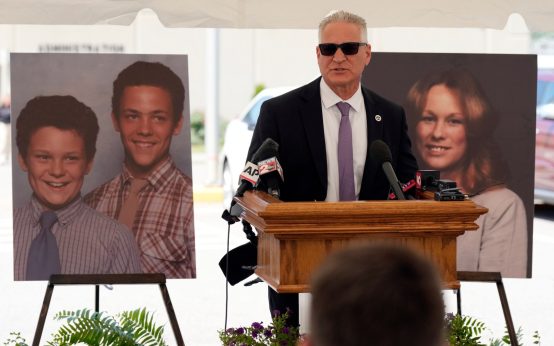 Tennessee Faces Scrutiny After Failed Execution of Christa Pike
 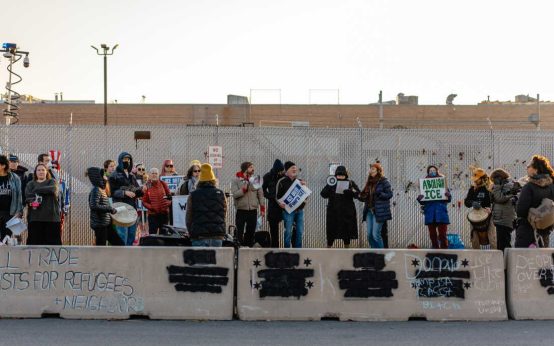 Demonstrators Sue Media Personality for Defamation
  State’s Repeated Failures in Conducting Lethal Injections
  Judge Declares Police Use of Flock Cameras Unconstitutional
  Police Release Arrest Video of Luigi Mangione in Pennsylvania
 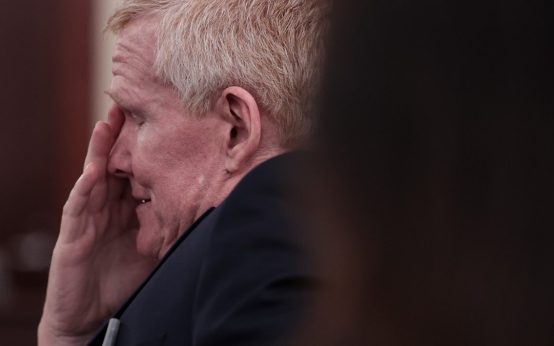 Murdaugh Attorneys Accuse Prosecutors of Withholding Key Evidence in Retrial