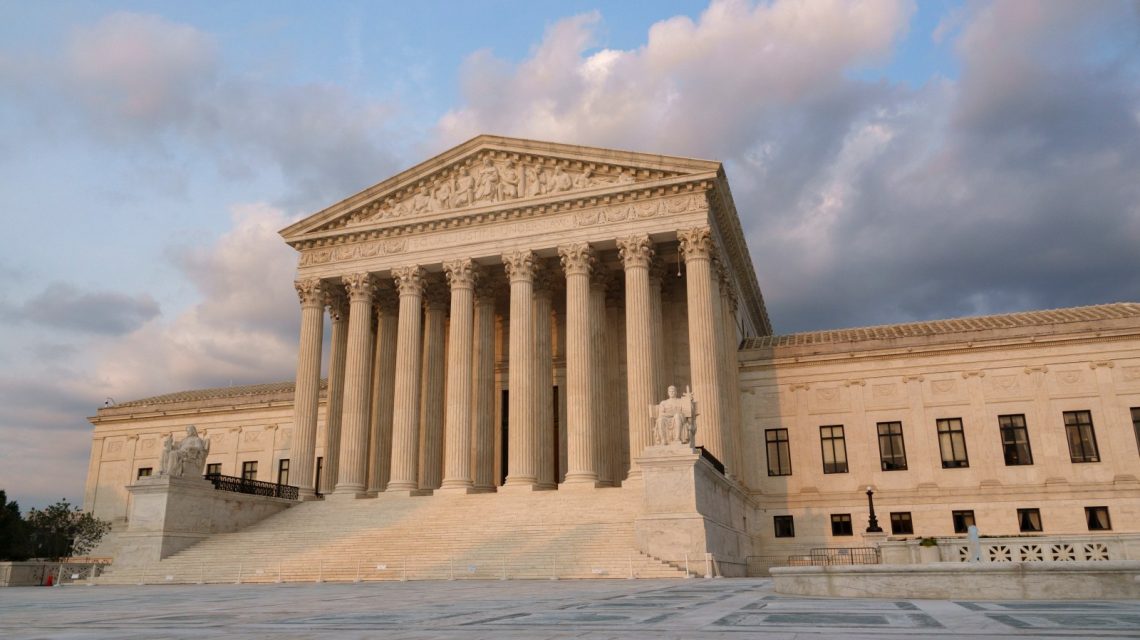
The Supreme Court chose not to engage in a dispute concerning a Biden-era immigration policy that permitted immigration judges to pause certain deportation proceedings. This decision leaves a court order blocking the regulation intact.
The justices declined an emergency appeal by Democratic-led cities and a legal advocacy group who argued the policy supported crime victims and neglected juveniles. In a statement shared by Democracy Forward, the applicants expressed deep disappointment.
Texas had taken legal action to stop the practice known as “administrative closure.” State officials contended that it had grown significantly under President Joe Biden, allowing some immigrants to remain in the U.S. indefinitely. The Trump administration and Texas later agreed to a court order hindering the practice. Administrative closure lets immigration judges put deportation cases on hold temporarily, particularly for immigrants seeking humanitarian protections or other legal statuses in the country.
Baltimore, Columbus (Ohio), and New Haven (Connecticut), along with Centro Legal de la Raza, aimed to defend the policy by intervening in the case. After a judge denied their request, they filed an emergency appeal with the Supreme Court.
“For decades, these procedures have allowed immigration judges to temporarily pause deportation proceedings for people pursuing lawful immigration relief, including survivors of violence, abused and neglected children, and victims and witnesses who cooperate with law enforcement,” applicants stated. “Eliminating these protections puts vulnerable people at greater risk of deportation and undermines public safety in communities across the country.”
The Justice Department urged rejection of the appeal, arguing that the applicants lacked standing to challenge the settlement and had not demonstrated immediate harm.
Solicitor General D. John Sauer argued that the cities were attempting to mount a broader challenge to the settlement. “This Court should not allow applicants to put the cart before the horse,” he wrote, asserting that the cities had “failed to establish any irreparable harm” pending their appeal.
The National Immigration Law Center viewed the decision as the High Court endorsing an unjust policy. Lynn Damiano Pearson, director of legal strategy at the center, noted that without administrative closure, judges would have to issue deportation orders to those pursuing legal status due to application processing delays. She warned of dire consequences for immigrants and their communities.
Newsweek has contacted the Justice Department for further comments.
 Mayor Mamdani’s Policing Reform Plans
 Gen Z Voter Shifts and Their Impact on the 2026 Midterm Elections
 Disappearance of US Senate Candidate Raises Questions
 DOJ Rule Change Reduces Appeal Time for Immigrants Facing Deportation
 Hakeem Jeffries’ Bid for House Speaker Faces Progressive Hurdles
 Ohio Judge Dismisses Defamation Lawsuit by Rep. Max Miller