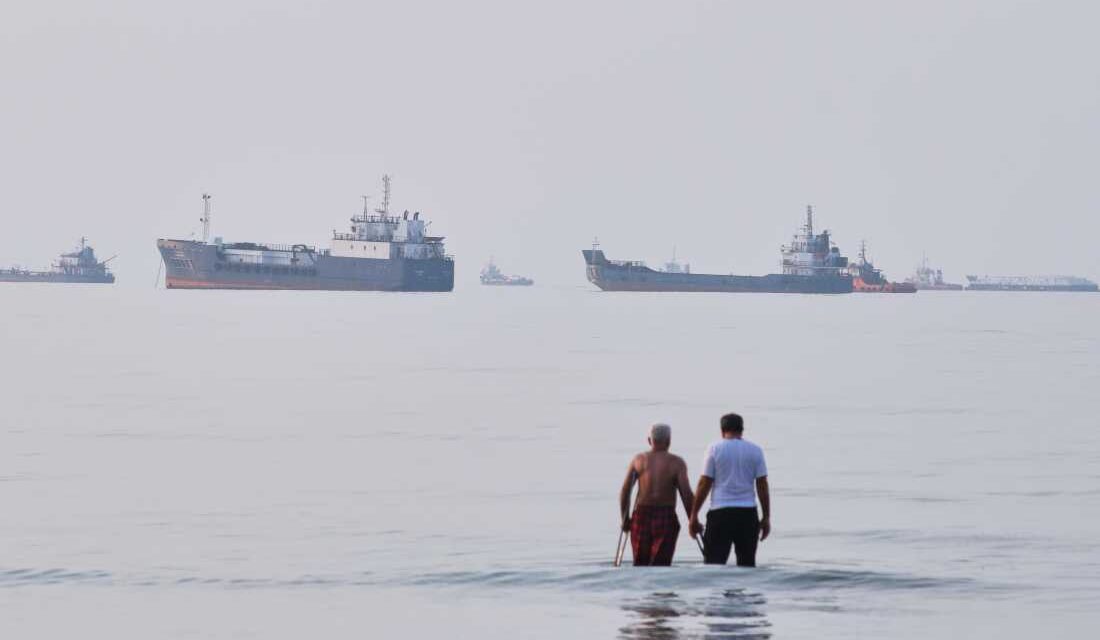
Two men stand knee-deep in the waters of the Strait of Hormuz, with vessels anchored nearby, off the coast of Bandar Abbas, Iran on Sunday, July 12, 2026. This image captures a period of calm following a pause in hostilities.
The United States has ceased aggressive actions towards Iran for the second consecutive day. Tehran has reciprocated. Both nations are working towards resuming talks to finalize an interim ceasefire deal compromised by recent military exchanges.
The reason for the U.S. suspension of attacks, particularly after targeting Iranian coastal areas for nearly two weeks, remains unclear. Efforts to reach the Pentagon for comment were unsuccessful.
President Trump has maintained a preference for a diplomatic approach while retaining all options should Iran persist in hostile activities in the Strait of Hormuz or against allied nations.
As mentioned by Steven Cheung, White House communications director, it would be strategic for Iran to pursue a negotiated agreement to avoid potential consequences. Iran’s military spokesperson confirmed no Iranian counterattacks have occurred following the U.S. cessation.
Regional tensions remain evident. Iran recently conducted counterattacks against nations hosting U.S. military officials, resulting in casualties at a base in Jordan.
Efforts Ongoing in Diplomatic Circles
A 60-day period, initiated when both nations signed the interim agreement in mid-June, is progressing. Critical matters, such as Iran’s contentious nuclear program, remain untouched as mediators focus on dialogue preservation.
A regional official, anonymously, described diplomacy efforts as positive, citing the mutual pause in strikes as a helpful element in de-escalation. Both parties aim to resume the interim ceasefire agreement. Discussions center on granting Iran greater control over the Strait of Hormuz transit with fewer restrictions imposed on vessels.
Concerns about shipping routes extend beyond Hormuz; the Bab al-Mandeb strait is under threat following blockades threatened by Iranian-backed Houthi forces in Yemen.
Impact on Global Energy and Economy
Global energy supply and economic stability are at risk, as gasoline prices continue to surge. Iran is in dialogue with Oman to ensure vessel safety in Hormuz waters, striving for progress while maintaining the status quo.
Esmail Baghaei, spokesperson for Iran’s Foreign Ministry, insists discussions are productive while emphasizing the unchanged condition of the strait.
Iran’s interim deal interpretation grants it current management rights over shipping lanes, opposing U.S. support for alternative routes favoring proximity to Oman.
Meanwhile, the U.S. military reinforces its naval blockade against Iran. Naval forces remain highly watchful, having redirected multiple commercial ships while impairing and boarding others.
International Support and Concerns
In a different region, Lebanese efforts continue post-conflict. A woman clears her shattered home in southern Lebanon, presenting a stark reminder of Israeli strikes.
Israeli Prime Minister Benjamin Netanyahu prepares for diplomatic engagements in the U.S., aligning with Trump’s ambition to limit Iran’s nuclear capabilities. Netanyahu emphasizes support for peaceful resolution moves but warns against further Iranian aggression towards Israel.
Netanyahu shared his full endorsement with Fox News, lauding Trump’s approach and expressing willingness to consider insights from upcoming meetings.
Netanyahu cautions Iran against future provocations, advocating for cautious diplomacy while underscoring potential repercussions of miscalculated actions.
 The Trump Team’s Challenge to the Military Leadership
  Maryland First State to Restrict Electronic Pricing in Grocery Stores
  British Police Arrest Man Suspected of Terror Plot
  Activists Push for Nationwide Ban on Child Marriage in the U.S.
  Democratic Hopes and Historical Warnings in 2026 Senate Race
  Republicans Face Challenges Amidst Cost of Living Concerns