Secretary of State Marco Rubio remarked in Athens about Iran’s loss of control over the Strait of Hormuz. His declaration points to a significant situation. In September, 16.5 million barrels of crude oil left the Persian Gulf daily, excluding Iran, according to ship-tracking firm Kpler. The U.S. blockade and sanctions have nearly halted Iran’s seaborne oil exports. However, attacks on tankers traversing the Strait of Hormuz have peaked during the ongoing conflict, maritime security sources reported to Reuters.
On a specific Tuesday, Kpler tracked only seven commodity vessels crossing the strait, a significant drop since July 23. Before the war, about 125 large commercial ships crossed daily. These two perspectives highlight the war’s impact, indicating a complex situation. The U.S. seemingly won control over the Strait of Hormuz, countering Iran’s potential to hold Gulf oil hostage by closing the waterway. Yet, the current state resembles more of an insurgency phase. A weakened Iran can still disrupt traffic, making transit costly and uncertain. The U.S. naval mission remains because full normalcy has not returned.
Challenges in Sustaining Peace
Looking back, on May 1, 2003, President George W. Bush declared victory in Iraq. Yet, after the six-week conventional war, U.S. forces spent over eight years dealing with an insurgency, awaiting stability. While Iraq and this situation are different, there are echoes in the U.S.’s escort-and-blockade mission.
The oil trade’s recovery stems from strategic adjustments rather than restoration. Kpler estimates show that currently, 40% of the region’s crude avoids Hormuz via Saudi and Emirati pipelines, compared to 17% before the war. Much of the oil is transferred through ship-to-ship processes in the Gulf of Oman. U.S. warships, under Project Freedom, have guided traffic since May.
Kpler now overlooks the need for a U.S.-Iran agreement for reopening the strait, as escorts and logistics have incrementally opened it up. Informed by these developments, Eurasia Group noted that Iran’s strategies to keep Hormuz closed have not succeeded. Yet, Iran’s efforts to harass shipping continue.
Continuous Threat from Iran
The U.S.-led Joint Maritime Information Center recently reported that five merchant ships, inclusive of LNG carriers, were attacked in early October in the strait. An attack on October 7 struck a tanker off Qatar, the first Gulf attack since September. These strikes are yet to be formally attributed. Still, the Center ranked the threat in the strait as ‘severe,’ considering recent Iranian activities.
Despite reducing crude traffic by 27% from the previous week’s high, exports from the Gulf of Oman and Red Sea have more than doubled prewar levels, maintaining overall regional stability. Although Iran can’t fully stop the oil flow, it can create costs, leading to increased delivered prices.
Eurasia Group suggests Iran isn’t seeking a return to intense conflict, viewing its current efforts as a long-term struggle to assert influence over the strait through regional disruptions. Expanding beyond the strait, drones from Iraq previously disabled Saudi Arabia’s East-West pipeline.
Ahmed S. Hashim sees Iran reinforcing its defense through adaptive strategies and a decentralized approach, using a variety of affordable weapons. While Iran can’t win through escalation, it’s prepared for ongoing low-level maritime engagements. Rosemary Kelanic classifies the tactics as asymmetric guerrilla warfare involving drones, missiles, fast boats, and mines.
Long-term Conflict
Analysts indicate declaring a victory in a prolonged battle is premature. Kelanic emphasized Iran’s capacity to sustain the struggle indefinitely with available technologies. Mona Yacoubian highlighted that current efforts provide a temporary solution, which Iran could overcome through intensified actions.
Nate Swanson praises U.S. Central Command for crude movement but questions the possibility of turning current achievements into a strategic victory. Initially, an open strait wasn’t among original U.S. war goals. While Iran’s leverage has faded, oil prices remain high, affecting the political landscape.
Kelanic criticizes the initial U.S. theory regarding Iran’s potential quick defeat, noting the vulnerability of American bases and their reliance on expensive platforms that cheap technology can undermine. She points out that despite more challenging circumstances than anticipated, the U.S. appears more constrained due to political limitations.
The Path Forward
Swanson describes three ongoing scenarios: Iranian pressure, potential escalation, and the sustainability of the U.S. mission amidst political pressures. With a pending election, these dynamics suggest a continuing stalemate. President Trump, facing political challenges, assured cessation of strikes before midterms, emphasizing the blockade’s persistence.
Eurasia Group sees a 35% chance of significant escalation, expecting a protracted standoff. Attacks may diminish, allowing for recovery without an agreement. An advantageous deal could be transformative, but renewed conflicts would demonstrate unresolved issues.
Kelanic considers a resolution this year unlikely. If Iran’s regime collapses, factions like the Houthis could capitalize, causing persistent disruptions near Hormuz. Recent naval deployments reflect long-standing military engagements, illustrating that while battles may have timelines, insurgencies follow chaotic paths.
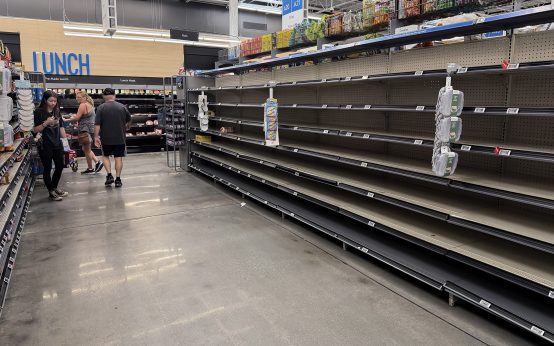 Hurricanes Simon and Isaias Intensify as Residents Brace for Impact
 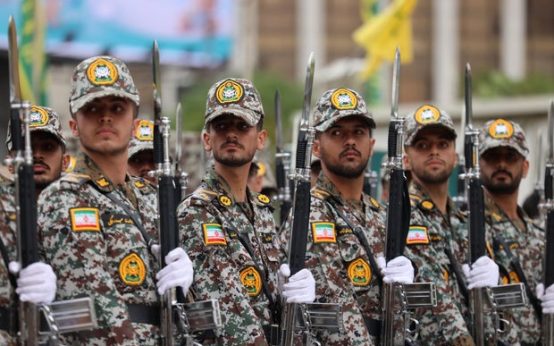 Developments in the Iran Conflict and Related Global Reactions
 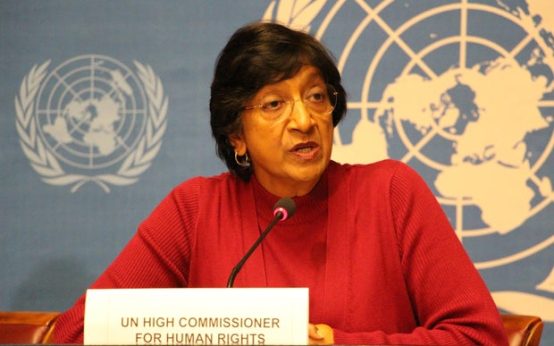 Navanethem Pillay Honored with Nobel Peace Prize for 2026
  Countries Competing to Host 2036 Summer Olympics
  Chinese Espionage: The Persistent Threat
  Controversial Rap Song Amid French Protests