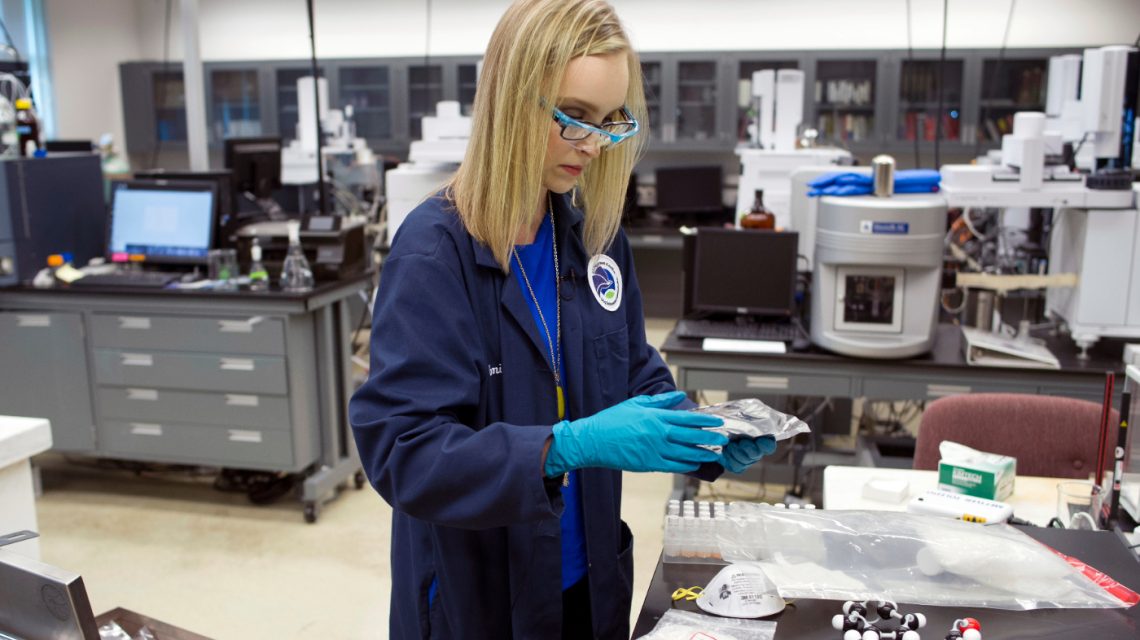
On August 9, 2016, Emily Dye, a forensic chemist, handled evidence at the Drug Enforcement Administration (DEA) Special Testing and Research Laboratory in Sterling, Va, which contained fentanyl analogs. This highlights the intricate work done in forensic science, often overlooked in discussions about reducing crime.
Although violent crime rates have dropped in Washington and many cities, the impact of shootings remains significant. A recent shooting injured my friend and former colleague while he was biking home in the District of Columbia. Discussions about reducing violence often focus on policing, community programs, sentencing policies, and firearm regulations. Yet, the role of forensic science remains underappreciated.
When shootings occur, the public demands answers. Forensic science aids investigators in identifying perpetrators, linking crimes, gathering reliable evidence, and ensuring accountability. Advances in this field are largely due to federal investments in research and development.
The National Institute of Justice, the research arm of the Department of Justice, has played a vital role in improving forensic methods. Key advancements include enhanced DNA analysis and high-resolution 3D ballistic imaging. Since 2009, over $300 million has been invested in forensic science research, funding numerous projects.
This progress did not happen by chance. Sustained federal support for scientific research has driven these achievements, building public trust in the criminal justice system. However, resources for crime labs are dwindling. The National Institute for Justice’s funding dropped from $30 million in 2015 to $13.6 million in 2024. Despite increased public needs, funding remains tight, hindering potential benefits like solving more cases, exonerating the innocent, and boosting confidence in justice.
As the institute’s former director, I grappled with these challenges, making tough choices about funding priorities. Budget constraints meant balancing support for doctoral fellowships and workforce development against other needs. While fiscally sound, this approach does not lay a foundation for future forensic advancements.
Forensic science rarely captures media attention. Yet, every DNA match, ballistic link, identified missing person, and avoided wrongful conviction stem from years of scientific progress. For a more efficient, fair, and accurate justice system, investing in forensic science is imperative.
Nancy La Vigne is the dean of Rutgers School of Criminal Justice and former director of the National Institute of Justice.